
When your harvest suddenly becomes abundant, start by preserving crops at their peak flavor and nutritional value, like berries, tomatoes, and fresh herbs. Focus on surplus ripe produce suitable for making sauces, salsas, or drying herbs, and freeze delicate greens quickly to prevent spoilage. Prioritize crops with the best storage potential, such as root vegetables, and consider market demand if you plan to sell. To discover more effective preservation strategies, keep exploring these key tips.

Get garden gear delivered free — and shop member deals
- Fast, free delivery on millions of items
- Access to Prime Big Deal Days deals on October 6–7
- Prime Video, Amazon Music and more included
Key Takeaways
- Prioritize perishable and high-demand crops like berries, tomatoes, and delicate herbs for quick preservation.
- Focus on surplus ripe produce suitable for canning, freezing, or drying to prevent spoilage.
- Preserve crops with the best long-term storage potential, such as root vegetables and dried herbs.
- Use preservation methods to extend usability and reduce waste of abundant harvests.
- Align preservation efforts with market demand and immediate use needs to maximize value.
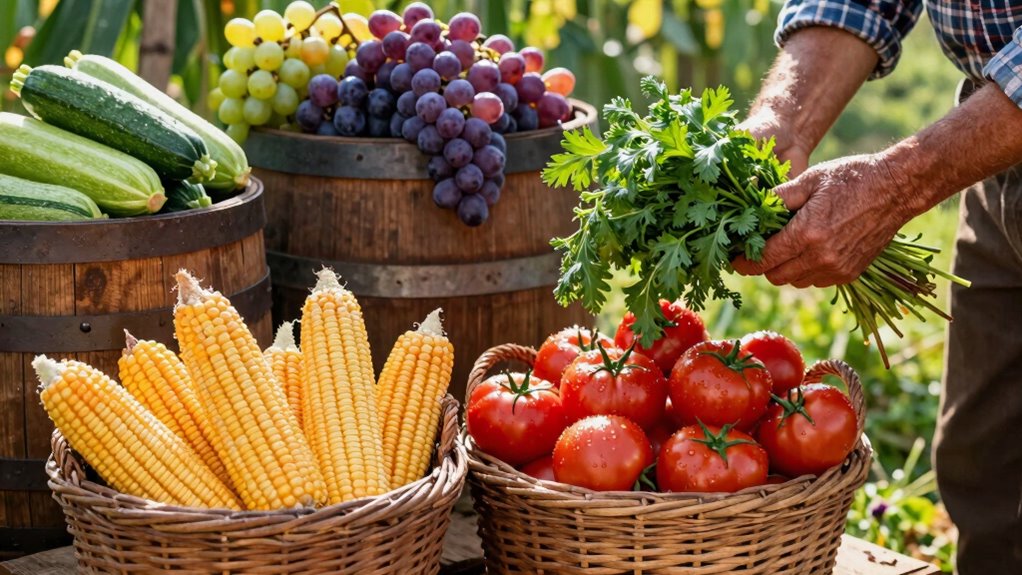
When your garden suddenly produces more than you can eat, knowing what to preserve first can make all the difference. It’s a moment of opportunity—you want to maximize your harvest’s value and enjoy your garden’s bounty long after the season ends. To do that effectively, you need to understand farmers’ market strategies and seasonal preservation techniques. These tools help you prioritize what to preserve first, ensuring nothing goes to waste and you get the most out of your hard work.
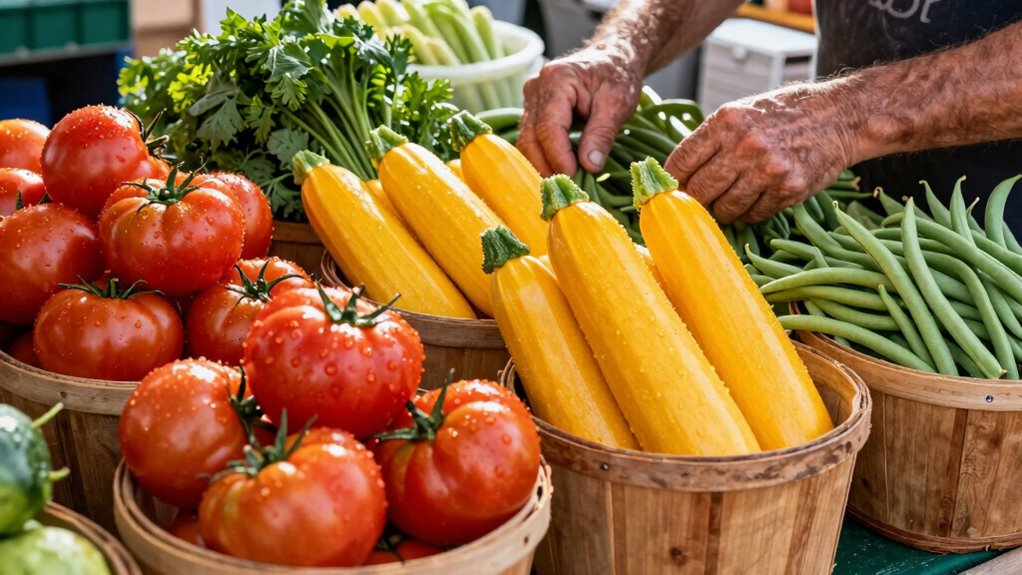
Start by assessing what’s in peak condition and most abundant. Berries, tomatoes, and fresh herbs are often at their best early in the harvest, so preserving these first captures their peak flavor and nutritional value. For example, if you have a surplus of ripe tomatoes, consider making sauces, salsas, or drying them for later use. These seasonal preservation techniques lock in freshness and flavor, allowing you to enjoy your garden’s offerings long after the season ends. Similarly, excess herbs can be dried or frozen to add flavor to meals months down the line. Understanding seasonal preservation techniques can significantly extend the usability of your harvest and reduce waste.
Farmers’ market strategies come into play when deciding what to preserve first. If you plan to sell some of your harvest, focus on the most marketable crops—those with the best shelf life or highest demand. Preservation techniques like canning, freezing, or dehydrating extend the usability of these crops and help you meet market needs. By doing so, you’re not just preserving food; you’re also creating an opportunity to generate income or stock your pantry for months to come.
Prioritizing what to preserve also involves understanding your storage options and space. Root vegetables like carrots, potatoes, and beets store well in cool, dark places, so you might want to focus on harvesting and curing them early on. Leafy greens and delicate herbs, on the other hand, are best preserved through freezing or drying quickly to prevent spoilage. This approach ensures your preservation efforts are efficient, reducing waste and maximizing your harvest.
Ultimately, your goal is to strike a balance—preserving what’s most valuable, whether for immediate use, sale, or long-term storage. By applying farmers’ market strategies and seasonal preservation techniques, you can turn a sudden abundance into a well-stocked pantry, a thriving market stall, or both. When you approach your harvest with a clear plan, you make the most of your garden’s generosity and enjoy the fruits of your labor well beyond the harvest season.
food vacuum sealer for preserving harvest
As an affiliate, we earn on qualifying purchases.
As an affiliate, we earn on qualifying purchases.
Frequently Asked Questions
How Do I Determine Which Crops to Prioritize for Preservation?
You should prioritize crop selection based on which crops have the highest perishability and preservation timing. Focus on those that spoil quickly, like berries or leafy greens, first. Consider their shelf life and ease of preservation methods available. By evaluating each crop’s preservation timing, you guarantee your harvest doesn’t go to waste, and you maximize your storage resources efficiently. Always act quickly on the most delicate crops first.
What Are the Safest Methods for Preserving Large Quantities Quickly?
Time is of the essence, like capturing fleeting sunlight—so choose preservation techniques that maximize speed and safety. Freeze fruits and vegetables for quick flavor enhancement and preservation, as it’s one of the safest methods for large quantities. Canning offers long-term storage, while dehydration removes moisture effectively. Opt for vacuum sealing to prevent spoilage, ensuring your harvest stays fresh and flavorful longer without risking safety.
How Can I Prevent Spoilage During Preservation Processes?
To prevent spoilage during preservation, focus on fermentation safety by maintaining proper storage temperature. Keep your fermentation in a cool, consistent environment—around 60-70°F—to inhibit unwanted bacteria and mold growth. Regularly check your jars or containers for signs of spoilage, like off smells or mold. Proper temperature regulation ensures safe fermentation, preserves flavors, and extends shelf life, helping your bounty stay fresh and delicious longer.
What Supplies or Equipment Are Essential for Preserving a Harvest?
You’ll need basic supplies like sterilized jars, lids, and a canner for safe canning, ensuring you follow canning safety guidelines. For freezing, invest in quality freezer bags or containers, and a reliable freezer. Use proper freezing techniques to prevent freezer burn. Both methods require a sharp knife, labels, and a thermometer. These supplies help preserve your harvest effectively, maintaining flavor and safety for months.
How Long Can Different Preserved Foods Typically Last?
Your preserved foods can last from months to years, depending on flavor profiles and preservation techniques. For example, fermented foods like sauerkraut can stay fresh for up to a year, while canned vegetables often last 1-2 years with proper sealing. Dried herbs can survive for 3-4 years, and jams may last up to 2 years. Mastering preservation techniques guarantees your bounty remains delicious and safe long after harvest.
Conclusion
When abundance strikes, remember the wise words of the old farmer’s tale—strike a balance like the steady hand of a seasoned sailor. Safeguard your harvest wisely, prioritizing what sustains you longest and offers the most value. Don’t let the bounty slip away like fleeting shadows; instead, act with purpose and foresight. By doing so, you’ll guarantee your harvest’s legacy endures, much like the timeless stories whispered by the wind across the fields.
Halloween Picks
halloween
As an affiliate, we earn on qualifying purchases.