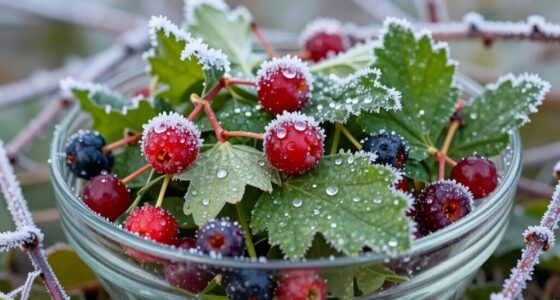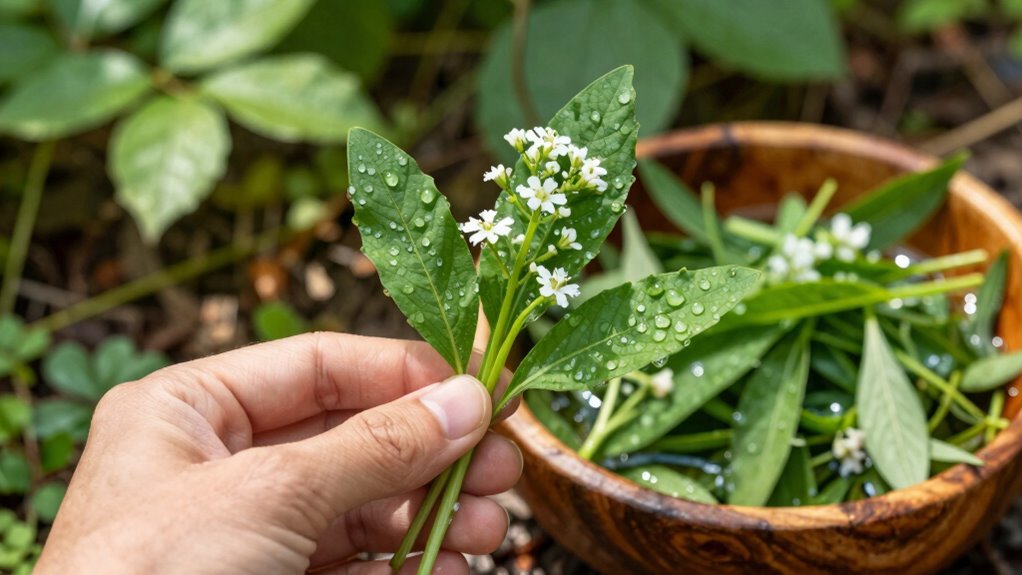

To reduce bitterness in wild plants, start by blanching them in boiling water for 1-2 minutes, then quickly cool in cold water to leach out bitter compounds. Proper handling and identification are essential for safety and flavor. You can also balance flavors by pairing wild greens with other ingredients or using different cooking methods like sautéing. Mastering these techniques will help you enjoy wild plants more fully—if you want to explore more tips, keep going.

Get garden gear delivered free — and shop member deals
- Fast, free delivery on millions of items
- Access to Prime Big Deal Days deals on October 6–7
- Prime Video, Amazon Music and more included
Key Takeaways
- Briefly blanch wild plants in boiling water for 1-2 minutes, then rapidly cool in cold water.
- Properly identify edible wild plants to ensure safe and optimal preparation.
- Use contrasting flavors and textures to mask or balance bitterness in dishes.
- Incorporate ingredients like garlic, lemon, or oils to enhance flavor and reduce perceived bitterness.
- Employ cooking methods such as sautéing after blanching to mellow bitterness and improve taste.
Many wild plants have a natural bitterness that can be unappealing, but with the right techniques, you can reduce or eliminate this flavor to enjoy their nutritional benefits. When you’re foraging for wild plants, it’s essential to know how to prepare them properly so you can maximize their health benefits without being turned off by their taste. Wild plant foraging tips emphasize not only identifying edible plants but also understanding how to handle their natural flavors, especially bitterness, which can sometimes mask their nutritional value. Many wild plants are packed with vitamins, minerals, and antioxidants, making them a valuable addition to your diet once you learn how to tame their bitter notes.
Mastering wild plant prep unlocks their nutrients while mellowing bitterness for tastier, healthier foraged meals.
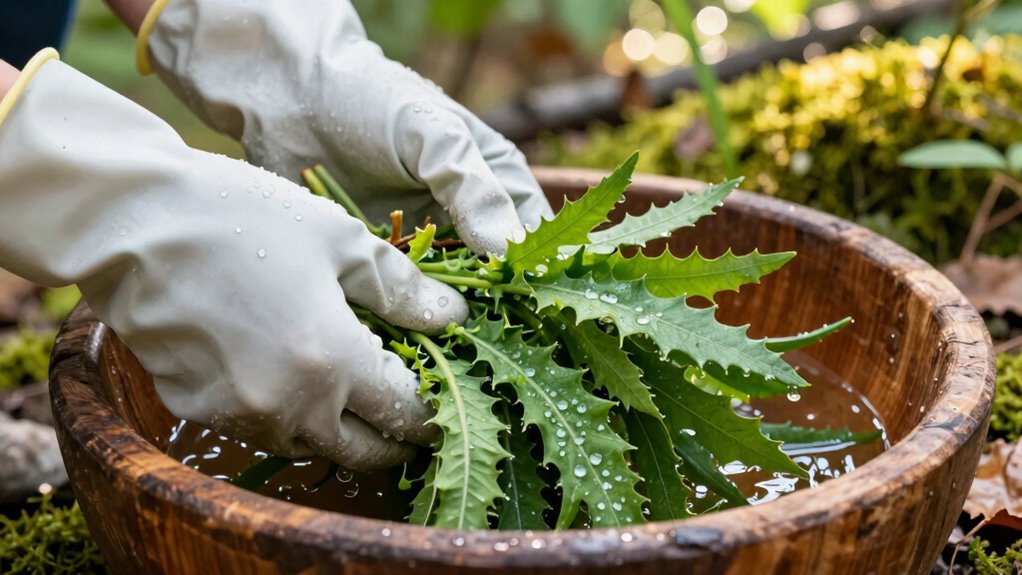
One effective way to start reducing bitterness is to blanch the plants briefly in boiling water. This method involves submerging the plants in boiling water for a minute or two, then quickly cooling them in cold water. This process helps leach out some of the bitter compounds, making the plants more palatable. You might find this especially helpful with greens like dandelion or wild spinach, which are highly nutritious but often bitter when raw. After blanching, you can proceed to sauté or incorporate them into salads, enjoying their nutritional benefits without the overpowering flavor. Additionally, understanding the role of contrast ratios in food preparation can help balance flavors and improve the overall taste experience. Incorporating different textures and flavors can further enhance the enjoyment of wild greens. A balanced approach can also involve adjusting flavor profiles to suit your taste preferences. Incorporating techniques such as pairing with other ingredients can also help mask bitterness and create a more harmonious dish. Exploring different cooking methods can also significantly alter the flavor and reduce bitterness, allowing you to enjoy a wider variety of wild plants.
As an affiliate, we earn on qualifying purchases.
Frequently Asked Questions
Which Wild Plants Are Most Commonly Bitter?
You’ll find that plants like wild chicory, dandelion greens, and certain wild herbs are most commonly bitter due to natural toxins. To enjoy these, you can use bitterness masking techniques like soaking in water, boiling, or adding acidic ingredients like lemon. These methods help reduce the bitterness, making wild plants more palatable while also neutralizing some wild plant toxins. Always guarantee proper identification and preparation before consumption.
Can All Wild Plants Be Made Less Bitter?
Not all wild plants can be made less bitter, but many respond well to flavor balancing techniques. You can soak, blanch, or rinse them to reduce bitterness while preserving nutrients. These methods work like gentle waves smoothing rough edges, allowing the natural flavors to shine through. By carefully applying these techniques, you preserve the plant’s nutrients and enhance its taste, making even the bitterest wild plants more enjoyable.
Does Cooking Affect the Bitterness Level of Wild Plants?
Cooking definitely affects the bitterness level of wild plants. You can use flavor enhancement and various cooking techniques like boiling, blanching, or soaking to reduce bitterness. These methods help break down bitter compounds and mellow flavors. Experimenting with techniques like roasting or sautéing can also bring out different tastes, making wild plants more palatable. Adjusting cooking time and adding ingredients like salt or acidity can further improve flavor and minimize bitterness.
Are There Specific Tools Needed for Processing Wild Plants?
You’ll need basic tools like sharp knives, scissors, and gloves for processing wild plants safely. Use tools and techniques like chopping, snipping, and pounding to prepare plants effectively. A vegetable brush helps clean roots and leaves, while a strainer or colander can rinse away dirt. Proper preparation methods guarantee you handle plants safely and efficiently, preserving their flavor and nutrients. Always choose the right tools for each step to make processing easier and more effective.
How Long Should I Soak Wild Plants to Reduce Bitterness?
You should soak wild plants for about 15 to 30 minutes to reduce bitterness and enhance flavor. During this soaking duration, you can change the water once or twice to further remove bitter compounds. Keep an eye on the plants; longer soaking might strip away some nutrients, so stick to the suggested time for best flavor enhancement. This simple step helps make wild plants more palatable and enjoyable.
Conclusion
Once you master removing bitterness, wild plants become your secret treasure. I remember a friend who once thought wild greens were too bitter to enjoy, but after a few simple tricks, they became her favorite ingredient. Like turning a harsh note into a harmonious melody, these methods transform wild plants into delightful bites. With patience and practice, you’ll find yourself savoring nature’s flavors, revealing the true bounty of the wild.
Fall yard work Picks
leaf blowers
As an affiliate, we earn on qualifying purchases.