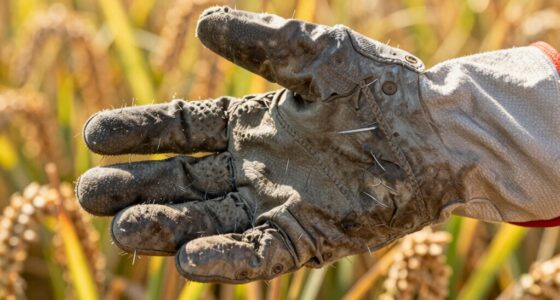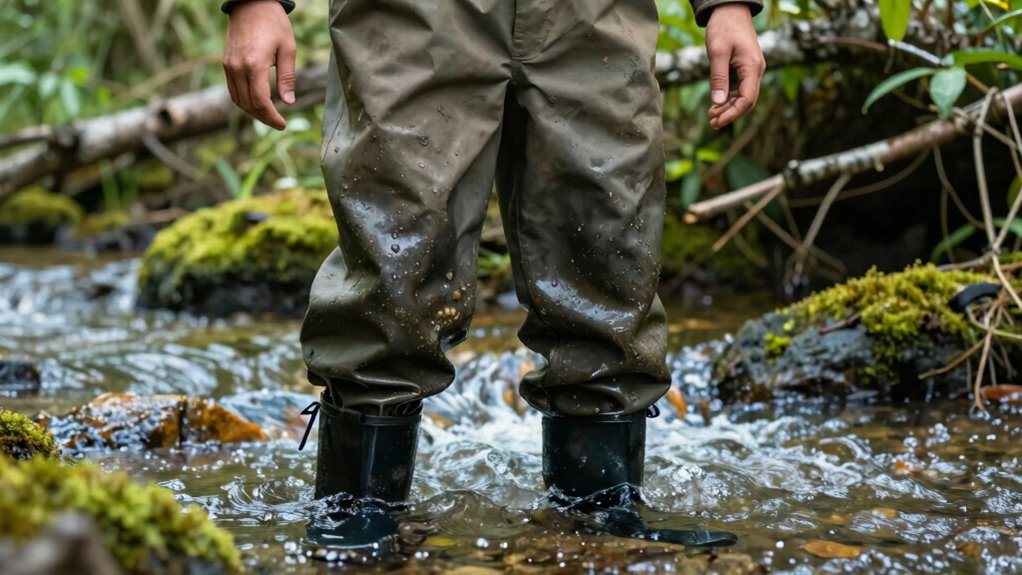
Chest waders help you safely access flood-prone fields, marshes, and streams by keeping you dry and stable in waterlogged terrains. They enable you to reach difficult harvest zones while providing comfort in unpredictable conditions. Make sure your waders are durable, waterproof, and suited to the water temperature. Proper safety gear like flotation devices and waterproof footwear enhances your safety. If you want to discover how to optimize your gear and safety, keep exploring these tips.
Key Takeaways
- Chest waders enable safe, dry access to flooded, muddy, or waterlogged harvest zones.
- Durable, breathable materials improve comfort and protect against environmental challenges.
- Safety gear like PFDs and wading sticks enhance stability and reduce drowning risks.
- Regular gear inspection prevents leaks and ensures reliable performance in tough terrains.
- Proper footwear and natural pathways facilitate secure footing and efficient harvesting.
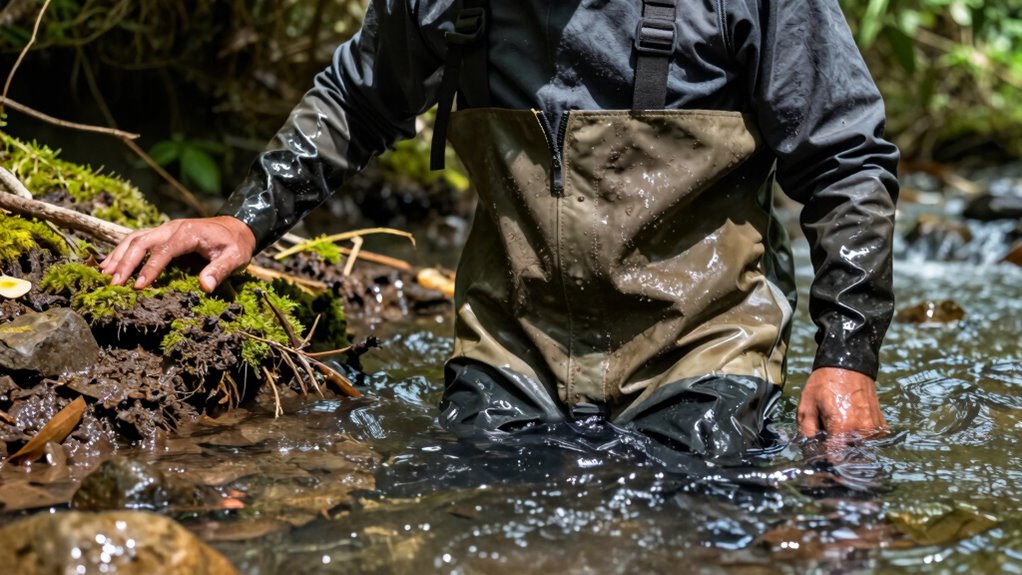
When it comes to reaching remote harvest zones that are often flooded or muddy, chest waders become an essential tool. These waterproof gear pieces allow you to navigate through waterlogged fields, marshes, or shallow streams without risking your safety or comfort. With chest waders, you can access areas that are otherwise impossible to reach on foot, ensuring you don’t miss out on valuable harvest opportunities. They keep you dry from head to toe, which is crucial when dealing with unpredictable water conditions. Using landscaping techniques to create natural pathways or clearings can further improve accessibility in difficult terrains. Choosing the right chest waders isn’t just about size; it’s about understanding the environment you’re working in. Look for waterproof gear made from durable materials like neoprene or Gore-Tex, which offer both waterproofing and breathability. Breathable waders prevent excessive sweating, keeping you comfortable during long hours of work. When you’re working in wet zones, waterproof gear protects you from prolonged exposure to water, reducing the risk of hypothermia and skin irritation. Make sure your waders have reinforced knees and seams, as these areas endure the most wear, especially when crawling through muddy or rocky terrain. Additionally, selecting waders with proper insulation can enhance comfort in colder conditions, preventing chills during extended periods in water. It’s also important to consider seasonal variations when choosing your gear, as different temperatures and water conditions require specific clothing layers for optimal comfort. Proper gear maintenance can extend the lifespan of your waders and ensure they function correctly when needed. Incorporating waterproof footwear with your outfit can further improve safety and stability when navigating slippery surfaces. Safety precautions are vital when using chest waders. Always check for leaks before heading out, as even small tears can quickly compromise your dry environment. Wearing a personal flotation device (PFD) is a smart safety measure, particularly if you’re working in deeper or moving water. It’s easy to underestimate water currents or lose your footing, so a PFD provides an extra layer of security. Keep your wading belt snug but comfortable to prevent water from flooding inside if you slip or fall. Never wade into water alone; having a partner nearby can be a lifesaver in case of emergencies. Be aware of weather conditions and avoid wading during thunderstorms or heavy rain, which can increase water levels or create dangerous currents unexpectedly. Proper footwear is just as important as the waders themselves. Invest in waterproof boots with good traction to prevent slipping on muddy or uneven surfaces. Always carry a wading staff or stick to help maintain your balance, especially when crossing streams or negotiating slippery banks. Regularly inspect your gear for signs of wear and replace worn-out parts promptly to ensure safety and functionality. By combining waterproof gear with careful safety precautions, you can confidently access hard-to-reach harvest zones, boosting your efficiency while minimizing risks. Staying prepared and cautious ensures that your wet access remains safe, productive, and comfortable.
waterproof chest waders for fishing
As an affiliate, we earn on qualifying purchases.
As an affiliate, we earn on qualifying purchases.
Frequently Asked Questions
What Are the Best Materials for Durable Chest Waders?
You’ll want chest waders made from durable materials like nylon or neoprene for longevity, as they withstand rough conditions and last longer. Look for fabrics that balance material longevity with breathability, such as coated nylon or breathable waterproof fabrics, to keep you comfortable during long wear. This combination guarantees your waders stay sturdy while allowing moisture to escape, enhancing your overall experience in hard-to-reach harvest zones.
How Do I Prevent Chest Waders From Leaking?
Imagine your waders as a fortress; to prevent leaks, start with high-quality, waterproof materials. Regularly check for punctures and use a reliable puncture repair kit to seal small holes promptly. Maintain your wader insulation, as it keeps the fabric flexible and resilient. By inspecting patches and seams regularly, you guarantee your waders stay waterproof, so you can focus on the task without worrying about leaks ruining your day.
Are There Eco-Friendly Options for Wet Access Gear?
Yes, you can find eco-friendly wet access gear. Look for brands that use eco-friendly manufacturing processes and participate in recycling programs for their gear. These options often feature sustainable materials like recycled plastics or natural fibers, reducing environmental impact. By choosing such gear, you support environmentally responsible practices and help protect the ecosystems you’re exploring. Always check product labels or manufacturer info to guarantee they prioritize sustainability.
How Do I Safely Navigate Strong Currents in Harvest Zones?
To safely navigate strong currents in harvest zones, you should prioritize river safety by always evaluating the current before entering. Look for signs of swift water, such as churning or debris, and test the depth and speed with a sturdy stick. Stay low, keep your weight centered, and use a secure grip on your gear. If the current seems too strong, don’t risk crossing—find a safer, calmer route instead.
What Maintenance Is Needed for Chest Waders After Use?
After each use, you should perform wader cleaning by rinsing them with fresh water to remove dirt, debris, and salt. Check for any tears or leaks and repair them promptly. For storage tips, make sure your waders are completely dry before storing them in a cool, dry place away from direct sunlight. Proper maintenance guarantees your chest waders stay durable and ready for your next adventure.
Conclusion
With chest waders, you can conquer even the most treacherous, waterlogged zones that seem to swallow every other attempt. They’re your ultimate armor against the wildest, wettest challenges, turning impossible access into an achievable feat. Don’t let those hidden harvest spots remain a mystery—gear up, step in, and make the impossible look easy. With the right gear, you’ll be steering those hard-to-reach zones faster than a flash of lightning, opening bounties others only dream of.