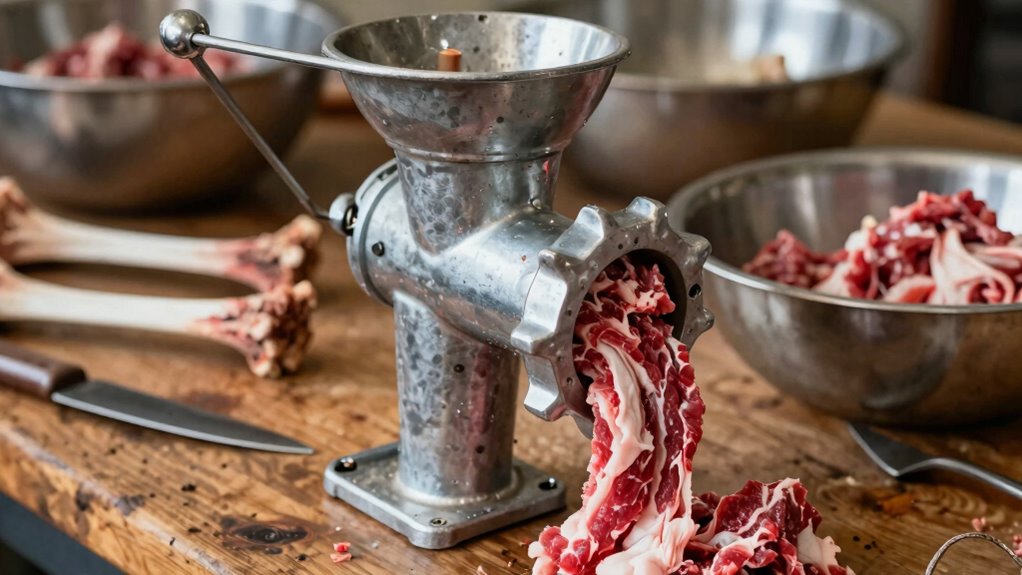

To optimize wild game processing with meat grinders, start by cleaning and disinfecting all parts after use to prevent cross-contamination. Break down the meat into uniform chunks for consistent grinding, and handle the carcass carefully during field dressing and trimming. Follow a proper workflow—organize steps from cleaning to packaging—to boost efficiency and maintain quality. Proper maintenance and hygiene are essential for smooth operation; keep exploring to uncover more about crafting a seamless meat processing routine.

Get garden gear delivered free — and shop member deals
- Fast, free delivery on millions of items
- Access to Prime Big Deal Days deals on October 6–7
- Prime Video, Amazon Music and more included
Key Takeaways
- Use proper wild game cleaning techniques, including field dressing and trimming, before grinding to ensure meat quality and safety.
- Disassemble and thoroughly clean the meat grinder after each use to prevent cross-contamination and maintain equipment longevity.
- Cut meat into uniform chunks and organize processing steps for efficient, consistent grinding and workflow.
- Implement hygiene-focused cleaning protocols between batches to ensure safety and prevent bacterial buildup.
- Regularly inspect and lubricate grinder parts to ensure smooth operation and extend equipment lifespan.
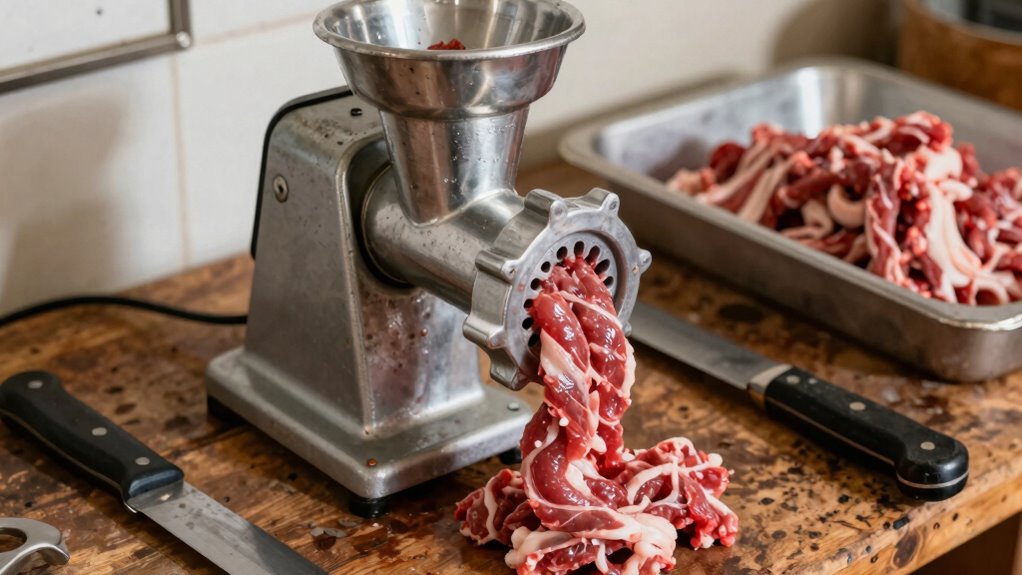
Processing wild game efficiently begins with understanding the role of meat grinders in the workflow. A good grinder helps you turn large cuts into manageable portions, making subsequent steps like mixing and packaging much easier. But before you start grinding, it’s vital to focus on meat grinder maintenance. Proper upkeep prevents contamination, guarantees consistent performance, and prolongs your equipment’s lifespan. Regularly cleaning all parts after each use is essential—disassemble the grinder, wash components with hot, soapy water, and dry them thoroughly. Lubricate moving parts if recommended by the manufacturer to keep everything operating smoothly. Neglecting maintenance can lead to dull blades, inefficient grinding, and potential bacterial buildup, which compromises the quality of your processed meat. Additionally, inspecting your grinder for signs of wear before every use can prevent unexpected breakdowns during processing. Using the right tools can also make maintenance easier and more effective.
Ensuring you have proper cleaning procedures in place is crucial for maintaining hygiene and preventing cross-contamination between different batches of meat. Equally important is mastering wild game cleaning techniques. Proper cleaning not only improves the quality of your meat but also minimizes the risk of spoilage and contamination. Start by carefully field dressing your game, removing the internal organs and cooling the carcass quickly. When it’s time to process the meat at home, take your time trimming away any connective tissue, silver skin, or fat that could affect taste or texture. During this step, pay close attention to removing any bloodshot or damaged tissue, which can taint the flavor of your final product. Proper meat handling and cleanliness are essential to ensure the safety and quality of your processed game. Once the meat is cleaned, cut it into uniform chunks suitable for your grinder. This guarantees even grinding and prevents jamming. Additionally, understanding color accuracy in your processing setup can help ensure the appearance of your meat is appealing and consistent. Using a proper workflow can streamline your entire wild game processing process and ensure high-quality results. Proper organization and adherence to a sequence can also improve efficiency and safety throughout the workflow.
electric meat grinder for wild game
As an affiliate, we earn on qualifying purchases.
As an affiliate, we earn on qualifying purchases.
Frequently Asked Questions
How Do I Properly Clean and Sanitize My Meat Grinder After Use?
To properly clean and sanitize your meat grinder, start by disassembling it and removing any leftover meat. Use hot water and a brush to scrub all parts, paying attention to crevices. For sanitization, apply a food-safe sanitizer or a vinegar solution, then rinse thoroughly. Dry all components completely to prevent rust. Follow these cleaning techniques and sanitization methods consistently to keep your grinder safe and in top condition.
What Safety Precautions Should I Follow When Processing Wild Game?
When processing wild game, safety precautions are your shield against potential risks. Always wear gloves and eye protection, and keep your workspace clean — wild game odors can linger, so sanitize thoroughly. Avoid cross-contamination by properly disposing of scraps and waste. Keep raw meat refrigerated, and cook game to the proper temperature. Staying vigilant guarantees your wild game processing remains safe, like a fortress guarding against unseen dangers.
How Can I Prevent Meat From Clogging the Grinder During Processing?
To prevent meat from clogging the grinder, you should adjust the grinding speed to a slower setting, giving the meat time to process smoothly. Keep the meat cold, ideally between 32-40°F, as colder meat reduces clogging chances. Regularly clear the auger and feed the meat in small, manageable portions. These steps guarantee a consistent grind and reduce the risk of jams during processing.
What Are the Best Storage Methods for Processed Wild Game?
To store processed wild game effectively, focus on freezer organization and vacuum sealing techniques. Use vacuum sealers to remove air and prevent freezer burn, keeping the meat fresh longer. Organize your freezer with labeled, airtight packages, stacking them neatly to maximize space. This approach helps you easily access specific cuts and guarantees your wild game stays flavorful and safe for future use. Proper storage extends the quality and shelf life of your meat.
How Do I Adjust Grinding Settings for Different Types of Wild Game?
You can adjust grinding settings by changing the grind size to match the meat’s texture—coarser for tougher game like elk, finer for tender game like deer. Monitor the grinding texture and make seasoning adjustments accordingly, adding more spices for gamey flavors or herbs for a milder taste. Always test the grind before processing large batches, ensuring your grinder settings produce the desired texture and flavor profile for each game type.
Conclusion
Using a meat grinder streamlines wild game processing, saving you time and ensuring consistent results. Did you know that properly processed wild game can last up to a year in the freezer? By following efficient workflows, you’ll preserve the quality of your meat and reduce waste. Whether you’re a seasoned hunter or just starting out, mastering these steps helps you enjoy your harvest to the fullest, making each meal both satisfying and sustainable.
Fall yard work Picks
leaf blowers
As an affiliate, we earn on qualifying purchases.