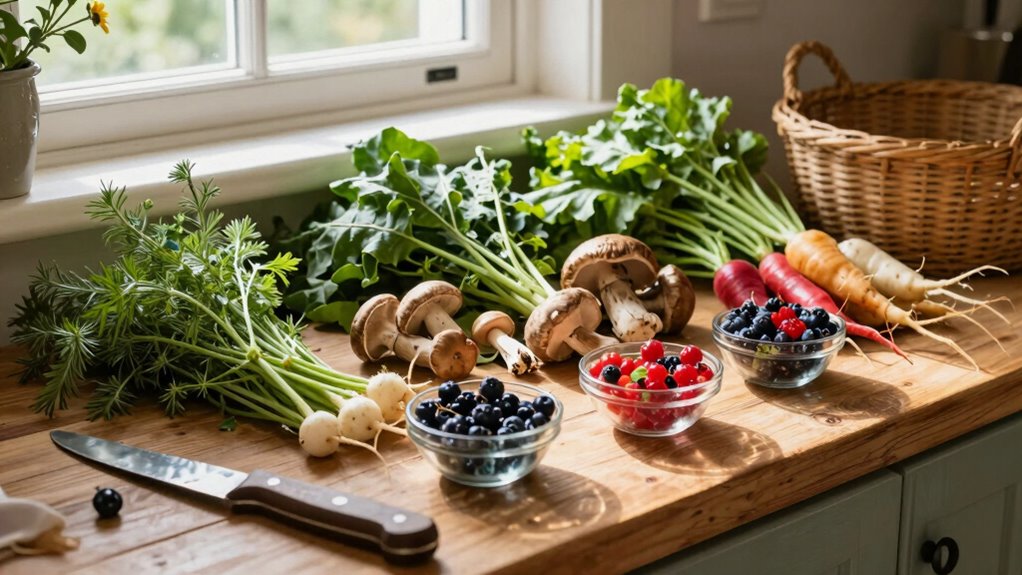
To build a seasonal wild food rotation, align your foraging with natural growth cycles—harvesting greens in spring, berries in summer, roots and mushrooms in fall, and preserving veggies or herbs in winter. Practice responsible identification and sustainable gathering to protect ecosystems. Preserve excess, through drying, freezing, fermenting, or pickling, so you can enjoy seasonal flavors year-round. Continuing with these strategies helps you create a balanced, mindful kitchen that works with nature’s rhythm.

Get garden gear delivered free with Prime
- Fast, free delivery on millions of items
- Prime Video, Amazon Music and more included
- Member-only deals all year
Key Takeaways
- Plan foraging trips according to seasonal growth cycles to ensure fresh, peak-nutrient wild foods throughout the year.
- Incorporate preservation methods like drying, freezing, and fermenting to extend seasonal harvests.
- Rotate wild foods based on their natural harvesting seasons to maintain freshness and sustainability.
- Use proper identification and sustainable harvesting techniques to protect ecosystems and ensure future growth.
- Develop a kitchen schedule that aligns seasonal wild food availability with preservation efforts for continuous access.
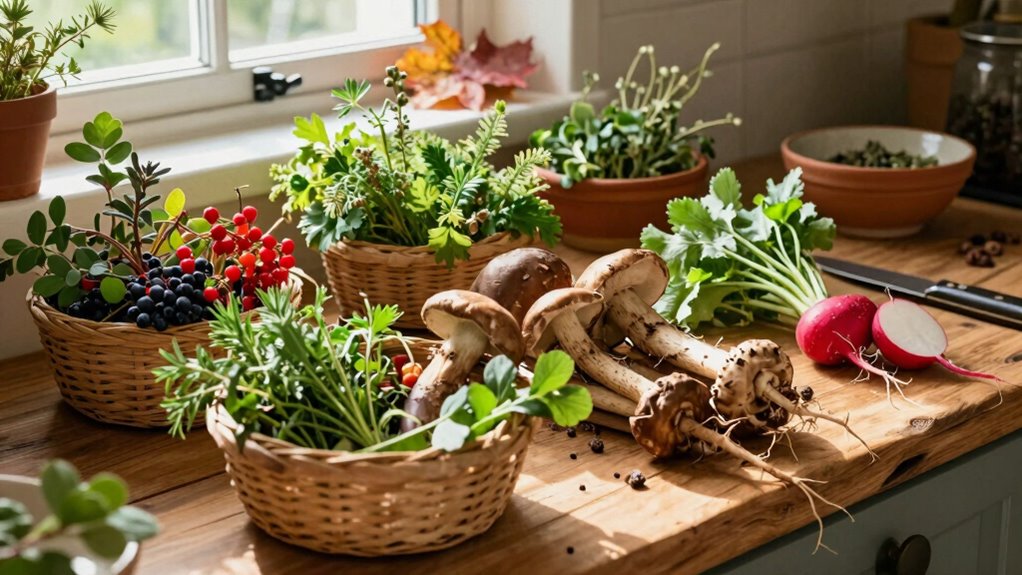
Creating a seasonal wild food rotation is an effective way to sustainably enjoy nature’s bounty throughout the year. By planning your meals around what’s in season, you can maximize flavor, nutrition, and ecological balance. To do this successfully, you need to understand foraging methods that help you identify and harvest wild foods responsibly. Learn to recognize edible plants, fungi, and herbs in their natural habitats, paying close attention to their growth cycles. Always verify your identifications with trusted guides or experts to avoid toxic look-alikes. Once you’ve gathered your wild ingredients, you’ll also want to incorporate preservation techniques to extend their shelf life and guarantee year-round access. Drying, freezing, fermenting, and pickling are all effective preservation methods that allow you to enjoy seasonal foods long after their natural harvest window has closed.
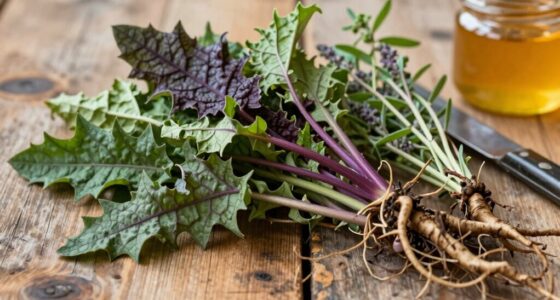
When building your wild food rotation, you should think about how different foods peak at various times of the year. Spring might bring wild greens like nettles and dandelions, while summer offers berries and edible flowers. Fall is prime time for root vegetables, mushrooms, and apples, and winter might be perfect for stored dried herbs or fermented vegetables. Planning your foraging trips around these seasonal windows ensures you’re harvesting at their nutritional peak and prevents overharvesting. It is also helpful to consider harvesting techniques that minimize environmental impact and promote sustainable gathering practices. Practicing sustainable foraging methods, such as taking only what you need, leaving enough for wildlife and future growth, and avoiding protected or endangered species. This approach helps maintain healthy ecosystems and ensures wild foods remain available for years to come. Additionally, understanding the importance of contrast ratio can help you optimize your indoor environment for processing and storage spaces, maintaining the quality of your preserved foods. Proper seasonal planning can further enhance your success by aligning harvests with natural growth cycles and preservation windows. Recognizing the significance of native plant knowledge is essential for identifying truly edible species and avoiding invasive or harmful plants. Incorporate these practices into your routine, and you’ll develop a deeper understanding of the local ecosystem and its seasonal rhythms.
Preservation techniques play a vital role in creating a balanced rotation. For example, drying herbs and mushrooms allows you to use them during off-seasons, while freezing berries and greens preserves their freshness and nutrients. Fermentation can turn excess vegetables into flavorful, probiotic-rich foods that last for months, and pickling offers a tangy way to enjoy seasonal harvests. Incorporate these methods into your routine, and you can enjoy a diverse array of wild foods throughout the year without depleting the natural sources. Remember, a well-planned rotation isn’t just about eating seasonally; it’s about respecting the environment, practicing responsible foraging, and using preservation techniques wisely. This balanced approach means you’ll always have access to fresh, wild foods while supporting healthy ecosystems and fostering a deeper connection to nature’s cycles.
Popular right now

De'Longhi Magnifica Duo Fully Automatic Espresso Machine with Milk Frother, Silver

De'Longhi Stilosa Compact Manual Espresso Machine with Milk Frother

Breville BES870BSXL Barista Express Espresso Machine, Black Sesame
As an affiliate, we earn on qualifying purchases.
Frequently Asked Questions
How Do I Identify Wild Foods Safely in the Wild?
You identify wild foods safely by practicing plant identification carefully, always double-checking your sources. Use reliable field guides, apps, or join local foraging groups to learn distinguishing features. Stay aware of toxicity by knowing which plants are safe and which are harmful, and never consume a plant unless you’re 100% confident in its identification. Remember, when in doubt, leave it out to avoid dangerous mistakes.
What Tools Are Best for Harvesting Wild Foods?
You’ll want sharp scissors or a small, sturdy knife for harvesting wild foods safely and efficiently. For delicate herbs or greens, use scissors to minimize damage, while a knife works well for roots and thicker stems. Carry a basket or mesh bag for easy collection and ventilation. After harvesting, focus on wild food preparation techniques that preserve freshness, and consider proper kitchen preservation methods to store your wild foods for later use.
Are There Any Legal Considerations for Foraging Wild Foods?
Yes, there are legal considerations for foraging wild foods. You need to be aware of legal regulations that vary by location, as some areas restrict foraging to protect native plants and ecosystems. Always check permission requirements before harvesting, as some lands require explicit permission or permits. Respect private property and protected areas, and avoid overharvesting to guarantee sustainable foraging practices. This way, you stay legal and support conservation efforts.
How Can I Store Wild Foods to Extend Their Shelf Life?
Wild foods may be fleeting, but you can extend their shelf life through smart Wild food preservation and storage techniques. Dry herbs and berries in a cool, dark place, and freeze greens or mushrooms in airtight containers. Use vacuum sealing for longer preservation, and ferment or pickle certain items for added flavor and longevity. These methods help you enjoy seasonal bounty well beyond harvest time, reducing waste and enriching your kitchen.
What Are Common Mistakes to Avoid in Wild Food Foraging?
When foraging wild foods, avoid common mistakes like believing wild food myths that can lead to dangerous misidentifications. Always follow proper foraging etiquette, such as respecting nature and local regulations, to prevent overharvesting and environmental harm. Be cautious with unfamiliar plants, and don’t assume all look-alikes are safe. Educate yourself thoroughly beforehand, and when in doubt, consult expert guides to guarantee safe, sustainable foraging practices.
Conclusion
As you embrace the rhythm of the seasons, you’ll find your kitchen transforming into a wild sanctuary, teeming with flavors untamed. With each harvest, a new secret awaits, whispering stories of nature’s hidden treasures. The journey isn’t just about food—it’s about reconnecting with the land’s pulse, feeling the thrill of discovery. Keep exploring, because the next wild bounty is just around the corner, ready to surprise and delight your senses in ways you never imagined.