Hoop houses are a low-cost way to extend your growing season naturally. They trap heat from the sun, warming soil and creating a microclimate that protects crops from harsh weather. This helps you plant earlier and harvest later without relying on energy-heavy systems. With simple frames and plastic covers, they’re easy to set up and customize for your space. Keep exploring to discover how these structures can transform your gardening approach even more.
Key Takeaways
- Hoop houses extend growing seasons by trapping solar heat and warming soil naturally.
- They provide a protective microclimate, shielding crops from harsh weather conditions.
- Low-tech hoop house setups are easy and inexpensive to build with PVC or metal frames.
- They serve as an eco-friendly pest barrier, reducing reliance on chemical controls.
- Customizable and lightweight, hoop houses enable early planting and late harvesting for diverse crops.
If you want to extend your growing season without relying on high-tech solutions, hoop houses offer a simple and effective option. These structures create a microclimate that shields your crops from the worst of the weather, helping to keep soil warmer and plants protected. Soil warming is essential, especially in early spring or late fall, because it allows you to start planting sooner or harvest later. By trapping heat from the sun, hoop houses gently raise the temperature of the soil, promoting faster germination and healthier root development. This natural warming reduces the need for energy-intensive heating systems and makes it easier for you to grow crops that wouldn’t typically thrive in your climate. Additionally, the low-tech nature of hoop houses makes them accessible and easy to maintain for gardeners of all experience levels. Using natural materials and simple designs, you can customize your hoop house to fit your specific gardening needs.
Hoop houses extend your growing season naturally by warming soil and protecting crops from harsh weather.
Pest control is another notable advantage of using hoop houses. When you establish a barrier over your garden, you can considerably reduce the number of pests that reach your plants. This physical barrier keeps out insects, rodents, and other critters that might damage your crops. Unlike chemical pesticides, which can harm beneficial insects and the environment, hoop houses provide a low-tech, eco-friendly way to manage pests. You can also add insect netting or fine mesh to further improve pest control without complicating the structure. This approach not only keeps your plants healthier but also minimizes the time and effort you spend on pest management. Incorporating sustainable practices like composting and rainwater collection can further enhance the eco-friendliness of your season extension efforts.
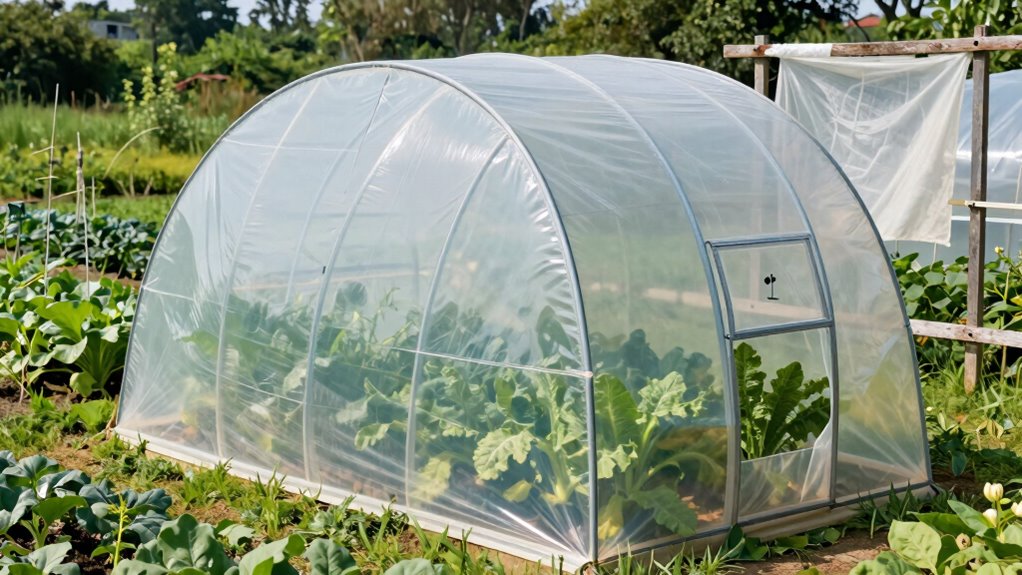
Setting up a hoop house is straightforward. You’ll start with a simple frame—usually made from PVC pipes or metal hoops—covered with clear plastic sheeting. The plastic traps heat and creates a greenhouse effect that warms the soil and air inside. Because the structure is lightweight and easy to assemble, you can often put up or take down a hoop house in just a few hours. This flexibility allows you to adapt to changing weather conditions or remove the structure once your plants are mature. The ease of construction also makes it accessible for small-scale gardeners or those new to season extension techniques. Maintaining proper ventilation during hot days is crucial to prevent overheating and ensure healthy plant growth. Furthermore, climate considerations play a role in optimizing the use of hoop houses for different regions and weather patterns.
In addition to soil warming and pest control, hoop houses help you extend your growing season with minimal investment. They’re cost-effective, require little maintenance, and can be customized to fit your space and crop choices. With a bit of planning, you can grow vegetables, herbs, and even some fruits well beyond their typical growing window. By harnessing the natural benefits of warmth and protection, hoop houses enable you to reap fresh produce longer, saving money and enjoying the satisfaction of a longer harvest.

VEVOR Walk-in Tunnel Greenhouse, 14.6×6.4×6.3 ft Hoop House Greenhouse Tunnel, Plant Hot House with Galvanized Steel Frame, White PE Cover, Roll-up Zipper Door and 8 Windows for Outdoor
- Heavy-Duty Galvanized Frame: Reinforced steel poles for stability
- Durable PE Cover: Waterproof, sun-resistant, insulating material
- Double-Stitched Seams: Prevents tearing and enhances durability
As an affiliate, we earn on qualifying purchases.
As an affiliate, we earn on qualifying purchases.
Frequently Asked Questions
How Much Do Hoop Houses Typically Cost to Build?
A hoop house typically costs between $1,500 and $5,000 to build, depending on size, materials, and complexity. You should consider a cost comparison to other season extension methods and explore funding options like grants or community programs to reduce expenses. By doing so, you’ll make an informed decision that balances your budget with your gardening goals, ensuring you get the most value out of your investment.
What Materials Are Best for Low-Tech Season Extension?
Like a sturdy shield, the best materials for low-tech season extension are durable and sustainable. You should consider using polycarbonate or clear plastic for the covering, as they let in ample sunlight while offering insulation. Wooden frames made from reclaimed or sustainably sourced timber work well, providing strength without harming the environment. These season extension techniques help you extend your growing season efficiently using eco-friendly material options.
How Long Does It Take to Set up a Hoop House?
Setting up a hoop house typically takes about one to three days, depending on your experience and the size of your project. With proper hoop house design and DIY construction tips, you can streamline the process. Gather all materials beforehand, follow clear instructions, and enlist help if needed. Make certain your foundation is level and secure, then bend the hoops into shape and cover them with plastic for a quick, efficient setup.
Can Hoop Houses Be Used Year-Round?
Yes, hoop houses can be used year-round if you adapt them to your climate and practice crop rotation. You’ll need to add insulation or heating during colder months and guarantee proper ventilation in summer. By adjusting your management strategies, you extend your growing season, protect crops from extreme weather, and maintain soil health. Climate adaptability and crop rotation become essential to make the most of your hoop house throughout the year.
What Are Common Pests in Hoop Houses?
Think of your hoop house as a fortress under siege—pests like aphids, whiteflies, and spider mites are common invaders. To keep them at bay, employ pest prevention strategies like crop rotation and proper ventilation. Organic control methods such as neem oil, insecticidal soaps, and introducing beneficial insects help maintain a healthy, pest-free environment. Staying vigilant guarantees your plants thrive despite these tiny foes.
Conclusion
Think of hoop houses as your garden’s cozy blanket, wrapping your plants in warmth and protection. With this low-tech season extension, you take control of your growing season, turning your outdoor space into a year-round oasis. It’s like planting seeds of hope in early spring and harvesting success well into winter. Embrace these simple tools, and watch your garden flourish beyond the usual limits—your personal greenhouse of possibility.