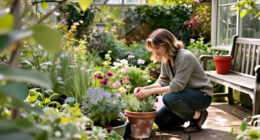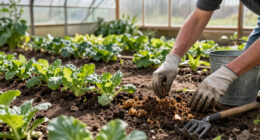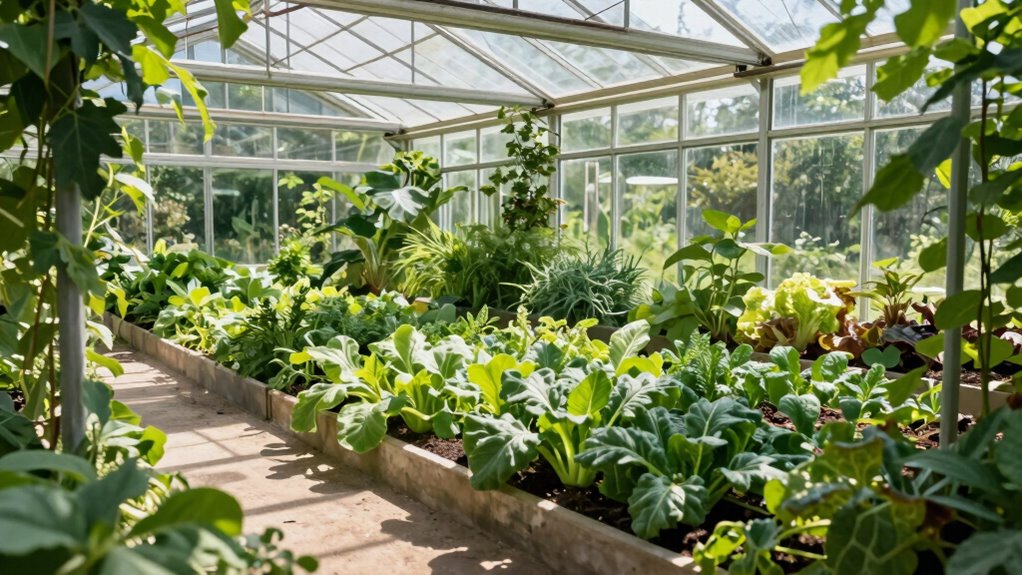

Greenhouses let you grow year-round by creating a controlled environment that extends your growing season. You can optimize temperature, humidity, and light levels to keep plants healthy and productive, no matter the weather outside. This protection allows you to cultivate fresh produce even in winter, reducing reliance on store-bought foods. By managing pests and climate with sustainable practices, you’ll boost your self-reliance. Keep exploring to discover how specific greenhouse setups can maximize your growing potential.

Get garden gear delivered free with Prime
- Fast, free delivery on millions of items
- Prime Video, Amazon Music and more included
- Member-only deals all year
Key Takeaways
- Greenhouses create a controlled environment to extend planting seasons regardless of outside weather conditions.
- Hydroponic systems inside greenhouses enable year-round cultivation with higher efficiency and faster growth.
- Climate and lighting controls optimize growing conditions, ensuring healthy plants throughout the year.
- Pest management strategies within greenhouses reduce chemical use and protect crops consistently.
- Sustainable practices in greenhouses support self-reliance, reduce reliance on store-bought produce, and lower environmental impact.
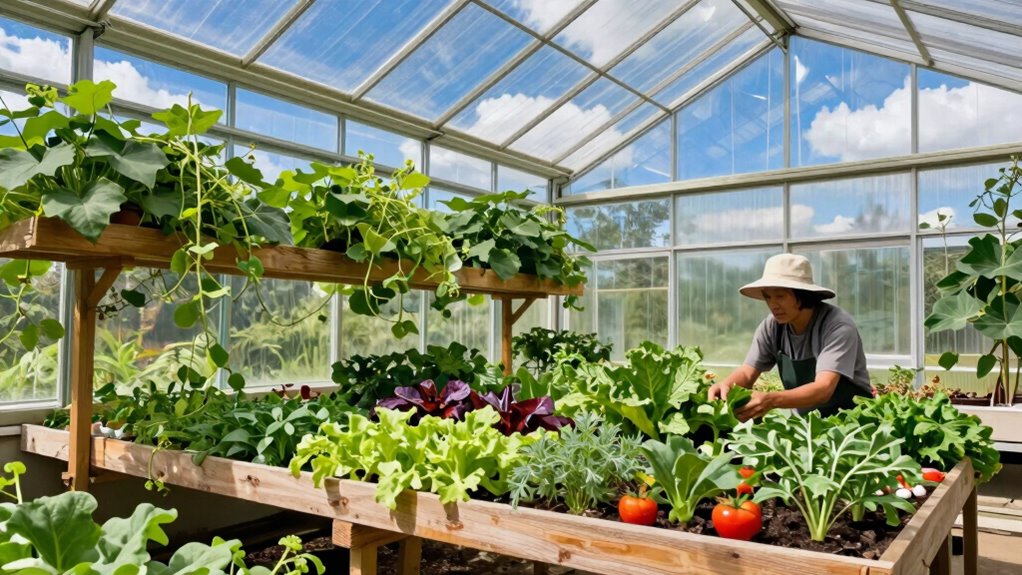
Growing your own food becomes possible even when outdoor conditions aren’t ideal thanks to greenhouses. These structures create a controlled environment that extends your growing season, allowing you to cultivate fresh produce year-round. Inside a greenhouse, you can optimize temperature, humidity, and light levels, giving you a significant advantage over traditional outdoor gardening. This controlled environment also enables you to implement emerging trends in sustainable agriculture, making your setup more innovative and efficient. This means you’re less dependent on seasonal changes and unpredictable weather, making self-reliance more attainable. One of the most effective ways to maximize space and productivity inside your greenhouse is by using hydroponic systems. These soil-less setups deliver nutrients directly to plant roots through nutrient-rich water, enabling faster growth and higher yields in a smaller footprint. Hydroponic systems are especially beneficial in a greenhouse setting because they allow you to precisely control nutrient levels and reduce soil-borne pests and diseases. Since pests can quickly damage crops, implementing good pest management practices is essential. In a greenhouse, pest control becomes more manageable because the environment is contained and easier to monitor. You can introduce beneficial insects, use organic sprays, or employ physical barriers like insect screens to keep pests at bay. This targeted approach minimizes chemical use and promotes healthier plants, ensuring your harvests stay abundant and safe. The combination of greenhouses and hydroponic systems means you can grow a wide variety of crops, even during winter months or in colder climates. You’ll find that vegetables like lettuce, herbs, and tomatoes thrive in this environment, giving you fresh ingredients whenever you need them. Plus, greenhouses help protect your plants from harsh weather conditions, such as heavy rain, wind, or frost, which can otherwise ruin outdoor crops. By extending your growing season, you also reduce the need to buy produce from stores, saving money and cutting down your carbon footprint. Maintaining pest management within a greenhouse involves regular inspections and quick responses to any signs of pests or diseases. Keeping the environment clean and ensuring proper ventilation further reduces pest problems. When combined with hydroponic systems, pest management becomes more straightforward because you’re working in a cleaner, more controlled setting. Additionally, understanding the importance of contrast ratio in lighting and image quality can help you optimize your greenhouse’s artificial lighting systems for better plant growth and monitoring. A well-designed greenhouse also considers climate control systems to maintain ideal conditions and prevent issues like humidity build-up or temperature fluctuations. Incorporating proper ventilation can further enhance airflow, reducing humidity and limiting mold growth. Proper waste disposal practices are also crucial for maintaining a sustainable greenhouse environment and minimizing environmental impact. Overall, greenhouses empower you to take full control of your food production, making it easier to grow fresh, healthy produce all year long. They turn the challenge of unpredictable weather into an opportunity, especially when paired with innovative systems like hydroponics and smart pest management strategies. This setup not only enhances self-reliance but also deepens your connection to sustainable living and healthy eating.
greenhouse climate control system
As an affiliate, we earn on qualifying purchases.
As an affiliate, we earn on qualifying purchases.
Frequently Asked Questions
How Do I Choose the Best Greenhouse Location for Year-Round Growing?
Choose a location with maximum sunlight optimization, ideally facing south to capture the most sun throughout the year. Guarantee the site offers good wind protection by placing it behind natural barriers like trees or structures. Avoid shaded areas or spots prone to frost pockets. Prioritize level ground for stability and easy construction. Considering these factors helps you create a climate-friendly environment that supports year-round growing inside your greenhouse.
What Are the Most Cost-Effective Ways to Insulate a Greenhouse?
To keep your greenhouse cozy without breaking the bank, consider cost-effective solutions like bubble wrap or recycled insulation materials. These options trap heat effectively and are easy to install, making your space more energy-efficient. You could also add thermal curtains or install double-pane glazing to enhance insulation. These simple, affordable measures help maintain warmth and extend your growing season, all while keeping costs manageable.
How Can I Prevent Pests in a Greenhouse Environment?
To prevent pests in your greenhouse, start by maintaining cleanliness and inspecting plants regularly. Use pest prevention methods like introducing natural repellents such as neem oil, garlic spray, or companion planting to deter unwanted insects. Keep the environment well-ventilated and avoid overwatering, which attracts pests. Quarantine new plants before adding them to your greenhouse, and remove any affected plants promptly to minimize infestations.
What Are Alternative Heating Options for Greenhouse Winters?
Imagine your greenhouse turning into a cozy, winter-taming fortress—solar heating and thermal mass are your secret weapons. Solar heaters capture sunlight during the day, releasing warmth at night, while thermal mass—like water barrels or stone walls—absorb heat and radiate it back. Together, they create a natural, energy-efficient warmth, making winter’s chill feel like a distant memory, so your plants thrive even in the coldest months.
How Do I Regulate Humidity Levels Inside a Greenhouse?
To regulate humidity levels inside your greenhouse, focus on effective humidity control and moisture management. Use a hygrometer to monitor moisture levels regularly. Ventilate your greenhouse by opening vents or doors to reduce excess humidity and prevent mold. Incorporate dehumidifiers if needed, and water plants early in the day to allow evaporation. Proper airflow and consistent monitoring help maintain ideal humidity, promoting healthy plant growth and preventing disease.
Conclusion
By using a greenhouse, you can extend your growing season by up to six weeks, giving you more fresh produce and independence from store-bought foods. Imagine harvesting ripe tomatoes in December—that’s nearly twice as long as the typical outdoor season! With this simple addition, you gain control over your food supply and enjoy the satisfaction of growing your own healthy, sustainable food year-round. It’s a small investment that pays off in endless fresh opportunities.
Fall yard work Picks
leaf blowers
As an affiliate, we earn on qualifying purchases.