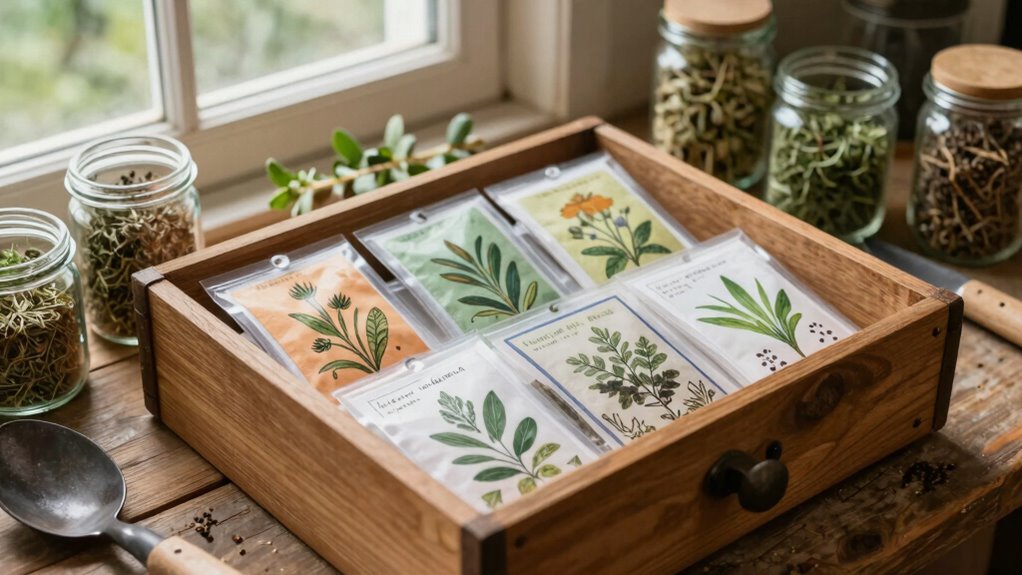

To prepare your seeds for long-term storage, keep them in airtight, opaque containers once they’re thoroughly dry and use desiccants like silica gel to control moisture. Store in a cool, dark place like a refrigerator, avoiding temperature fluctuations that can harm viability. Regularly check the seeds’ condition and perform germination tests to guarantee success. Want to learn more about maintaining a reliable seed supply for your garden? Keep exploring for helpful tips.
Listen free for 30 days with Audible
Thousands of audiobooks and originals — cancel anytime.
As an affiliate, we earn on qualifying purchases.
Key Takeaways
- Use airtight, opaque containers with desiccants to keep seeds dry and protected from light and humidity.
- Store seeds in a cool, consistent temperature environment, ideally around 40°F (4°C), such as in a refrigerator.
- Label seed containers with type and date to monitor age and plan timely replacements or germination tests.
- Dry seeds thoroughly before storage to prevent mold, rot, and premature sprouting.
- Regularly check seed viability through germination tests and replace older or less viable seeds accordingly.
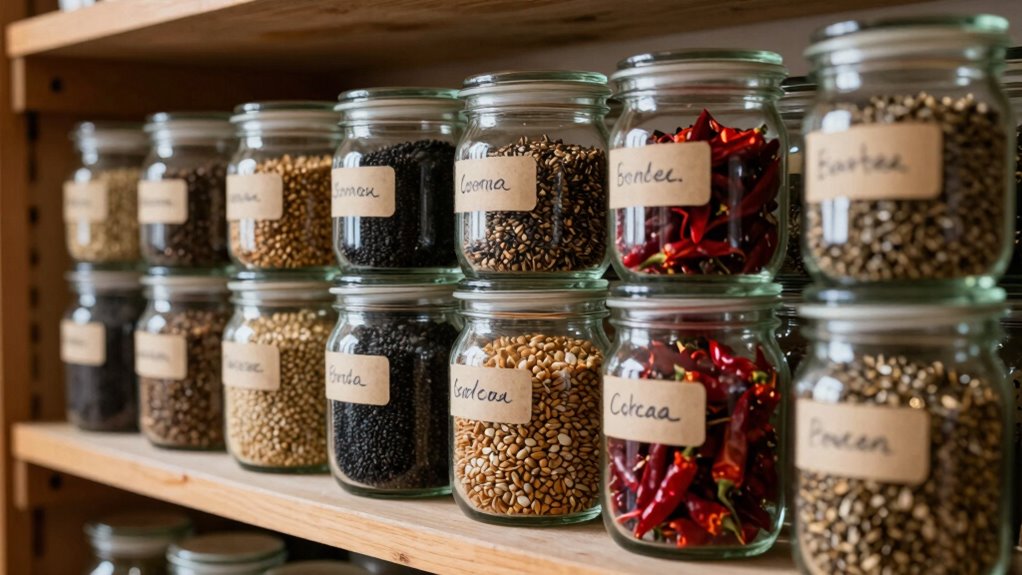
Ever wondered how to guarantee your garden is ready for any season? The key lies in proper seed storage and understanding how to maintain seed viability over time. When you select seeds for your garden, you want to ensure they will sprout when planted, which means paying close attention to seed viability. Seeds lose their ability to germinate as they age, especially if they’re not stored correctly. To prolong their vitality, you need to adopt effective storage techniques that preserve seed quality and prevent deterioration.
The foundation of successful seed storage is choosing the right containers. Airtight jars, sealed plastic bags, or specialized seed storage boxes work well to keep out moisture, which is a primary enemy of seed viability. Before storing, make sure your seeds are completely dry. Excess moisture can lead to mold growth and cause seeds to rot or sprout prematurely. Some gardeners prefer to use desiccants like silica gel packets to absorb any residual humidity inside storage containers. Labeling each container with the seed type and date helps you keep track of your collection’s age, so you can use older seeds first or replace them as needed.
Temperature control is essential for maintaining seed viability. Keep your seeds in a cool, dark place—ideally around 40°F (4°C). Many gardeners use refrigerators for long-term storage because the consistent, low temperature slows down the aging process. Avoid storing seeds in places with temperature fluctuations, like garages or attics, as these can cause condensation inside your containers, damaging the seeds. Light exposure also reduces seed longevity, so storing seeds in opaque containers or in a dark cabinet helps preserve their germination potential. Additionally, proper storage conditions can prevent the development of mold or mildew, further extending seed life.
Proper seed moisture levels are crucial for maintaining seed longevity, as excess moisture can trigger spoilage and reduce germination rates. Additionally, understanding the behavior of different seed types over time can help you plan better storage strategies. Some seeds, like those of beans and corn, can remain viable for only a year or two. Others, such as tomatoes or herbs, may last several years if stored properly. Regularly testing seed germination by planting a few seeds before planting a large batch ensures you’re not surprised by poor sprouting rates later. Furthermore, maintaining an organized seed collection with proper storage conditions can significantly extend seed viability. Proper storage combined with diligent seed viability checks ensures your seed collection stays healthy, giving you a reliable start for every planting season.
seed storage airtight containers
As an affiliate, we earn on qualifying purchases.
As an affiliate, we earn on qualifying purchases.
Frequently Asked Questions
How Do I Prevent Seed Spoilage During Storage?
To prevent seed spoilage during storage, you should start by thoroughly cleaning your seeds to remove dirt and debris, which can cause mold. Make sure they are completely dry before storing. Use airtight containers to prevent moisture and pests from entering. Incorporate pest prevention measures like silica gel packets or natural repellents. Store seeds in a cool, dark place to slow down deterioration, keeping your seeds viable for future planting.
What Are the Best Containers for Seed Preservation?
You should choose airtight, moisture-proof containers like glass jars with tight-fitting lids or metal tins to preserve seed quality. Many worry about plastic leaching chemicals, but high-quality, food-grade plastic containers also work well. When selecting seeds, prioritize those suited for your climate. Using the right container materials guarantees your seed selection remains viable, preventing spoilage and keeping your garden ready for planting season.
How Long Can Seeds Be Stored Effectively?
Seeds can be stored effectively for varying durations, typically from 1 to 10 years, depending on the type. You should know that seed aging causes a germination decline over time, especially if stored improperly. To maximize longevity, keep seeds in cool, dark, and dry conditions. With proper storage, you can maintain good germination rates longer, but always test older seeds before planting to confirm viability.
Should I Store Seeds in the Refrigerator or Freezer?
You should store seeds in the freezer for ideal seed germination and preservation, especially for long-term storage. Freezing maintains consistent low temperatures, which help prevent moisture and temperature fluctuations that can harm seeds. Use airtight containers or vacuum-sealed bags to guarantee proper storage conditions. Refrigerators can work for short-term storage, but freezers are better for long-term seed viability, keeping your seeds ready when you’re ready to plant.
How Do I Test Seed Viability Before Planting?
Testing seed viability is like checking if a spark will ignite. You can do a simple germination test by placing 10-20 seeds between moist paper towels and keeping them warm. After a week or two, count how many sprout; if over 70% do, your seeds are viable. This germination testing helps you overcome seed dormancy doubts, ensuring your garden gets a strong start.
Conclusion
By properly storing seeds and staying prepared, you guarantee your garden grows gracefully year after year. Remember, diligent diligence in details delivers dependable, delicious dividends. With careful care, your seeds stay strong, sprouting spectacularly season after season. Stay steadfast in your storage strategies, and your garden’s greatness will grow gradually, guaranteeing grand, glorious greenery long-term. So, stay savvy, store smartly, and savor the success of a sustained, splendid seed supply!
Flea & tick season Picks
flea and tick prevention
As an affiliate, we earn on qualifying purchases.