TL;DR

Get garden gear delivered free with Prime
- Fast, free delivery on millions of items
- Prime Video, Amazon Music and more included
- Member-only deals all year
A gardening report from Planet Natural says cool air, damp soil and sheltered hiding places can favor slug activity in fall beds, putting newly planted seedlings at risk. It recommends checking for slugs first, then prioritizing small plants with targeted cleanup, barriers and, if needed, label-compliant bait.
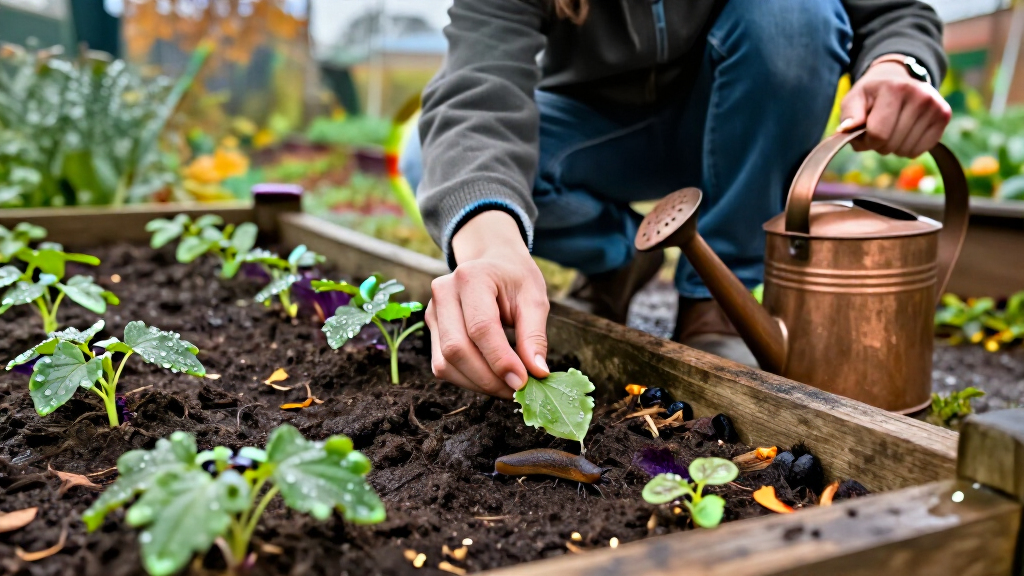
Planet Natural’s fall gardening report says cool air, damp soil and leaf litter can create conditions in which slugs feed around tender seedlings, sometimes removing much of a new plant’s leaf area overnight. The report advises gardeners to confirm slug activity before treating and focus protection on young starts rather than trying to eliminate every hole in mature leaves.
The report recommends checking plants after dusk or early in the morning, when slugs may be active. Look along the soil line, beneath low leaves and around bed edges; a silvery slime trail can be a clue, although rain may make it hard to see. A small board or folded damp newspaper placed near affected plants can serve as daytime shelter and be checked at dawn.
Planet Natural distinguishes between new seedlings and established plants. Newly planted lettuce, bok choy, kale and other greens can be badly set back if a slug removes their growing tip or most of their leaf area. Mature kale with a healthy center may tolerate some ragged outer leaves. The report suggests replacing a seedling whose center is gone when the season and local frost window allow, while protecting plants that retain an intact growing point.
For prevention, the report recommends clearing wet debris, empty pots and boards from beside vulnerable rows, and pulling heavy mulch back a few inches from new stems until they are established. Drip irrigation or a soaker hose can limit wetting across the bed surface; where overhead watering is used, morning watering gives foliage and soil more time to dry before evening. These steps reduce shelter and persistent dampness but do not make a bed slug-proof.
Why Seedlings Need Priority
The report’s central distinction is practical: the same feeding damage has different consequences depending on a plant’s stage. A well-rooted crop may continue growing despite a few holes, while a newly transplanted seedling has less leaf area to lose and may have its growing tip damaged. Checking the youngest plants first helps gardeners direct time and protection where they are most likely to prevent a lost start.
Targeted measures also avoid treating an entire bed when only a few plants are at immediate risk. A short evening inspection, removal of nearby hiding places and a barrier around selected starts can be more proportionate than responding to every damaged leaf with a product.
As an affiliate, we earn on qualifying purchases.
Fall Beds Create Slug Shelter
Planet Natural attributes fall slug activity to a combination of cool conditions and persistent moisture, along with low light and sheltered places such as leaf litter, boards, pots and dense mulch. Those conditions can let slugs move and feed while young plants are especially exposed. The report describes this as a garden-management issue rather than evidence that every instance of leaf damage comes from slugs.
Irregular, ragged holes, scraped or windowed patches on thin leaves, missing cotyledons and slime trails can support the diagnosis. The report recommends checking at night or near dawn because daytime inspection may miss slugs under cover. It also cautions against broad cleanup that leaves the whole garden bare: the proposed changes focus on the immediate seedling zone.
What a Garden Check Can Confirm
The supplied report gives general gardening guidance, not measured findings about slug numbers, crop losses or how much any single intervention reduces damage. Local conditions and results will vary, and a damaged leaf alone does not establish that slugs caused it. A dusk or dawn inspection, slime trails and a check beneath nearby shelters can help establish whether slugs are active.
The source text supplied for this article ends partway through its advice on slug and snail bait. It says to use bait only after confirming continuing activity and to select a product labeled for slugs and snails and for the crop or site being treated, following its label. It does not provide the remainder of those directions, product-specific guidance or details about local rules. Gardeners should rely on the complete product label for permitted use, application and safety precautions.
Check Again Before Escalating
The report recommends following cleanup or barrier work with another evening check, rather than treating on a fixed schedule. Gardeners can inspect the most vulnerable starts, lift a board trap at dawn and see whether fresh feeding or active slugs remain. If activity continues and seedlings are still threatened, the report says a labeled bait may be considered; physical protection and hand collection remain options for small areas.
For any pesticide or bait, use it only in accordance with its label, including the listed site, crop, placement and rate. Keep products away from children and pets as directed by the label, and use any protective equipment it specifies. The supplied source does not identify a particular bait or provide product-specific application instructions.
Key Questions
How can I tell if slugs are eating my seedlings?
Look for irregular, ragged holes, scraped or windowed patches, missing young leaves and silvery slime trails. Check after dusk or early in the morning, including under low leaves and near the soil line.
Should I protect mature kale as well as new starts?
The report recommends prioritizing new seedlings. Established kale with a healthy center may keep growing despite some damaged outer leaves, while a young plant can be set back if its growing tip is lost.
Do copper barriers work in a fall bed?
Planet Natural says a continuous, clean copper band can discourage slugs around a few plants or containers. Leaves, mulch, tubing or nearby stems should not bridge the barrier. The report describes it as a targeted option, not a guaranteed defense for a whole plot.
When should I consider slug bait?
The report says to consider bait only when slug activity is confirmed and damage continues to threaten seedlings despite cleanup and barrier measures. Choose a product labeled for slugs and snails and for the crop or site, and follow its label exactly.
Source: rss
Halloween Picks
halloween
As an affiliate, we earn on qualifying purchases.