
If you’re comparing a solar still and a transpiration bag for extracting water from plants, the solar still uses sunlight to evaporate water from environmental sources, while the transpiration bag captures water directly from plant leaves. The still is effective for collecting from soil or contaminated sources but takes longer and depends on sunlight. The transpiration bag offers quicker access to plant water, but only where lush plants grow. Keep going to discover how both methods work best in different situations.
Key Takeaways
- Solar stills evaporate environmental water sources, while transpiration bags collect water directly from plant transpiration.
- Solar stills require sunlight and specific design, whereas transpiration bags depend on healthy, active plants.
- Stills can produce cleaner water from contaminated sources, but are slower; transpiration bags offer quick water from plants.
- Efficiency of solar stills hinges on sunlight intensity and setup; transpiration bags depend on plant health and environmental conditions.
- Combining both methods enhances self-sufficiency in water collection during outdoor or emergency situations.
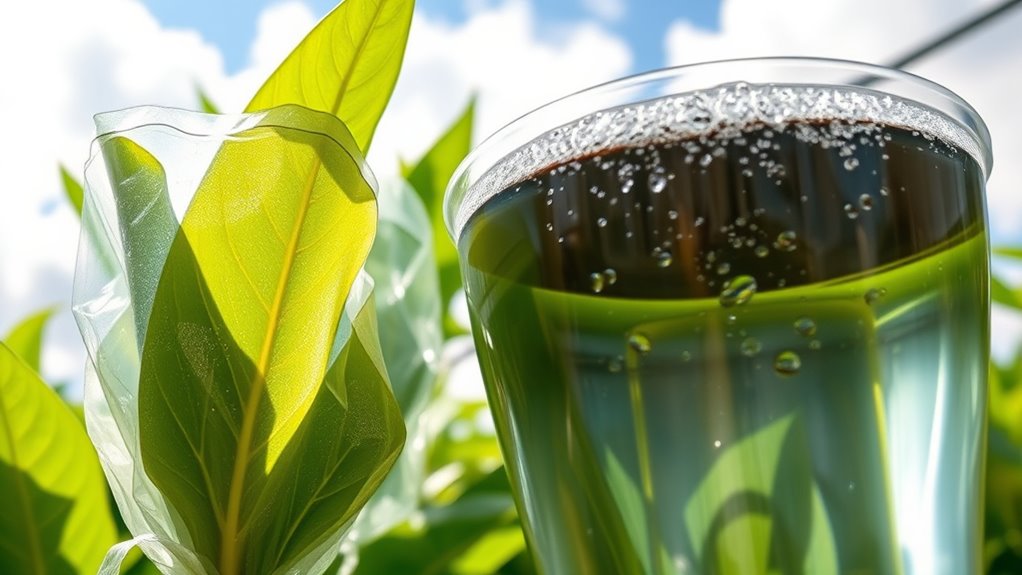
When it comes to collecting freshwater from natural sources or during emergencies, two popular methods are solar stills and transpiration bags. Both techniques harness natural processes to provide you with crucial water, but understanding their differences can help you choose the best approach for your situation. If you’re seeking liberation from dependency on external supplies, mastering these methods puts control back into your hands. You’ll want to contemplate evaporation efficiency and plant water loss, as these factors directly influence how much water you can extract and how sustainable the process is.
Mastering solar stills and transpiration bags empowers your survival with sustainable water collection techniques.
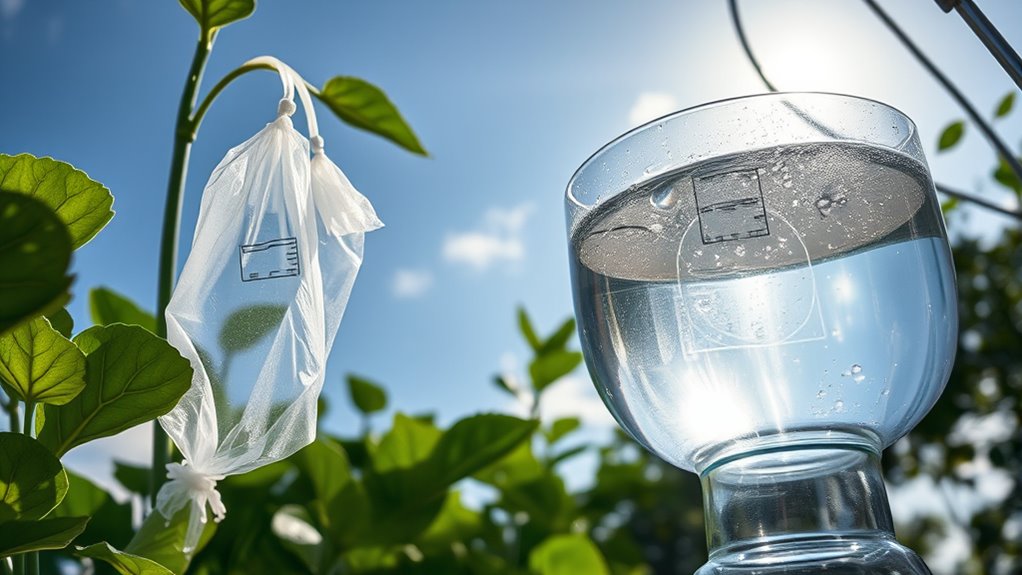
A solar still works by trapping sunlight to evaporate water, which then condenses into a collection basin. It’s an effective, low-tech solution that relies on evaporation efficiency—the rate at which water turns into vapor and then condenses. When you set up a solar still, you’re essentially accelerating natural evaporation, but it’s important to optimize conditions to maximize output. The efficiency depends on factors like sunlight intensity, temperature, and the design of the still itself. When properly built, solar stills can produce a steady supply of clean water, but they also have limitations. They don’t extract water from plants directly, so they’re best suited for collecting from bodies of water, soil moisture, or even contaminated sources. Additionally, solar stills typically require sunlight and time to produce water, making them less effective in cloudy or shaded environments.
Transpiration bags, on the other hand, tap into the natural process of plant water loss. When you wrap a bag around a leafy branch, the plant transpires—releasing water vapor through tiny openings called stomata. This vapor collects inside the bag, which you can then open and extract. The efficiency here depends heavily on the plant’s transpiration rate, which varies by species, temperature, humidity, and plant health. Transpiration bags are particularly useful if you’re in a forest or lush environment, as they allow you to harvest water directly from living plants. They’re a form of passive harvesting, turning the plant’s natural water loss into a resource. However, keep in mind that excessive transpiration might weaken the plant or cause stress, so moderation is key.
Both methods emphasize plant water loss, but they do it differently. Solar stills don’t involve plants directly, instead relying on the environment’s evaporation. Transpiration bags leverage the plant’s natural water output, making this method more sustainable in green areas. If your goal is liberation from relying solely on external supplies, understanding these distinctions empowers you to adapt your approach. Using transpiration bags can supplement your water needs with minimal equipment, especially if you’re in a green space, while solar stills provide a more universal solution, particularly when water sources are scarce or contaminated. In either case, optimizing evaporation efficiency and managing plant water loss are key to maximizing your water yield and maintaining your independence in survival or emergency scenarios. Developing a knowledge of water collection techniques and their applications can significantly improve your self-sufficiency in outdoor or emergency situations.
Top picks for "solar still transpiration"
Open Amazon search results for this keyword.
As an affiliate, we earn on qualifying purchases.
Frequently Asked Questions
Can Solar Stills Operate Effectively in Cloudy Weather?
Solar stills can still operate in cloudy weather, but their efficiency drops because they rely on sunlight to produce vapor. When clouds block the sun, less heat is available to evaporate water, so you won’t get as much clean water. However, they still work to some extent, giving you a chance to gather water even in less sunny conditions. Keep in mind, sunny days maximize your solar still’s performance.
What Plants Are Best Suited for Transpiration Bag Water Collection?
You should choose plants with high water absorption and transpiration rates, like willows, poplars, or certain vines. These plants release more water vapor, making them ideal for transpiration bag collection. Select healthy, mature plants that are well-suited to your environment for better water yield. By focusing on plant selection, you can maximize water recovery, giving you the freedom to gather clean water naturally and sustainably.
How Does Temperature Affect Water Yield in Both Methods?
Temperature markedly influences water yield in both methods. As temperature rises, solar efficiency improves, boosting evaporation rates. In solar stills, higher temperatures accelerate water vapor conversion, increasing collection. For transpiration bags, elevated temperatures enhance plant transpiration, yielding more water. However, extreme heat can reduce efficiency by causing excessive evaporation or stress. Understanding this temperature influence empowers you to optimize water collection, giving you greater independence from traditional sources.
Are There Safety Concerns Using Transpiration Bags With Edible Plants?
Think of transpiration bags as delicate whispers of nature, but safety is your shield. Using transpiration bag safety with edible plants isn’t inherently risky if you guarantee the bags are clean and free from contaminants. Edible plant safety depends on proper handling, avoiding pesticides, and monitoring for mold. By prioritizing these steps, you free yourself from worry, embracing the pure, life-giving water without fear—your liberation begins with cautious care.
What Is the Cost Comparison Between Solar Stills and Transpiration Bags?
You find that solar stills tend to be more expensive upfront, but their long-term economic feasibility can outweigh initial costs with consistent water production. Transpiration bags are cheaper and easy to set up, making them a cost-effective choice for short-term use. Your cost analysis shows that if you seek liberation through affordable, sustainable water sources, transpiration bags offer an accessible solution, while solar stills suit those willing to invest for greater water yield.
Conclusion
In the battle for pure water, solar stills and transpiration bags each have their strengths. Think of the solar still as a gentle rainmaker, harnessing the sun’s power, while the transpiration bag acts like a thirsty plant’s whisper, collecting moisture through nature’s process. Both methods are valuable tools in your water-saving toolkit, offering a sustainable way to quench your thirst. Whichever you choose, remember that nature’s way of sharing water is truly a gift from the Earth itself.