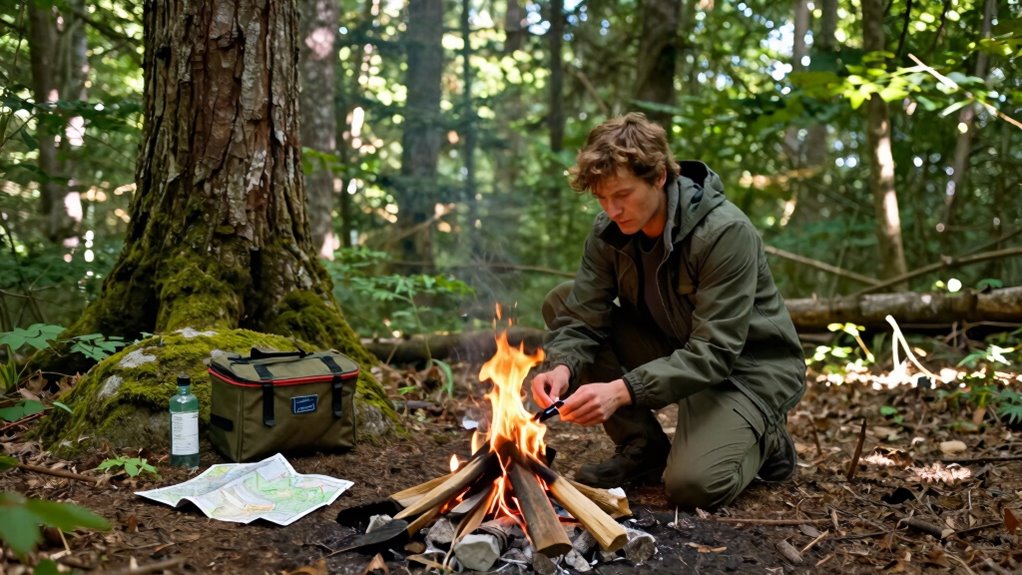

Start by securing your most crucial needs: water and shelter. Find a safe water source first, ensuring it’s clean by filtering or boiling it. Construct a simple shelter to protect yourself from weather, insects, and animals. Avoid foraging until these essentials are safe and in place, as this prevents illness, dehydration, and exposure. Once your core needs are met, you can focus on gathering food confidently, with more tips on effective survival strategies ahead.

Get garden gear delivered free with Prime
- Fast, free delivery on millions of items
- Prime Video, Amazon Music and more included
- Member-only deals all year
Key Takeaways
- Secure water sources and ensure water safety through filtration or boiling.
- Build shelter promptly to protect from weather and environmental hazards.
- Address immediate safety concerns, such as avoiding dangerous animals or unstable terrain.
- Assess surroundings for the safest, most accessible resources before foraging.
- Focus on core needs—water and shelter—before attempting to gather food.
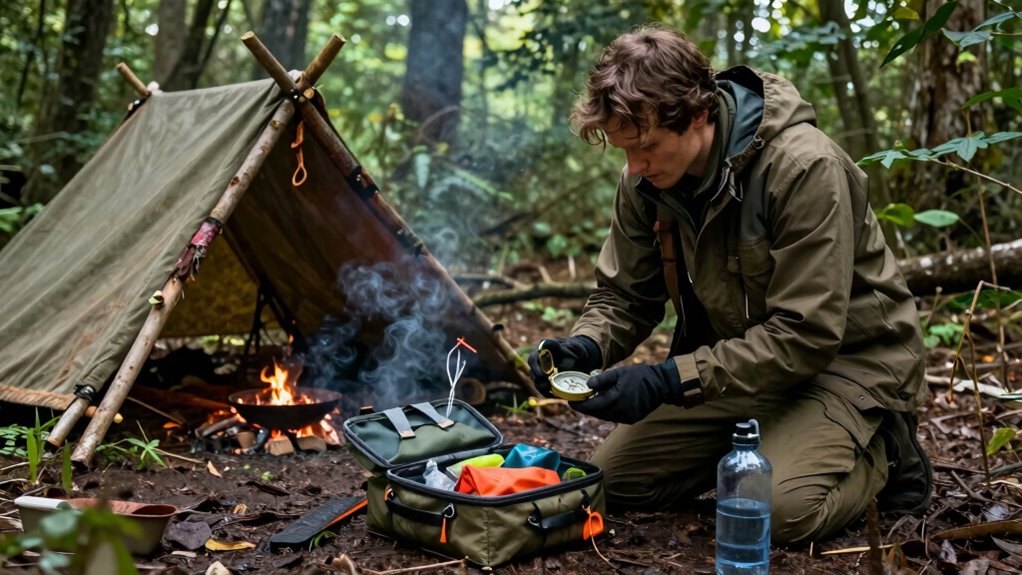
When faced with a survival situation, knowing how to prioritize tasks can mean the difference between life and death. Your first focus should be on securing essential needs—water, shelter, and safety—before anything else. Without water, your body dehydrates quickly, impairing your ability to think clearly and function. Water procurement becomes your top priority because staying hydrated is critical. Look for natural sources like streams, rivers, or rain catchments. If water isn’t immediately accessible, collect dew or moisture from plants, and consider using a makeshift solar still or boiling water if you have the means. Ensuring a safe water supply prevents dehydration and allows you to maintain energy for other survival tasks. Sustainable textile care techniques can even be applied to create makeshift water filters or clothing that helps retain moisture in survival gear. Additionally, understanding water filtration methods can significantly improve your chances of making contaminated water safe to drink. Knowing how to identify safe water sources is also crucial, as some natural sources may contain harmful contaminants that can worsen your situation. Recognizing how to use natural materials for filtration can make a substantial difference in your survival prospects.
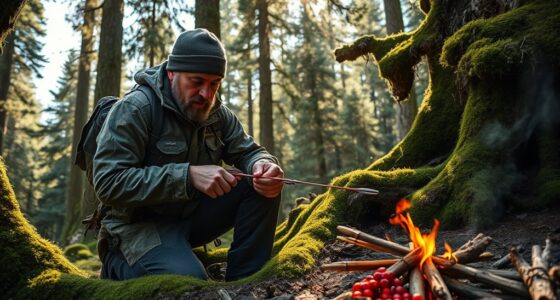
Next, you need to think about shelter construction. Exposure to the elements can sap your strength and increase the risk of hypothermia or heat stroke, depending on the climate. Building a shelter should be your second priority because it provides protection from weather, insects, and animals. Use natural materials like branches, leaves, and grasses to create a basic but effective shelter. Find a sheltered spot—perhaps under a sturdy tree or against a hillside—to reduce wind and rain exposure. Constructing a shelter quickly keeps you protected from environmental hazards and gives you a stable base for further survival activities. It also helps conserve your body heat or keep you cool, depending on the conditions. Being aware of family photoshoot fails and unpredictable situations can teach you to adapt quickly and avoid common mistakes that might compromise your safety. Incorporating natural landscaping principles can help you design a more effective and sustainable shelter that blends into the environment.
Once you have water and shelter secured, you can shift your attention to other needs like signaling for help, gathering food, or navigation. But remember, without water and shelter, your chances of survival diminish rapidly. Always assess your environment for the safest and most effective ways to meet these core needs first. Have a clear plan: locate water sources early, then build shelter to protect yourself from the elements. Be resourceful—use what’s around you, and adapt your strategies as the situation changes. Prioritizing these tasks ensures you’re taking care of your most vital needs, giving you the best chance to stay alive and stay focused on foraging or finding rescue. In survival, seconds count, and knowing what to do first can make all the difference.
Popular right now

Philips 3300 Series Fully Automatic Espresso Machine with LatteGo Milk System

Dreame L50 Ultra Robot Vacuum and Mop

Dyson V8 Cyclone Cordless Vacuum
As an affiliate, we earn on qualifying purchases.
Frequently Asked Questions
What Are the Most Critical Survival Tasks in Extreme Weather?
In extreme weather, your top priorities are shelter construction and water sourcing. You need to quickly build or find shelter to protect yourself from harsh elements and prevent hypothermia or heatstroke. Simultaneously, locate a water source to stay hydrated, as dehydration worsens survival chances. Focus on these tasks first to stabilize your situation, then move on to foraging or other survival activities. Staying protected and hydrated is essential to endure extreme conditions.
How Do I Prioritize Tasks During a Medical Emergency?
In a medical emergency, you’re the hero, so act quickly. First, assess the situation and provide basic first aid—stop bleeding, perform CPR if needed, and address breathing issues. Simultaneously, signal signaling by using a whistle or mirror to attract help. Prioritize tasks based on severity, focusing on life-threatening conditions first. Staying calm and organized helps you make swift decisions, ensuring you maximize chances of survival.
What Tools Are Essential for Prioritizing Survival Tasks?
You need essential tools like shelter essentials—such as a tarp or tent—and navigation tools like a compass or GPS device. These help you secure a safe shelter first and find your way if you’re lost. Prioritizing survival tasks involves using these tools efficiently to establish safety, prevent hypothermia, and locate help. Always carry these items in your survival kit, ensuring you can address immediate needs before foraging or exploring further.
How Does the Environment Influence Task Prioritization?
The environment heavily influences your task prioritization through environment assessment and resource management. You need to evaluate hazards, climate, and available resources quickly to determine what tasks are urgent. If water is scarce, securing hydration takes precedence. In colder climates, maintaining warmth becomes critical. By understanding your surroundings, you can adapt your priorities, focusing on survival tasks that address immediate threats and conserve resources effectively.
When Should I Reconsider My Survival Priorities?
Like a ship steering through shifting seas, you should reconsider your survival priorities when mental resilience wanes or resources run dangerously low. When stress clouds your judgment or you notice resource management faltering, it’s time to reassess. Staying adaptable ensures you address pressing needs first. Keep an eye on your mental state and resource levels, adjusting your priorities as circumstances evolve, to maximize your chances of survival.
Conclusion
Remember, in survival, you’re the captain steering through stormy seas. When I once faced a night lost in the woods, tending to my shelter first was like patching a leaky boat—crucial before venturing further. Prioritize your tasks like a skilled sailor; secure your safety first, then explore. Focusing on immediate needs guarantees you’ll weather the storm and reach calmer waters. Stay calm, stay smart, and keep your priorities clear.