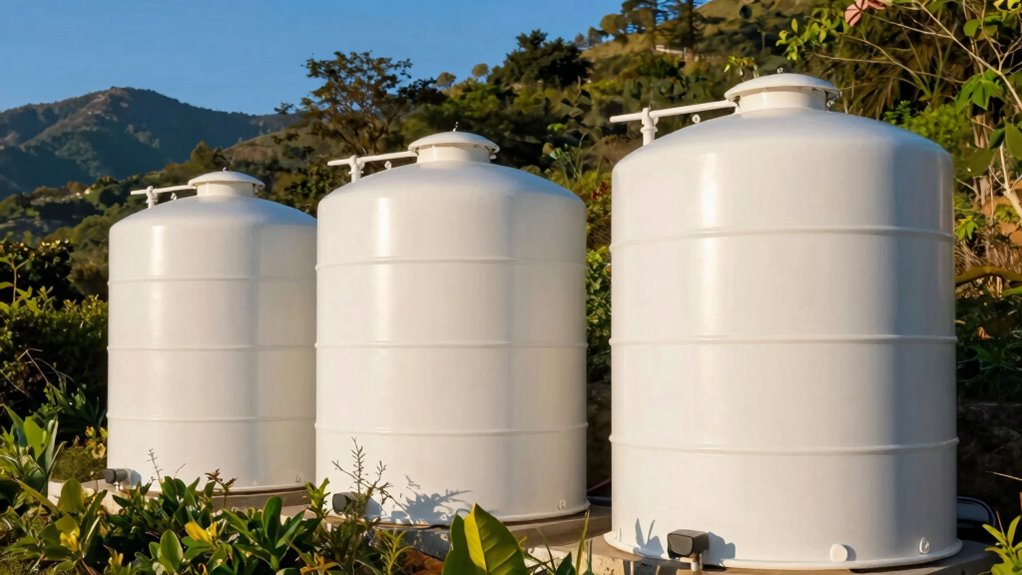

Water tanks are essential in off-grid planning because they guarantee you have a steady water supply during dry spells and support sustainable living. They allow you to harvest rainwater, which reduces reliance on external sources and helps conserve resources. Choosing the right material and size boosts durability and safety. Proper maintenance keeps water quality high. If you keep exploring, you’ll discover how to optimize your water storage system for your specific needs.

Get garden gear delivered free — and shop member deals
- Fast, free delivery on millions of items
- Access to Prime Big Deal Days deals on October 6–7
- Prime Video, Amazon Music and more included
Key Takeaways
- Provide a reliable water supply independent of municipal infrastructure.
- Enable rainwater harvesting to maximize natural resources.
- Offer storage capacity during dry seasons or droughts.
- Support water conservation and efficient management.
- Enhance off-grid resilience and self-sufficiency.
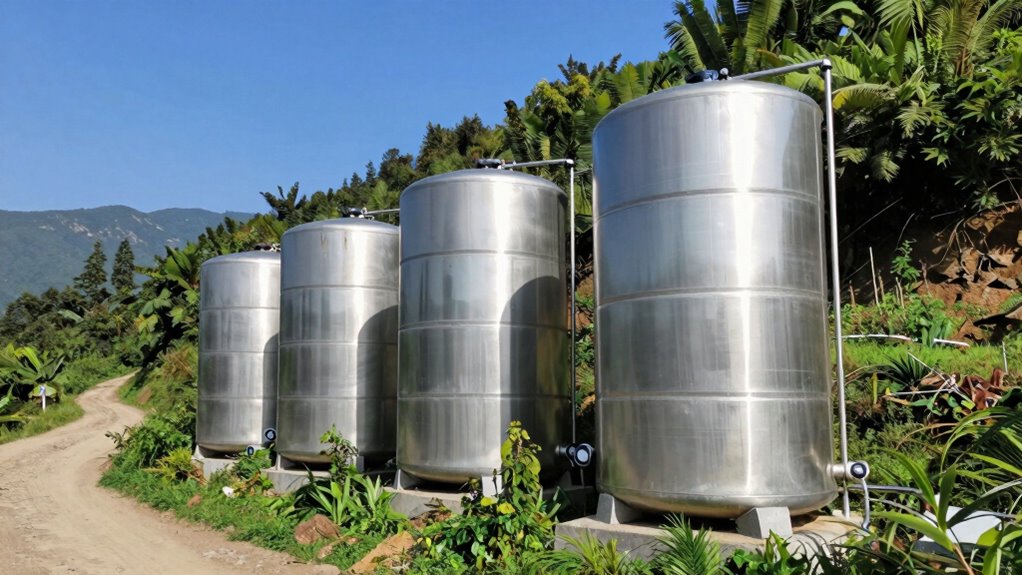
When planning an off-grid lifestyle, water tanks become an essential component for guaranteeing a reliable water supply. Without access to municipal water systems, you need a system that captures, stores, and provides water consistently. Rainwater harvesting is a practical method to achieve this, allowing you to collect rainwater directly from your roof or other surfaces. Installing a water tank for rainwater harvesting means you can turn a natural resource into a dependable water source, especially during dry spells or droughts. But beyond just collecting water, choosing the right tank material plays a pivotal role in the success and longevity of your off-grid water system.
Tank material choices impact durability, maintenance, and safety. Common options include plastic, concrete, and metal. Plastic tanks are lightweight, affordable, and resistant to rust and corrosion, making them a popular choice for rainwater harvesting systems. They come in various sizes and shapes, fitting into tight spaces and easy to install. On the other hand, concrete tanks are extremely durable and can last for decades. They are less susceptible to UV damage and temperature fluctuations, but they’re heavier and more challenging to move or install. Metal tanks, typically made of galvanized steel, are sturdy and long-lasting but may require additional coating or lining to prevent rust, especially if you’re storing rainwater or other untreated sources.
Including water tanks in your off-grid setup enhances your resilience by providing a buffer against water shortages. You can store rainwater collected during heavy rainfall, ensuring you have enough water during dry periods. This storage capacity also allows you to manage water usage more effectively, reducing waste and maximizing your resources. Furthermore, tanks can serve multiple purposes, such as supplying water for drinking, cooking, gardening, or even small-scale livestock. When selecting a tank, consider factors like the local climate, roof catchment area, and your water needs to determine the appropriate size and material.
Properly maintained tanks are essential to prevent contamination and guarantee water quality. Regular cleaning, first-flush diverters for rainwater harvesting, and secure covers help keep your stored water safe. Integrating rainwater harvesting with well-chosen tank materials creates a sustainable and reliable off-grid water system that supports your self-sufficient lifestyle. Ultimately, water tanks are more than just containers; they are indispensable elements that bring security, independence, and resilience to your off-grid planning.
As an affiliate, we earn on qualifying purchases.
Frequently Asked Questions
How Do I Calculate the Right Water Tank Size for My Needs?
To calculate the right water tank size, start by estimating your daily water needs, including drinking, cooking, cleaning, and laundry. Consider your water supply planning, factoring in rainwater catchment or storage capacity. Don’t forget tank insulation, especially if you live in extreme weather, to prevent freezing or overheating. Choose a tank that can store at least a few days’ worth of water, ensuring you have enough reserve during dry spells or supply disruptions.
What Materials Are Best for Durable, Long-Lasting Water Tanks?
A stitch in time saves nine, and choosing the right materials guarantees your water tank lasts. For durability, consider high-density polyethylene (HDPE) or reinforced concrete—both resist corrosion and weather damage. They’re ideal for tank installation, providing strength and longevity. Metal tanks, like stainless steel, also work well but can be pricier. Prioritize material durability to prevent frequent replacements and ensure a reliable water supply in your off-grid setup.
How Often Should I Clean and Maintain My Off-Grid Water Tank?
You should clean your off-grid water tank at least once every six months to maintain water quality and extend its lifespan. Regular maintenance involves draining the tank, scrubbing it with a brush, and disinfecting with a safe solution. Keeping the tank clean prevents algae, bacteria, and sediment buildup, ensuring safe water for use. Proper upkeep not only improves water quality but also markedly increases your tank’s durability over time.
Can Water Tanks Be Integrated With Rainwater Harvesting Systems?
You can definitely integrate water tanks with rainwater harvesting systems; in fact, over 60% of off-grid setups depend on this combo. Proper rainwater filtration guarantees clean water, while strategic tank placement minimizes contamination risks. Position your tank in shaded, well-drained spots near catchment areas. This integration maximizes water efficiency, reduces dependence on external sources, and makes your off-grid living more self-sufficient.
What Are the Costs Associated With Installing a Water Tank?
You’ll find that installing a water tank involves costs for the tank itself, installation, and ongoing maintenance. Water quality is vital, so investing in a tank with proper filtration helps guarantee safe water. Tank security is also important to prevent contamination or theft, especially in remote areas. Overall, budgeting for quality materials and secure features helps protect your water supply while maintaining safe, clean water for off-grid living.
Conclusion
As you plan your off-grid life, water tanks stand as silent guardians, holding the promise of sustainability amid the chaos of nature. They’re your reservoir of hope during dry spells, a calm lake in the desert of uncertainty. Without them, your retreat might feel like a fragile boat on turbulent waters—vulnerable and unsteady. But with water tanks, you anchor yourself in resilience, turning fleeting rain into a steady stream of life’s essential flow.
Fall Picks
fall essentials
As an affiliate, we earn on qualifying purchases.