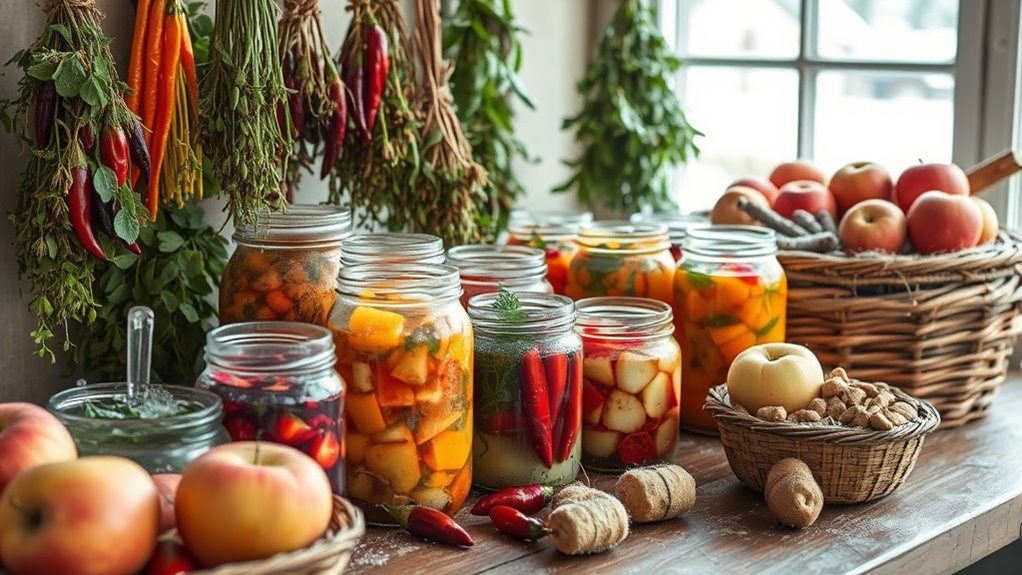

To preserve food in cold weather, you can use natural methods like drying, cellaring, and fermenting. Carve out cool, dark spaces in your home to create a root cellar for storing hardy produce and root vegetables, extending freshness without electricity. You can also ferment vegetables and dairy to make probiotic-rich, shelf-stable foods that develop complex flavors. Mastering these techniques helps you enjoy seasonal harvests year-round and boosts your self-sufficiency—stay tuned for more tips on each method.

Get garden gear delivered free with Prime
- Fast, free delivery on millions of items
- Prime Video, Amazon Music and more included
- Member-only deals all year
Key Takeaways
- Utilize indoor root cellars to store hardy produce in cool, dark, and humid conditions for extended freshness.
- Ferment vegetables and dairy during winter to produce shelf-stable, probiotic-rich foods without electricity.
- Maintain consistent temperature and humidity in storage spaces to prevent spoilage and optimize preservation.
- Organize fermentation setups with proper lighting and monitoring to ensure safety, flavor development, and success.
- Combine drying, cellaring, and fermenting techniques for a comprehensive, sustainable cold-weather preservation strategy.
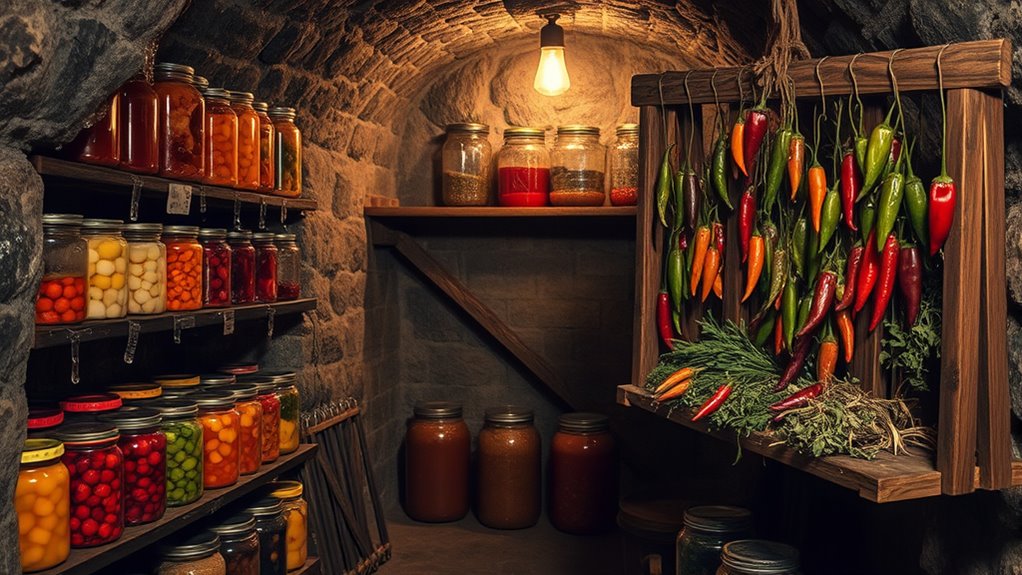
When the temperatures drop, preserving your food becomes essential to prevent spoilage and waste. But it’s more than just about avoiding discard; it’s about reclaiming control over your sustenance, embracing self-sufficiency, and living freely beyond the confines of supermarket shelves. Indoor root cellars and winter fermentation techniques are powerful tools in this pursuit, giving you the means to store and transform your harvest with confidence and independence.
An indoor root cellar isn’t just a makeshift storage space; it’s a sanctuary of preservation right in your home. You can carve out a cool, dark corner—perhaps in a basement, closet, or even a large cabinet—and turn it into a year-round food vault. The key is maintaining consistent, cool temperatures and high humidity, which slow down spoilage and keep root vegetables, apples, and other hardy produce fresh for months. Think of it as your personal food bank, where you control the conditions and extend the life of your bounty without relying on electricity or commercial packaging. This approach liberates you from the cycle of constant shopping, reducing waste and allowing you to enjoy seasonal flavors long after harvest.
Winter fermentation techniques further elevate your food preservation game. Fermentation isn’t just about making sauerkraut or kimchi; it’s a way to discover nutrition, develop complex flavors, and create a shelf-stable product that empowers you. During colder months, natural fermentation thrives because cold temperatures slow down the process, giving you more control and less risk of spoilage. You can ferment vegetables, dairy, or even beverages, transforming fresh ingredients into tangy, probiotic-rich foods that support your health and independence. The beauty of winter fermentation is that it’s adaptable and forgiving—once you understand the basics, you can experiment with different flavors and textures, making each batch uniquely yours. Additionally, understanding the importance of color accuracy and proper lighting conditions can help you better organize and monitor your fermentation environment for optimal results.
Frequently Asked Questions
What Are the Best Tools for Drying Seasonal Produce?
You’ll want a good food dehydrator with adjustable temperature controls for ideal air circulation. Combine it with a fan to boost airflow and reduce drying time. Using dehumidifiers in your space helps keep humidity low, preventing mold. These tools give you the freedom to preserve seasonal produce effortlessly, so you can enjoy your harvest year-round without relying on store-bought options. Embrace the process and take control of your food preservation.
How Do I Prevent Mold During Cellaring?
Prevent mold during cellaring by maintaining meticulous moisture control. Keep the environment dry and well-ventilated to discourage dampness and mold multiplication. Regularly inspect stored produce, removing any signs of spoilage. Use breathable containers and avoid overpacking, which traps moisture. By balancing airflow and moisture, you free your produce from mold’s menace, empowering you with pristine, preserved harvests that flourish freely, free from the fears of mold’s meddlesome menace.
Which Fruits Ferment Best in Cold Weather?
You’ll find that hardy fruits like apples, pears, and cranberries ferment best in cold weather. Choose ripe, healthy fruit for ideal fermentation, and use sturdy fermentation containers that withstand temperature fluctuations. Cold weather slows fermentation, giving you more control and freedom to experiment with flavors. Embrace the chill, select resilient fruits, and secure your containers well—your homemade fermented delights will thrive in this liberating, cool environment.
How Long Can Preserved Foods Be Stored Safely?
Your preserved foods can last for years if stored properly—it’s like holding a treasure chest of flavor! To prevent spoilage, keep them in cool, dark environments and guarantee airtight seals. Proper storage longevity depends on the method—ferments can last months, dried fruits years, and cellar-kept goods up to a year or more. By doing so, you escape spoilage’s grip and enjoy your bounty whenever you desire, truly liberated from time’s constraints.
Are There Specific Techniques for Preserving Herbs in Winter?
You can preserve herbs in winter through herb drying and winter herb storage techniques. Start by harvesting herbs at their peak, then hang them upside down in a warm, dry, well-ventilated space. For longer storage, consider using airtight containers or freezing herbs in ice cubes. These methods free you from relying on fresh herbs, empowering you to enjoy vibrant flavors all year round, no matter the season.
Conclusion
So, embrace the chilly months and turn them into your preservation powerhouse. Dry, cellar, and ferment with confidence—your bounty will thank you! With these techniques, you could outlast even the harshest winter storms, making your pantry a fortress of flavor. Don’t let the cold scare you away; instead, see it as your secret weapon for creating delicious, long-lasting treasures. Get started now, and watch your food storage skills become legendary!
Halloween Picks
halloween
As an affiliate, we earn on qualifying purchases.