
You can spot wild berries more easily by focusing on simple traits like color, shape, and growth patterns. Look for ripe blackberries and raspberries, which are shiny, plump, and have distinctive thorny or hollow stems. Blueberries are small, round, and grow in clusters on low bushes, while elderberries form dark clusters hanging from fern-like leaves. Knowing these reliable features helps you identify safe options faster—stay tuned to learn more tips for safe foraging.
Key Takeaways
- Focus on berries with bright, distinctive colors like red raspberries and blackberries, which are easy to recognize when ripe.
- Look for familiar shapes such as round blueberries and clustered elderberries in specific habitats.
- Avoid berries with white, yellow, or unripe green hues, as they are often toxic and harder to identify safely.
- Use trusted guides or apps to cross-reference berry features and ensure correct identification.
- Stick to common, well-known berries that grow in accessible areas for simpler, safer foraging.
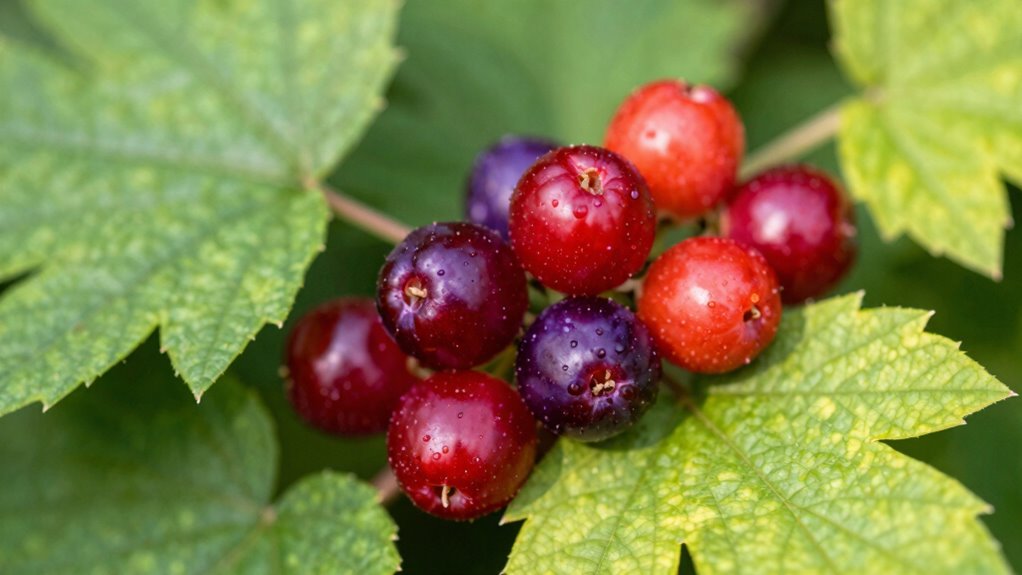
Many wild berries are easier to identify than you might think, even if you’re a beginner forager. The key is to learn a few simple, reliable traits that set edible berries apart from their toxic look-alikes. When you’re starting out, prioritize foraging safety by sticking to berries that have clear, distinctive features. Keep in mind that many wild berries grow in specific habitats, so knowing where to look can boost your confidence and success. The best way to learn is to observe the berries carefully, noting their color, shape, and growth patterns, and then cross-referencing with trusted guides or foraging apps.
Identifying safe wild berries relies on simple traits, careful observation, and trusted guides for a confident foraging experience.
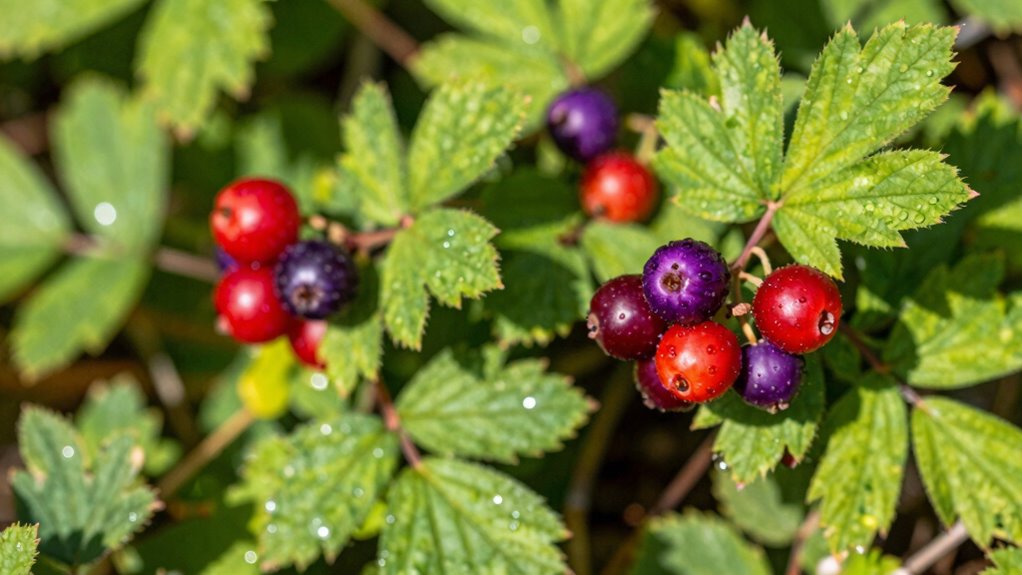
One of the easiest berries to identify is the blackberry. You’ll recognize it by its shiny black or deep purple color and the thorny, sprawling stems. Blackberries are usually found in thickets or along fences, and their berries are plump, juicy, and composed of multiple drupelets. Raspberries are similar, but they tend to be softer, with a hollow core after picking, and they often have a bright red color. Both berries are safe when fully ripe, but be cautious not to mistake unripe berries or other red berries that could be toxic. To maximize your berry harvesting tips, pick only berries that are fully ripe and have a rich color, and avoid any that look shriveled or green.
Another easy-to-identify wild berry is the elderberry. Its clusters of small, dark purple to black berries hang from delicate, fern-like leaves. Elderberries are safe to eat once cooked, but raw berries contain toxins that can upset your stomach. The key to foraging safety with elderberries is to always cook them thoroughly before consumption. Similarly, blueberries are a reliable choice for beginners. They grow on low bushes with smooth, round berries that are deep blue or purple, often with a slight whitish bloom on the surface. Blueberries are widely available and easy to distinguish from other berries because of their size, color, and the way they grow in clusters. Additionally, understanding plant toxicity can help prevent accidental ingestion of dangerous berries, making your foraging experience safer. Learning to recognize edible versus toxic berries is crucial for safe foraging.
As you continue to explore wild berries, stay cautious and avoid berries with white or yellow hues, as many of these are toxic. Recognizing the distinctive features of common edible berries can significantly reduce the risk of misidentification. When in doubt, leave the berry untouched. Using your senses carefully and following these berry harvesting tips helps ensure a safe and enjoyable foraging experience. Remember, patience and attention to detail are your best tools in the wild, turning foraging into a rewarding adventure rather than a risky one.

Wild Berries & Fruits Field Guide of Indiana, Kentucky and Ohio (Wild Berries & Fruits Identification Guides)
As an affiliate, we earn on qualifying purchases.
As an affiliate, we earn on qualifying purchases.
Frequently Asked Questions
Are There Any Legal Restrictions on Foraging Wild Berries?
You should check local regulations before foraging wild berries, as there can be legal restrictions. Many areas require legal permits for foraging, especially in protected parks or reserves. Always stick to designated foraging zones to avoid fines or penalties. Research local laws beforehand, and respect private property. By doing so, you guarantee your foraging activities stay legal and sustainable, helping preserve these natural resources for future foragers.
How Can I Safely Test if a Berry Is Edible?
To safely test if a berry is edible, start by exploring its flavor profiles—sweet, tart, or bitter—to guide your judgment. Foraging safety tips include conducting a skin test by applying a small amount of crushed berry to your skin and waiting for any reaction. Always research specific berries beforehand, and when in doubt, consult a local expert. Remember, cautious exploration keeps you safe and enhances your foraging adventure.
What Are Common Look-Alike Berries to Watch Out For?
You should watch out for common false berries like elderberries, which resemble edible blackberries but can cause stomach upset if mistaken. Berry color variations can be tricky—red or white berries often look tempting but may be toxic. Always double-check for key features, such as leaf shape and stem color, to avoid confusing safe berries with common false berries that could harm you. When in doubt, consult a local expert or field guide.
Can Children Easily Identify Safe Wild Berries?
While it’s charming to think children can easily spot safe wild berries, berry picking safety depends on their age and experience. Young children might struggle with identifying edible berries confidently, so supervision is essential. Follow child foraging tips like teaching them to recognize common safe berries and avoiding look-alikes. Encourage cautious exploration, and always double-check berries before tasting, ensuring safety while nurturing their curiosity about nature’s offerings.
What Is the Best Time of Year to Find These Berries?
You’ll find wild berries best during their peak berry harvesting seasons, which typically fall in late spring through summer. The ideal foraging months vary by region, but generally, late June to August offers the highest chances. During these months, berries are ripe and abundant, making it easier to identify safe options. Keep an eye on local seasonal guides to time your foraging trips perfectly and enjoy fresh, wild berries at their best.
Conclusion
So, sifting through the shrubs and seeking sweet surprises doesn’t have to be stressful. With a little knowledge, you can confidently catch sight of safe, tasty wild berries without succumbing to confusion. Remember, by paying close attention, you’ll avoid risky reds and embrace the bountiful, beautiful berries around you. Trust your taste and take the time to truly identify—because discovering delicious wild wonders is a wonderful, rewarding adventure waiting just outside your door.