You can easily preserve wild foods like berries, roots, mushrooms, and herbs for winter using simple methods. Freezing berries in a tray or canning roots in jars works well, while drying mushrooms and herbs ensures they stay flavorful. Pickling adds tang to roots and some vegetables, and hanging herbs to dry keeps their aroma. Keep exploring to discover more tips and tricks that make winter wild food preservation even simpler.

Get garden gear delivered free with Prime
- Fast, free delivery on millions of items
- Prime Video, Amazon Music and more included
- Member-only deals all year
Key Takeaways
- Berries like blackberries and raspberries are easy to dry or freeze for quick winter use.
- Root vegetables such as carrots and parsnips can be stored in cool, dark places or canned.
- Mushrooms can be dried thoroughly or frozen after cleaning and blanching.
- Herbs like sage and mint dry easily by hanging or can be frozen in ice cubes.
- Wild foods like sunchokes and elderberries are simple to preserve through drying or freezing.

As winter approaches, it’s vital to gather and preserve wild foods now to guarantee a steady supply during the colder months. The key to successful winter foraging is understanding foraging safety—making sure you correctly identify edible plants and fungi, avoid toxic varieties, and harvest responsibly to protect the environment. Once you’ve collected your wild foods, preservation techniques become essential to extend their shelf life and retain nutrients. The easiest wild foods to preserve are those that lend themselves well to common methods like drying, freezing, or canning.
Gather and preserve wild foods now for a safe, tasty winter supply through drying, freezing, and canning.
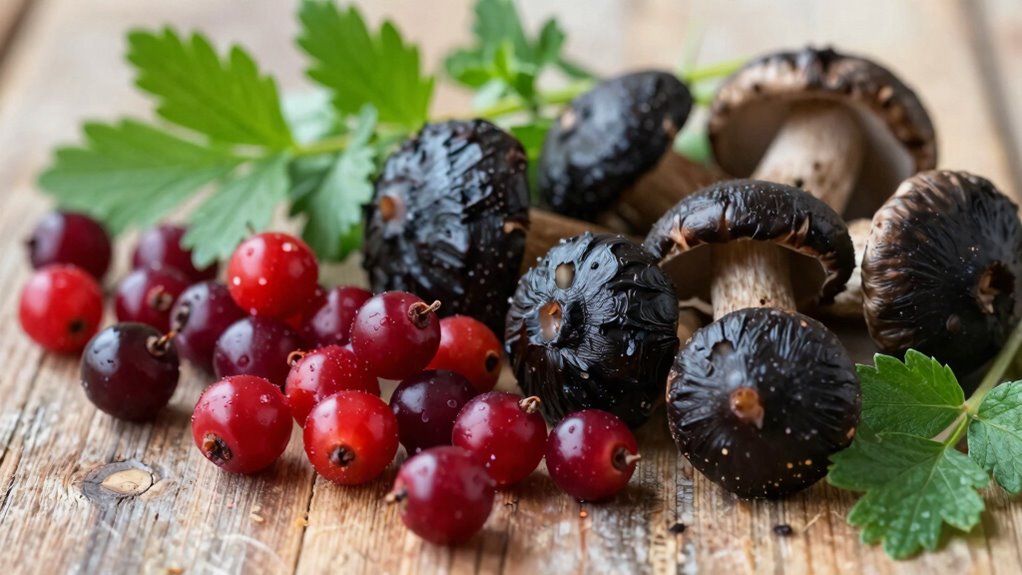
Berries are among the simplest wild foods to preserve. You can gather blackberries, raspberries, or elderberries and either dry them in a dehydrator or on a low-temperature oven. Drying concentrates their flavors and makes for easy snacking or additions to porridge and baked goods. Freezing berries is equally simple—spread them out on a tray to prevent clumping, then transfer to airtight containers or freezer bags. This method preserves their freshness and makes them ready for smoothies, desserts, or sauces during winter. Proper handling during freezing helps maintain their texture and flavor for months.
Root vegetables like wild carrots, parsnips, or sunchokes are also straightforward to preserve. After harvesting, you can store them in a cool, dark place for a few weeks or opt for preservation techniques like canning or pickling. Canning involves boiling the roots in jars with a brine or syrup, creating long-lasting supplies you can enjoy months later. Pickling adds flavor and preserves roots in a tangy solution, perfect for winter snacking or adding to hearty stews. Incorporating knowledge about sustainable harvesting ensures you don’t deplete wild populations and help maintain natural ecosystems, which is a crucial aspect of responsible foraging.
Mushrooms are another wild food that’s relatively easy to preserve, provided you apply proper foraging safety. Only pick mushrooms you can positively identify as safe, and then dry them thoroughly using a dehydrator or oven. Dried mushrooms retain their flavor and are convenient for adding depth to soups and sauces. Some types can also be frozen after cleaning and blanching, but drying is often the simplest and most space-efficient method. Understanding foraging safety and proper identification is vital to prevent poisoning and ensure a safe, sustainable harvest.
Herbs, such as wild thyme, sage, or mint, can be preserved by drying or making herbal infusions. Hang small bundles upside down in a dry, well-ventilated space, and once dried, crumble them into jars for winter use. Alternatively, you can freeze herbs in ice cube trays with water or oil, which makes adding flavor to winter dishes quick and easy. Knowing proper harvesting techniques helps ensure the ongoing health of the plant populations you rely on.
food dehydrator for drying wild mushrooms and herbs
As an affiliate, we earn on qualifying purchases.
As an affiliate, we earn on qualifying purchases.
Frequently Asked Questions
Can I Safely Forage Wild Foods in Urban Areas?
Yes, you can safely forage wild foods in urban areas, but you need to be cautious about pollution risks. Urban foraging involves checking for contamination from vehicle emissions, industrial waste, or pesticides. Always identify plants accurately and avoid foraging near busy roads or industrial sites. Wash wild foods thoroughly, and when in doubt, stick to plants known to be safe and less exposed to pollutants. Safety comes first in urban foraging.
How Do I Identify Edible Wild Plants Accurately?
To identify edible wild plants accurately, focus on plant identification skills and foraging safety. Study detailed guides, use reliable apps, and observe key features like leaves, flowers, and growth patterns. Always double-check your identification before eating, and if unsure, consult experienced foragers or local experts. Never consume a wild plant unless you’re 100% certain it’s safe, as misidentification can lead to serious health risks.
Are There Any Wild Foods I Should Avoid Preserving?
You should steer clear of wild foods that have toxic look-alikes, as mistaken identity can lead to serious health issues. Some plants may seem harmless but contain compounds that react poorly with preservatives, risking spoilage or dangerous interactions. Always double-check your identification and avoid preserving anything you’re uncertain about. When in doubt, leave it out, ensuring your foraging remains safe and enjoyable through careful selection.
What’s the Best Method to Prevent Spoilage During Preservation?
To prevent spoilage during preservation, you should use proper fermentation techniques and drying methods. Fermentation involves controlling temperature and using salt or starter cultures to inhibit bacteria growth, while drying removes moisture that bacteria need to thrive. Make sure to clean your tools thoroughly, store preserved foods in airtight containers, and keep them in a cool, dark place. These steps help extend shelf life and keep your wild foods safe for winter.
How Long Can Preserved Wild Foods Last Safely?
Wild foods, preserved properly, can last from several months to a year, depending on the preservation techniques you use. Canned foods may last up to a year, dried wild foods typically stay good for 6 to 12 months, and fermented products can last even longer with proper storage. During this time, wild food nutrition remains mostly intact, making preservation techniques essential for maintaining both flavor and health benefits throughout winter.
Conclusion
As winter’s icy grip tightens, your preserved wild foods become a warm embrace against the cold, like a hidden treasure chest waiting to be opened. By mastering simple preservation methods, you transform fleeting wild treasures into enduring gifts, ensuring your pantry remains a vibrant mosaic of nature’s bounty. With each jar sealed and every root stored, you weave a safety net of flavors and nutrients, turning the wilderness into your personal winter wonderland of sustenance.
Columbus Day / Indigenous Peoples' Day Picks
long weekend sales
As an affiliate, we earn on qualifying purchases.