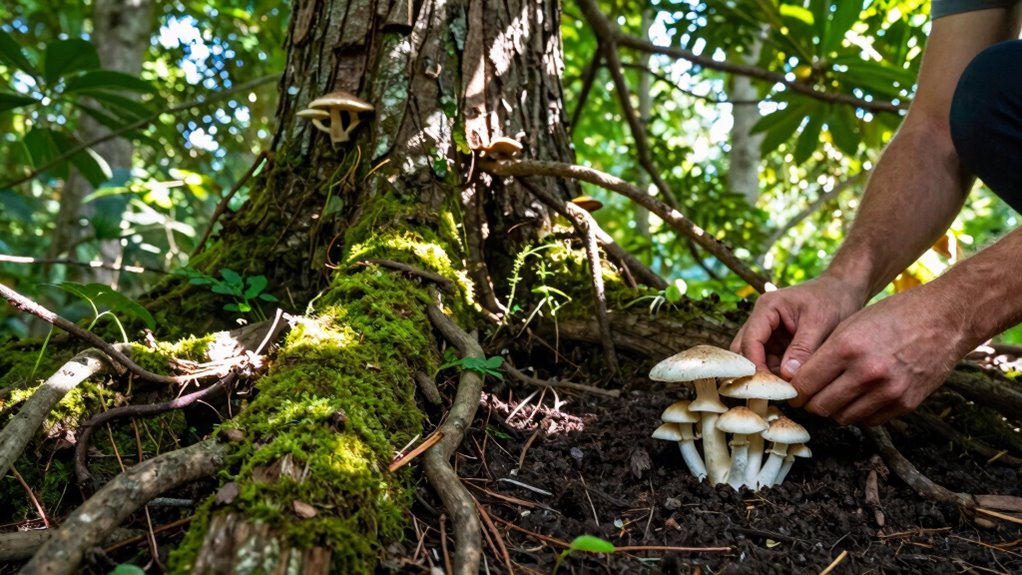
Associating trees with mushroom cultivation creates a natural environment that boosts mycelium growth and soil health. You benefit from underground fungal networks connecting with tree roots, which exchange nutrients and support healthy mushroom development. Trees also create microclimates that regulate moisture, shade, and temperature, reducing stress on your fungi. Additionally, organic matter from trees enriches the soil and attracts beneficial insects and microorganisms that protect and strengthen your crop. To discover more ways this natural relationship improves your success, keep exploring the benefits.
Key Takeaways
- Tree roots form symbiotic relationships with mycelium, enhancing nutrient exchange and mushroom growth.
- Trees create microclimates that stabilize moisture and temperature, supporting healthy mushroom development.
- Organic matter from trees enriches soil nutrients, promoting vigorous mycelium and mushroom production.
- Trees attract beneficial microorganisms and insects that help prevent diseases and improve cultivation resilience.
- Associating with trees mimics natural forest conditions, fostering complex mycelium networks and sustainable mushroom farming.
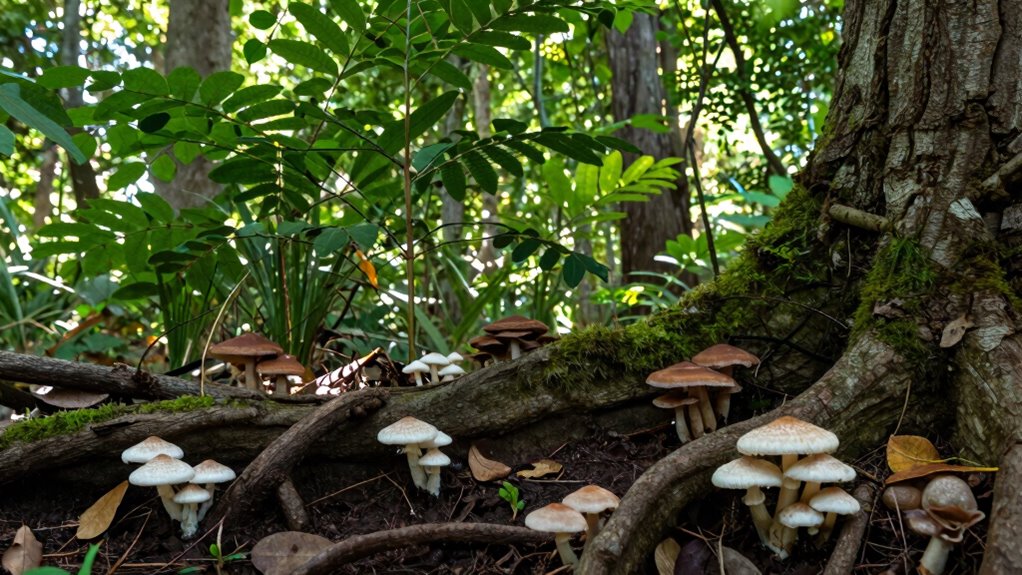
Many mushroom growers find that associating trees with their cultivation efforts can considerably boost success. When you plant mushrooms near specific trees, you’re tapping into a natural system that enhances mycelium networking. This interconnected web of fungi and plant roots creates a symbiotic relationship, where nutrients are exchanged, and the mushrooms thrive more readily. The mycelium, which is the underground network of fungal threads, connects with tree roots, allowing nutrients from decayed organic matter to flow efficiently between plants and fungi. This process not only supports healthy mushroom growth but also strengthens the overall ecosystem in your growing area.
By integrating trees into your mushroom cultivation, you also influence the forest microclimates around your setup. Forest microclimates refer to the localized environmental conditions created by trees, such as shade, humidity, and temperature moderation. These microclimates help maintain a stable, moist environment essential for mushroom development. When you plant or choose the right trees near your mushroom beds, you create a natural canopy that shields your fungi from harsh sunlight and wind, reducing evaporation and keeping humidity levels consistent. This stability minimizes stress on your crops, leading to more consistent and abundant yields.
Furthermore, trees contribute organic matter through leaf litter and decaying roots, enriching the soil and boosting the nutrients available for mycelium growth. As the organic matter decomposes, it releases essential nutrients into the soil, which the mycelium can access more easily thanks to its networking capabilities. This nutrient boost promotes vigorous mycelium colonization, resulting in healthier and faster mushroom production. Additionally, the presence of trees attracts beneficial insects and microorganisms that support the health of your fungal network and prevent diseases. Incorporating HEPA, carbon, UV-C air filtration tools can further improve air quality, reducing airborne contaminants and supporting a healthier microenvironment for your fungi.
The strategic placement of trees also encourages a diverse microbial community, which is key for resilient mushroom cultivation. When your setup mimics natural forest conditions, you create an environment where fungi can establish complex mycelium networks more effectively. This natural symbiosis makes your mushroom beds less dependent on external interventions like artificial humidity or fertilization. Moreover, fostering these natural relationships can lead to a more sustainable and resilient mushroom farm. Recent research highlights how microbial diversity plays a crucial role in the robustness of mushroom cultivation systems. When you leverage these natural processes, you’re not only increasing your chances of success but also cultivating a more sustainable and resilient mushroom farm.

JARPSIRY 5 Pcs Garden Mushroom Statue Tree Hugger, Resin Realistic Glossy Ganoderma Figurines Tree Sculpture Whimsical Fairy Garden Decor, Outdoor Patio Yard Lawn Ornaments
【High Quality Material】The set of 5 garden mushrooms statue outdoor decor are made of durable resin, which is…
As an affiliate, we earn on qualifying purchases.
As an affiliate, we earn on qualifying purchases.
Frequently Asked Questions
How Does Tree Association Influence Mushroom Growth Rates?
Tree association influences mushroom growth rates by promoting root symbiosis, which enhances nutrient exchange between trees and fungi. This partnership supplies mushrooms with essential nutrients, boosting their development. Additionally, trees provide shade optimization, creating a suitable microclimate that prevents overheating and moisture loss. Together, these factors create an ideal environment, encouraging faster and healthier mushroom growth, making your cultivation more successful and sustainable.
Can Tree Association Prevent Mushroom Diseases?
Think of a healthy tree as a sturdy shield guarding your mushroom crop. Strong tree nutrient absorption boosts disease resistance, creating a natural barrier against mushroom diseases. When trees thrive, they release essential nutrients and beneficial compounds into the soil, acting like an immune system for your fungi. This symbiotic relationship helps prevent infections, keeping your mushrooms healthy and productive, much like a well-guarded fortress.
What Tree Species Are Best for Mushroom Cultivation?
You should focus on tree species like oaks, willows, and poplars for mushroom cultivation, as they foster beneficial root interactions. These trees promote fungal symbiosis patterns that support mushroom growth, creating a healthy environment. By selecting trees with compatible fungal relationships, you’ll enhance your chances of success. Understanding these interactions helps develop a thriving mushroom cultivation system, ensuring better yields and healthier fungi.
Does Tree Age Affect Mushroom Production?
Like the wisdom of ancient oaks, older trees can influence mushroom production. As trees age, their health and soil moisture levels often decline, which can reduce mushroom yields. Younger trees typically maintain better soil conditions, promoting fungi growth. You should monitor tree health closely; healthy, mature trees help sustain ideal soil moisture, creating a thriving environment for mushrooms. Ultimately, the tree’s age impacts the delicate balance needed for successful cultivation.
How Do Trees and Mushrooms Communicate?
You discover that trees and mushrooms communicate through mycorrhizal signaling, a process where fungal symbiosis occurs. The fungi connect with tree roots, exchanging nutrients and chemical signals. This communication helps trees detect threats and optimize resource sharing. In this symbiotic relationship, the fungi act as messengers, facilitating nutrient exchange and enhancing overall health for both trees and mushrooms, ensuring mutual success in their environment.
mycelium growth enhancement products
As an affiliate, we earn on qualifying purchases.
As an affiliate, we earn on qualifying purchases.
Conclusion
By understanding the connection between trees and mushrooms, you reveal nature’s secret partnership. Just as a sturdy tree provides shelter and nutrients, it also nurtures the mushrooms growing beneath. Without this symbiosis, both struggle to thrive. So, when you nurture your trees, you’re also fostering mushroom success. It’s a reminder that in nature, as in life, the strongest bonds create the most unexpected and rewarding results. Embrace this relationship, and watch your mushrooms flourish.

Mushroom Soil Compost Pail, Organic Nutrient-Rich Garden Soil for Vegetables, Flowers, Raised Beds, Lawn & Planting Mix (6 lb)
Nutrient-Rich Organic Compost – Provides essential nutrients for healthier plants and improved soil fertility.
As an affiliate, we earn on qualifying purchases.
As an affiliate, we earn on qualifying purchases.

5LB All-in-One Mushroom Grow Bag High Yield & Fast Colonization – Produces Multiple Flushes – Self-Healing Injection Port – Just add Spores & Grow in Bag
Grow Start-to-Finish in the Bag: Simply inject your own spores or liquid culture, follow our easy steps, and…
As an affiliate, we earn on qualifying purchases.
As an affiliate, we earn on qualifying purchases.