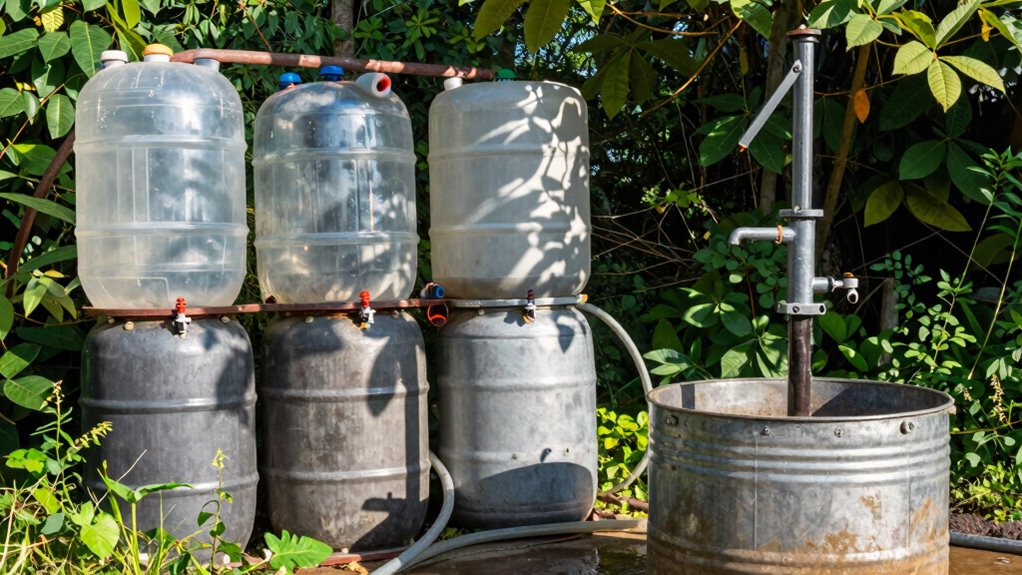

Water storage planning belongs in any survival setup because you need a reliable, safe supply during emergencies. Proper planning guarantees you can store, filter, and replenish water even when sources are limited or contaminated. Using sealed containers, rain harvesting, and emergency filters keeps your water safe and ready. With good maintenance, your water system stays functional long-term. Keep exploring, and you’ll discover ways to optimize your water resilience even further.
Key Takeaways
- Ensures a reliable water supply during shortages or emergencies, preventing dehydration and health risks.
- Facilitates effective use of natural sources through proper collection, treatment, and storage methods.
- Maintains water quality by preventing contamination with sealed, clean, and well-maintained containers.
- Supports sustainable water management via rain harvesting, reducing dependence on external sources.
- Enhances overall survival resilience by integrating multiple water sourcing and purification strategies.
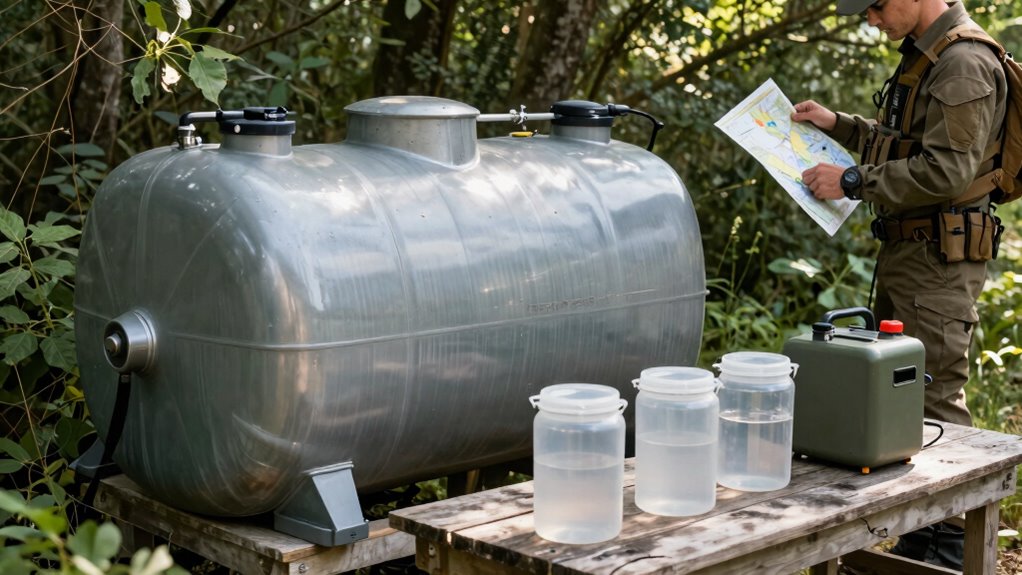
Have you ever considered how essential water storage is in a survival setup? Water is the foundation of life, and having a reliable supply can mean the difference between safety and disaster. When planning your survival setup, it’s important to think beyond just storing water; you need systems in place for emergency filtration and methods to replenish your supply. Emergency filtration becomes your best friend when your stored water runs low or gets contaminated. Bottled water can only last so long, and natural water sources aren’t always safe to drink without proper treatment. Investing in portable filters or purification tablets ensures you can make questionable water safe to consume. It’s critical to have these tools accessible, so you’re prepared for scenarios where your stored water supply is compromised.
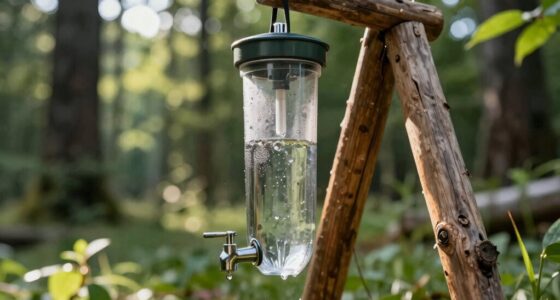
Rain harvesting is another essential element in sustainable water storage planning. If you’re in an area prone to rain, setting up a system to collect and store rainwater can supplement your existing supply considerably. You can use simple gutters and barrels or more advanced collection systems to maximize efficiency. Rain harvesting allows you to tap into a free, renewable source of water, reducing the strain on your stored reserves. During dry spells or when your stored water begins to dwindle, harvesting rainwater provides peace of mind that you’ll have a continuous flow of water for drinking, cooking, and hygiene. Additionally, understanding water storage planning and how to optimize your setup can greatly enhance your resilience. Proper storage containers should be sealed, food-grade, and resistant to pests and contamination. Regularly inspecting and cleaning your containers prevents bacteria and algae growth, ensuring your water remains safe to drink. Combining rain harvesting with your stored water creates a resilient system—one that can adapt to changing conditions and sustain you longer in a survival situation. Recognizing the importance of contamination prevention is key to maintaining safe drinking water over time.

5 High-Capacity Emergency Water Straws – Lightweight, Reusable, 1800-gallon Filters for Camping, Hiking, Travel, Biking, Survival, and Emergency Preparedness – No Expiration Date – Practical Survival
Humans can live 3 days without water but 1 gallon (the recommended daily water intake) weighs over 8lbs….
As an affiliate, we earn on qualifying purchases.
As an affiliate, we earn on qualifying purchases.
Frequently Asked Questions
How Much Water Should I Store per Person?
You should store at least one gallon of water per person daily for emergency filtration and basic needs. Aim for a storage capacity that covers three days to a week, guaranteeing you have enough during crises. Consider your household size and climate, and regularly rotate your supply to keep it fresh. Having a reliable storage capacity and emergency filtration system guarantees you stay hydrated and healthy in any survival situation.
What Are the Best Containers for Water Storage?
You need the absolute best containers for water storage—think tanks so durable they could survive a tornado! Look for food-grade, BPA-free plastic or stainless steel, which resist leaks and contamination. These containers should also be easy to clean and perfect for water purification, ensuring your supply stays safe no matter what. Investing in sturdy, reliable containers gives you peace of mind, knowing your water will stay pure and protected during any crisis.
How Long Can Water Be Safely Stored?
You can typically store water safely for about six months if you use proper water purification methods and maintain storage durability. To extend this period, regularly rotate your water supply, keep containers sealed, and store in a cool, dark place. Proper purification before use guarantees safety, especially if the water has been stored for a long time. This way, you stay prepared and have reliable access to clean water in emergencies.
Should I Treat Stored Water Regularly?
You should treat stored water regularly; it’s as vital as breathing in a survival situation. Over time, bacteria can grow even in stored water, so perform water purification before use. Incorporate storage rotation to keep water fresh—use older supplies first and replace them. Regular treatment and rotation guarantee your water stays safe and potable, preventing contamination and safeguarding your health when it matters most.
How Do I Prevent Water Contamination in Storage?
To prevent water contamination in storage, you should regularly clean your containers with a safe disinfectant and rinse them thoroughly. Additionally, perform water testing periodically to guarantee quality and safety. Always use food-grade containers, keep lids tightly sealed, and store water in a cool, dark place. These steps help prevent bacteria, algae, and other contaminants from compromising your water supply, ensuring it’s safe when you need it most.

Best Downspout Diverter Rainwater Harvesting & Collection, Self-Flushing, Prevents Clogs, Fits 2-5/8 x 2-5/8, 2×3, 3×3, 3×4, up to 5×5 & Round Downspouts.
Patented Rainwater Diverter System – Designed for maximum efficiency, this downspout diverter kit captures more water faster with…
As an affiliate, we earn on qualifying purchases.
As an affiliate, we earn on qualifying purchases.
Conclusion
Think of water storage planning as the backbone of your survival setup—without it, everything else crumbles like a house of cards. By ensuring you have enough clean water stored, you’re building a foundation that keeps you alive and thriving in tough times. Don’t wait until it’s too late; plan ahead like a seasoned captain charts a safe course. With water security in place, you’re better equipped to face whatever challenges come your way.

Saratoga Farms 5-Gallon Stackable Water Storage Containers, Emergency Water Storage for Camping and Disaster Preparedness, 20 Gallons
PORTABLE, STACKABLE WATER CONTAINERS: These 5-gallon water containers are designed with flat bottoms and tops that nestle together…
As an affiliate, we earn on qualifying purchases.
As an affiliate, we earn on qualifying purchases.

P&G Purifier of Water Portable Water Purifier Packets. Emergency Water Filter Purification Powder Packs for Camping, Hiking, Backpacking, Hunting, and Traveling. (12 Packets)
TREAT YOUR WATER – P&G Purifier of Water Packets are highly effective and are registered as a disinfectant…
As an affiliate, we earn on qualifying purchases.
As an affiliate, we earn on qualifying purchases.