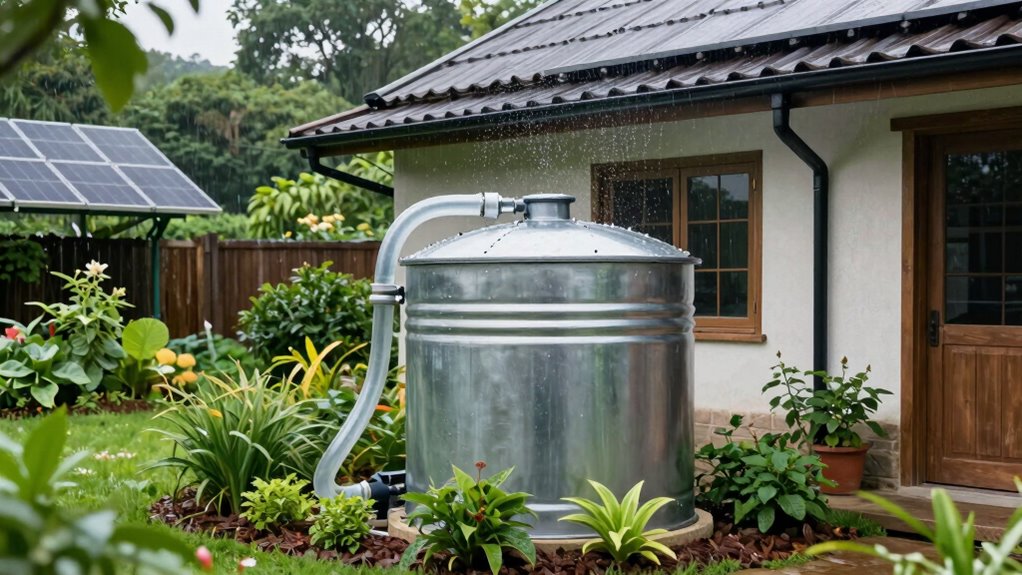

Implementing rainwater collection systems helps you become more self-reliant, sustainable, and environmentally responsible. By capturing rainwater from clean surfaces like your roof and maintaining your system, you reduce dependence on municipal water and guarantee a reliable water source for household needs. Regular cleaning, water testing, and using proper treatment methods keep your water safe and your system efficient. Keep exploring to discover how proper management can maximize your system’s benefits and longevity.

Get garden gear delivered free — and shop member deals
- Fast, free delivery on millions of items
- Access to Prime Big Deal Days deals on October 6–7
- Prime Video, Amazon Music and more included
Key Takeaways
- Implement sustainable rainwater harvesting to reduce reliance on municipal water sources and enhance property self-sufficiency.
- Use clean collection surfaces and first-flush diverters to ensure high water quality for household use.
- Regularly maintain gutters, filters, and tanks to prevent contamination and system failures.
- Test and treat collected water as needed for safe drinking, cooking, and household use.
- Proper management extends system lifespan, ensures continuous supply, and promotes environmental conservation.
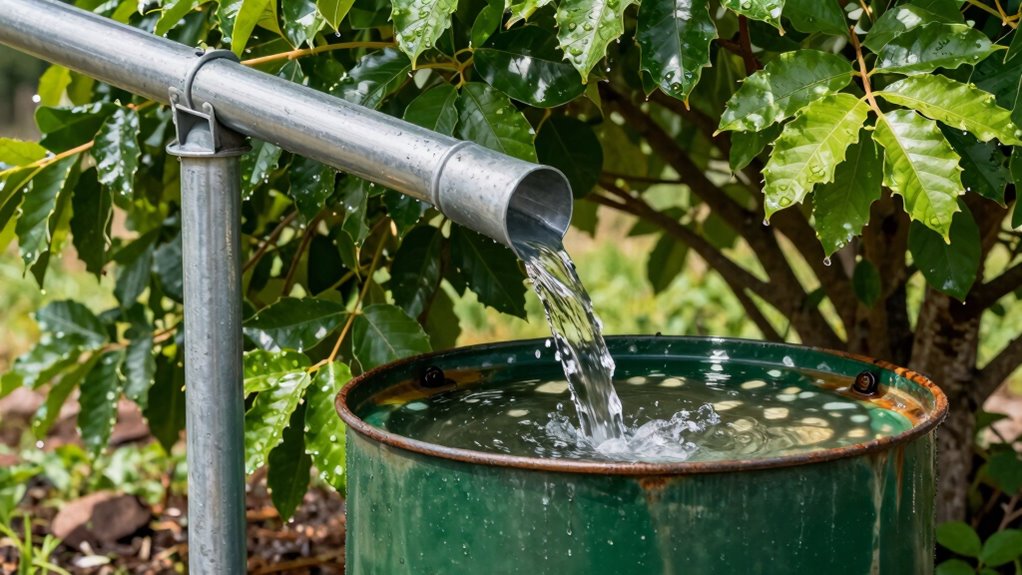
Rainwater collection systems are an essential component for anyone aiming to make their property more self-reliant. By capturing and storing rainwater, you reduce your dependence on municipal water supplies and create a sustainable water source. However, to fully benefit from your system, you need to pay close attention to water quality and system maintenance. Proper management ensures the water remains safe and the system functions efficiently over time.
Water quality is a critical aspect of any rainwater harvesting system. If you plan to use the water for drinking, cooking, or other household needs, you must ensure it’s free from contaminants. This starts with quality collection surfaces—preferably smooth and clean roofs that don’t shed debris or chemicals. Installing first-flush diverters helps divert the initial runoff, which often contains dirt, leaves, and pollutants. Regularly inspecting and cleaning your gutters and filters also keeps debris out of storage tanks, preventing bacterial growth and sediment buildup. Additionally, consider installing a professional water testing kit periodically to check for pathogens, chemicals, or heavy metals, especially if your area has industrial activity or pollution concerns. Proper water treatment, such as UV sterilization or filtration, might be necessary if you intend to use rainwater for drinking, ensuring it remains safe and potable. Regular maintenance of water quality is vital for ensuring safe, potable water.
System maintenance is another crucial component to keep your rainwater harvesting setup in top shape. Regular upkeep involves cleaning gutters, screens, and filters to prevent blockages and maintain water flow. You should also inspect tanks for cracks, leaks, or signs of deterioration, repairing any issues promptly to avoid water loss or contamination. Ensuring that all valves and pumps work correctly prevents system failures. Annual inspections are recommended to check for mold, algae, or sediment buildup inside the tanks, which can compromise water quality. Additionally, maintaining a record of your maintenance activities helps you stay organized and ensures all parts are serviced regularly. Proper maintenance not only prolongs the lifespan of your system but also guarantees the water collected remains clean and safe for use.
As an affiliate, we earn on qualifying purchases.
Frequently Asked Questions
How Much Does a Rainwater Collection System Typically Cost to Install?
A rainwater collection system typically costs between $1,000 and $5,000 to install, depending on size and complexity. For effective budget planning, consider factors like tank capacity, filtration, and plumbing. Conduct a thorough cost analysis to determine the best options within your budget. Keep in mind that investing in quality components can save you money long-term by reducing maintenance and ensuring reliable water supply for your self-reliant property.
What Are the Best Materials for Rainwater Storage Tanks?
You should choose tanks made from durable materials like polyethylene, fiberglass, or concrete, as they guarantee tank durability over time. These materials are resistant to corrosion and UV damage, making them suitable for long-term use. Additionally, consider material compatibility with your local climate and water quality; for example, polyethylene tanks are lightweight and resist chemical reactions, making them a popular and reliable choice for rainwater storage.
How Do I Ensure Water Purity for Drinking Purposes?
To guarantee water purity for drinking, you should implement effective water filtration systems that remove contaminants and pathogens. Regularly test water purity through testing kits or lab analysis to confirm its safety. Keep your storage tanks clean and covered to prevent debris and insects from contaminating the water. Incorporate UV sterilization or chlorine treatments if needed, and always verify water quality before consumption to stay safe and healthy.
Are There Legal Restrictions on Rainwater Harvesting in My Area?
Like a knight checking the scrolls of old, you should verify local regulations and legal permits before harvesting rainwater. Many areas have rules governing collection systems, especially for potable use. You might need to register your setup or adhere to specific standards. To stay on the safe side, contact your local government or water authority to confirm your rainwater harvesting efforts comply with current laws.
How Often Should I Maintain and Clean the System?
You should follow a regular maintenance schedule, inspecting your system at least once a month and after heavy storms. During cleaning procedures, clear debris from gutters and filters, and flush out storage tanks periodically to prevent algae and sediment buildup. It’s also wise to check for leaks or damage and guarantee all parts are functioning properly. Consistent maintenance keeps your rainwater harvesting system efficient and safe for use.
Conclusion
By installing a rainwater collection system, you’re building a water supply as reliable as a steady heartbeat. It’s a simple, effective way to reduce dependence on municipal systems and embrace self-sufficiency. Think of it as planting a seed for resilience—nurturing your property to stand strong through any drought or emergency. With a little effort, you’ll turn your property into a self-reliant oasis, flowing with the endless promise of rain.
Fall yard work Picks
leaf blowers
As an affiliate, we earn on qualifying purchases.