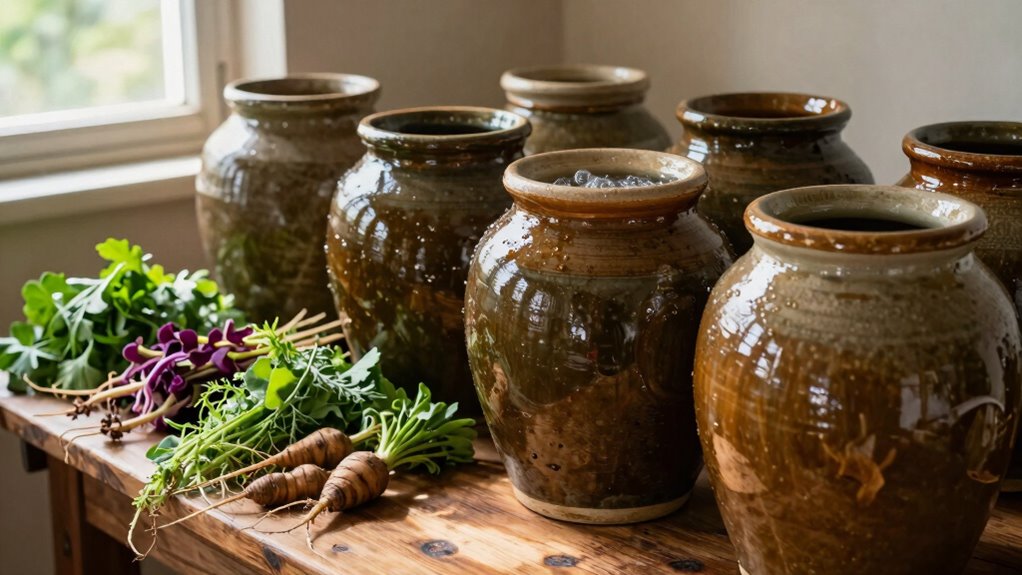

You can preserve wild foods using traditional fermentation crocks, which create an oxygen-free environment with water seals or weights. By fermenting herbs, fungi, or berries in these ceramic vessels, you extend their shelf life while developing rich flavors and probiotics. This simple, sustainable method relies on salt, natural microbiomes, and time, offering a safe and effective way to enjoy seasonal bounty year-round. To discover more about how these methods work, keep exploring the principles behind traditional food preservation.

Get garden gear delivered free — and shop member deals
- Fast, free delivery on millions of items
- Access to Prime Big Deal Days deals on October 6–7
- Prime Video, Amazon Music and more included
Key Takeaways
- Fermentation crocks create an anaerobic environment essential for safe wild food fermentation.
- Traditional methods utilize salt, brine, and natural microbiomes to preserve wild harvests effectively.
- These techniques extend shelf life and develop complex flavors without modern refrigeration.
- Fermentation enhances safety, digestibility, and probiotic content of wild foods like plants, fungi, and berries.
- Such methods support sustainable, culturally rooted preservation practices using minimal equipment.
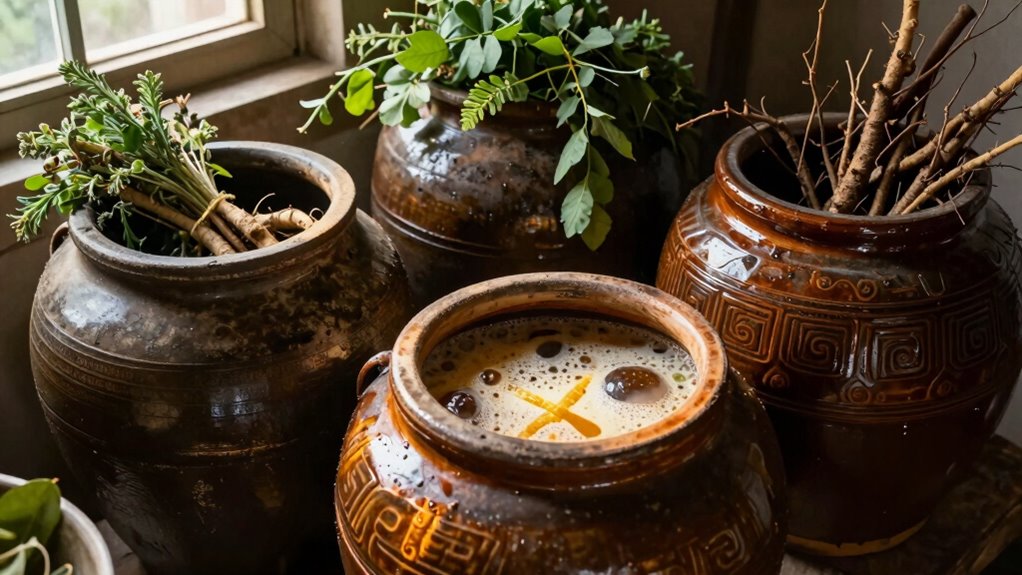
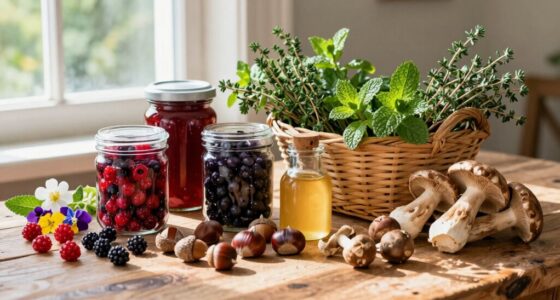
Have you ever wondered how traditional communities preserved wild foods without modern refrigeration? It’s a fascinating story that relies on resourcefulness, knowledge, and time-tested methods. One of the most enduring practices is wild harvest, where people gather edible plants, roots, and fungi from nature’s bounty. These wild foods, rich in nutrients and flavor, require careful preservation to last through seasons when fresh picks are scarce. That’s where fermentation techniques come into play, transforming perishable harvests into shelf-stable, delicious staples.
Fermentation has been a cornerstone of food preservation for centuries, especially in rural communities relying on wild harvests. Instead of simply drying or salting, they used fermentation to enhance the safety, flavor, and longevity of their wild foods. You might find that traditional fermentation involves placing these wild ingredients into fermentation crocks—ceramic vessels designed to create an anaerobic environment. These crocks, often with water seals or weights, keep out oxygen while allowing gases to escape, ensuring the fermentation process proceeds smoothly. The process naturally encourages the growth of beneficial bacteria, which outcompete harmful microbes, preserving the food without spoilage.
When working with wild harvest foods, fermentation techniques offer several advantages. They not only preserve the harvest but also develop complex flavors and improve digestibility. For example, wild vegetables or herbs might be fermented into tangy condiments that add zest to simple meals. Mushrooms or roots could be fermented into pastes or drinks, adding probiotic benefits and extending their shelf life. You’re fundamentally leveraging nature’s own microbiome to keep your wild foods safe and tasty. The process is straightforward: you clean and chop your wild ingredients, pack them into a fermentation crock, add salt or brine as needed, and then let fermentation do the work. Over days or weeks, the wild harvest transforms, gaining acidity and flavor complexity. Utilizing fermentation crocks ensures a controlled environment for successful wild food preservation.
Traditional fermentation also acts as a form of wild food preservation that’s accessible and sustainable. It requires minimal equipment—just a crock, some salt, and patience—and makes use of the wild resources available to you. By mastering fermentation techniques, you connect with a long lineage of food preservation that’s both effective and respectful of nature’s abundance. Whether you’re preserving wild greens, berries, or fungi, fermentation provides a reliable way to enjoy seasonal bounty year-round, all while honoring age-old practices that sustain communities far from modern conveniences.
fermentation crock with water seal
As an affiliate, we earn on qualifying purchases.
As an affiliate, we earn on qualifying purchases.
Frequently Asked Questions
How Long Do Fermentation Crock Preserved Foods Last?
Fermentation crock preserved foods can last for months to years, depending on the type and storage conditions. As you store them properly, they develop richer flavors over time, enhancing their taste and complexity. You’ll notice a deeper flavor development, which is part of their cultural significance. Keep them in a cool, dark place, and regularly check for signs of spoilage to enjoy these traditional foods safely and for the longest possible period.
Are Fermentation Crocks Suitable for All Types of Wild Foods?
Fermentation crocks are versatile and suitable for many wild foods, but their effectiveness depends on the specific flavor and texture you’re aiming for. They excel at capturing wild flavors and preserving vegetables, roots, and greens, but might not be ideal for delicate or high-moisture wild foods. Crock versatility allows you to experiment, though some wild ingredients may require different methods. Always consider the food’s characteristics to guarantee proper preservation.
Can Fermentation Crock Preservation Replace Modern Refrigeration?
While fermentation crocks can preserve wild foods safely and hold cultural significance, they can’t fully replace modern refrigeration. Fermentation safety depends on proper technique and environment, but refrigeration offers consistent, long-term preservation unaffected by ambient conditions. Think of fermentation as a traditional art, rich in history, while refrigeration provides quick, reliable storage. Both serve essential roles—fermentation for flavor and culture, refrigeration for convenience and safety.
What Are Common Mistakes in Traditional Wild Food Fermentation?
You might make mistakes like not maintaining the wild flavor balance or overlooking fermentation safety. For instance, handling wild ingredients without proper cleanliness can lead to spoilage or harmful bacteria. Not monitoring the fermentation process regularly may result in off-flavors or unsafe products. Make sure you keep the environment clean, use the right salt ratios, and taste-test carefully. These steps help preserve the wild flavor and keep your fermentation safe and delicious.
How Do I Troubleshoot Mold or Spoilage in Fermentation Crocks?
Think of mold as an unwelcome guest crashing your fermentation party. To troubleshoot, first identify mold types—white, green, or black—and remove any affected food immediately. Clean the crock thoroughly, ensuring no spores remain. To prevent spoilage, maintain proper salt or acidity levels, keep the crock submerged, and monitor regularly. Staying vigilant helps preserve your ferments and keeps mold at bay, ensuring tasty, safe preservation.
Conclusion
By embracing fermentation crocks and traditional wild food preservation, you open a world of flavors and health benefits. Think of these methods as a time-tested bridge connecting you to ancient culinary wisdom, much like a sturdy oak tree rooted deeply in history. With patience and care, you’ll turn simple ingredients into vibrant, nourishing foods that sustain your body and soul. So, immerse yourself and let your kitchen become a lively hub of tradition and taste.
Fall yard work Picks
leaf blowers
As an affiliate, we earn on qualifying purchases.