
In late fall, you’ll find black trumpet and porcini mushrooms thriving in moist, shaded forests. Black trumpets grow beneath leaf litter or mossy patches in deciduous woods, while porcini prefer forest edges near conifers and oaks. Look for them after rain when the soil is damp and the environment is cool. Pay attention to subtle clues to identify these fungi, and uncover more tips for successful foraging as you explore further.

Get garden gear delivered free — and shop member deals
- Fast, free delivery on millions of items
- Access to Prime Big Deal Days deals on October 6–7
- Prime Video, Amazon Music and more included
Key Takeaways
- Black Trumpets thrive in deciduous forests under leaf litter or mossy patches in shaded, moist areas after rain.
- Porcinis grow near forest edges, especially around oaks, pines, and chestnuts, favoring well-drained soil.
- Late fall after rain is ideal; fungi activate and reach peak flavor during this season.
- Focus on shaded, moist spots in deciduous and mixed forests to find both fungi.
- Harvest sustainably with proper techniques, leaving mycelium intact for future growth.
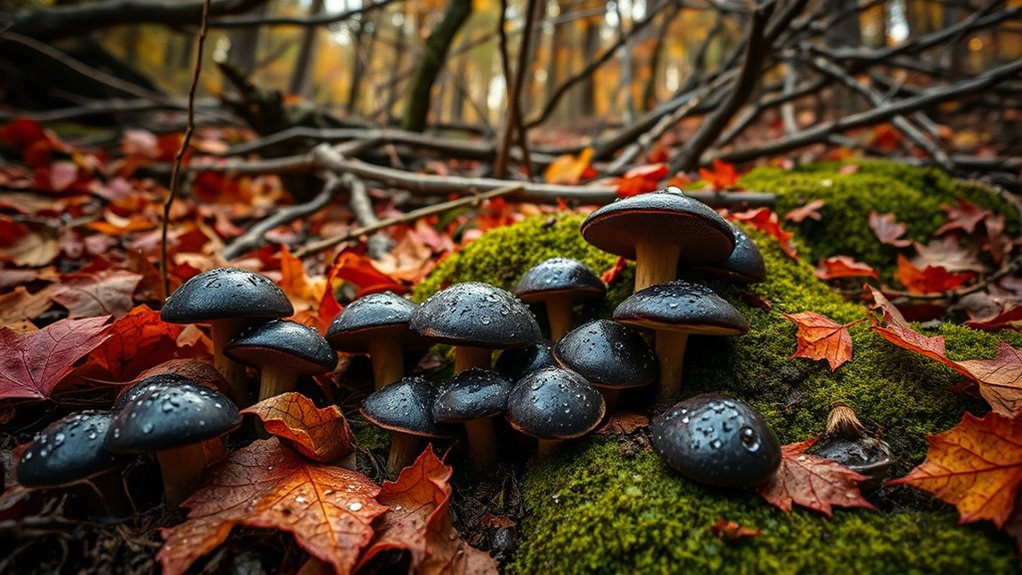
As fall arrives, the season for Black Trumpet and Porcini mushrooms is in full swing, offering foragers and chefs alike a fleeting window to harvest these prized fungi at their peak. This is your moment to break free from the ordinary, to chase the wild bounty that calls to your adventurous spirit. With the right foraging tips, you can confidently navigate the forests and fields, uncovering hidden treasures that elevate your culinary game and connect you with nature’s raw, unfiltered beauty.
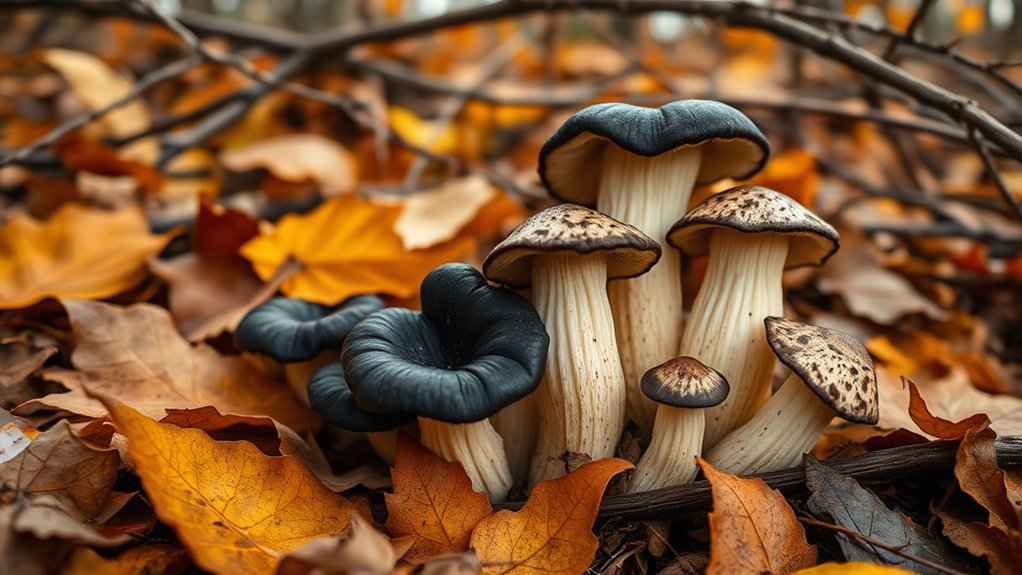
Start by knowing where to look. Black Trumpets thrive in deciduous forests, often hiding beneath leaf litter or in mossy patches alongside hardwood trees. They prefer moist, well-drained soils, so focus your efforts in shaded areas with abundant fallen leaves. Porcinis, on the other hand, favor the edges of forests—near coniferous or mixed woods—and often grow at the base of trees like oaks, pines, and chestnuts. Look for their thick, bulbous stems and brownish caps, which deepen in color as the season progresses. Timing is essential; late fall offers the best chance, especially after a good rain, which awakens the fungi and brings them to their fullest expression.
Discover Black Trumpets in moist, deciduous forests; Porcinis thrive at forest edges near oaks and pines after rain.
Foraging tips aren’t just about location; they’re about respect and sustainability. Always double-check identification to avoid dangerous look-alikes. Black Trumpets are trumpet-shaped, dark, and have a delicate, smoky aroma. Porcinis have a firm texture and a rich, nutty scent. Use a knife to gently harvest the fungi at the base, leaving the mycelium intact to promote future growth. Be mindful of your surroundings, and forage with gratitude—this is about liberation, reclaiming your connection to the land rather than over-harvesting or damaging the environment. Incorporating proper foraging techniques ensures both sustainability and safety for future seasons.
When it comes to culinary uses, these mushrooms aren’t just ingredients—they’re a gateway to flavor liberation. Black Trumpets add smoky, earthy notes to sauces, soups, and sautés, elevating simple dishes with their unique aroma. Porcinis bring depth and umami richness; rehydrate dried porcini in warm water to extract every ounce of flavor, then use the soaking liquid in risottos, stews, or pasta sauces. Both fungi lend themselves to roasting, grilling, or frying, allowing their bold profiles to shine. Embrace your creativity, knowing that each harvest grants you the power to craft dishes that are vibrant, nourishing, and deeply satisfying. This is more than foraging; it’s a statement of independence, a reclaiming of culinary freedom rooted in the wild.
black trumpet mushroom foraging kit
As an affiliate, we earn on qualifying purchases.
As an affiliate, we earn on qualifying purchases.
Frequently Asked Questions
When Is the Peak Harvest Time for Black Trumpets and Porcini?
You’ll find black trumpets and porcini peak in late fall, typically from September to November. For ideal seasonal foraging tips, look in deciduous forests and mossy areas after the first frost. These mushrooms elevate your culinary uses with rich, earthy flavors perfect for sautés, soups, or drying. Embrace the freedom of wild harvesting, trusting your senses to find these treasures, and enjoy their deep, robust taste in every dish you create.
Are Black Trumpets and Porcini Safe to Eat Raw?
You shouldn’t eat black trumpets and porcini raw because mushroom poisoning is a real risk. Cooking these mushrooms thoroughly destroys toxins and enhances their flavor, giving you a safer, more delicious experience. Remember, always follow cooking tips to avoid any health issues. Ignoring this advice could lead to serious poisoning. So, embrace the liberation of cooking your mushrooms well—raw eating isn’t worth the danger.
How Can I Distinguish Between Edible and Toxic Mushrooms?
Did you know over 90,000 mushroom poisoning cases occur annually? To identify edible mushrooms safely, rely on clear identification tips—look for distinctive features like color, gills, and stem shape. Never consume mushrooms unless you’re 100% sure they’re safe, as misidentification can lead to serious poisoning. Trust reputable guides or consult an expert. You deserve the freedom to forage confidently, but always prioritize safety over curiosity.
What Equipment Is Best for Foraging These Mushrooms?
You should use a sturdy, sharp knife for mushroom identification and a basket for collecting specimens safely. A good field guide is essential for accurate foraging safety, helping you distinguish edible from toxic varieties. A small brush can clean dirt without damaging the mushrooms. Remember, proper equipment not only makes foraging more efficient but also guarantees you stay confident and liberated in your mushroom hunting adventures.
Can I Find These Mushrooms in Urban Areas?
Like explorers charting new worlds, you can find black trumpet and porcini mushrooms in urban areas through urban foraging. Seek out parks, old-growth trees, and disturbed sites where these fungi thrive. Embrace mushroom sustainability by responsibly harvesting, leaving enough behind for nature’s balance. Liberation comes from connecting with nature in unexpected places—your city’s hidden treasures await, if you know where and how to look.
Conclusion
As you venture into late fall, seek out black trumpets and porcini where the forest whispers, where the damp earth beckons, and where the quiet shadows hide their treasures. Follow the scent, chase the clues, and embrace the thrill of discovery. Let the season guide you, let patience reward you, and let nature’s bounty surprise you. Because in the search for these mushrooms, every step, every find, every moment becomes part of the adventure.
Fall yard work Picks
leaf blowers
As an affiliate, we earn on qualifying purchases.