TL;DR

Get garden gear delivered free with Prime
- Fast, free delivery on millions of items
- Prime Video, Amazon Music and more included
- Member-only deals all year
A Country Living report describes a “bug snug” method shared by OmVed Gardens: make a simple frame from three poles, then fill it with garden cuttings, leaves and other plant material. The pile can provide shelter for insects and other wildlife over winter while keeping trimmings in one place; the report does not establish how much wildlife a snug attracts or how effective it is.
A three-pole frame filled with garden cuttings can create a small winter shelter for wildlife, according to a method demonstrated by OmVed Gardens and reported by Country Living; learn more about how to give beneficial garden insects a home. The “bug snug” is intended to keep pruning waste and leaves in one place while offering insects shelter, with the report also describing possible benefits for frogs and birds.
To make one, use three sturdy, straight poles to form a triangular, teepee-like frame. OmVed landscape gardener John Gaffney says the poles can be hazel, bamboo canes or another suitable material, and the structure can be made at different sizes. The poles should hold their shape; pushing them into the ground can add stability.
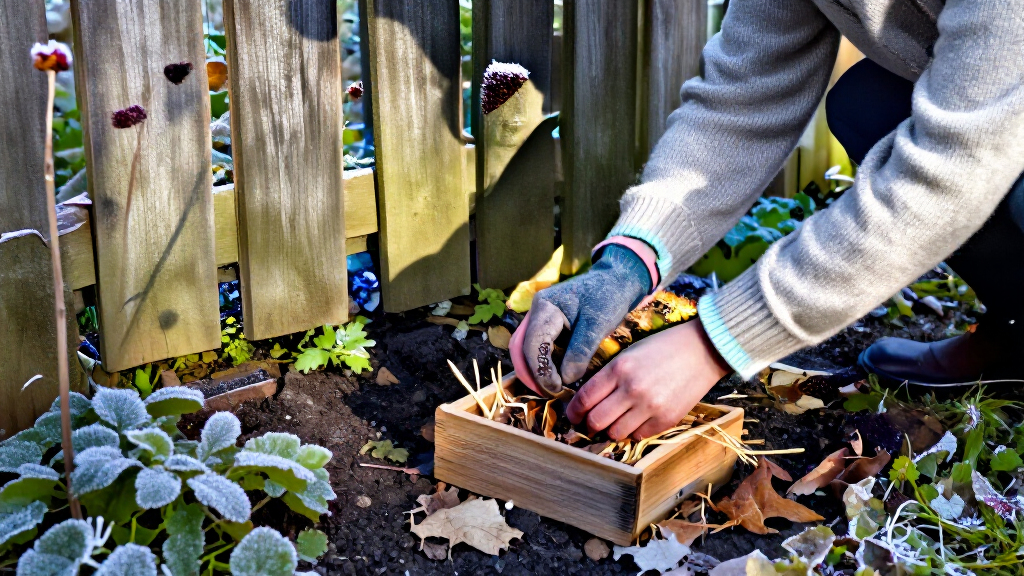
Once the frame is assembled, fill it with garden cuttings, lawn clippings and leaves, layering the material up to the top. Gaffney singled out wildflower stems as useful because their hollow interiors can give insects places to shelter. The method makes use of material gardeners might otherwise remove or discard, while concentrating it in a designated area.
The report says the shelter may help insects, frogs and birds over winter, while adding elements to help migrating birds can support them on their journey. It also says birds can use material from the pile for nesting in spring; other ways to help backyard birds can support them through fall. These are described as potential uses, not as measured results: the source gives no counts of visiting wildlife or comparison with gardens without a bug snug.
A Use for Garden Cuttings
The idea offers gardeners a practical way to leave some natural material in the garden without spreading it across lawns, paths or beds. Instead of treating every fallen leaf and cut stem as waste, a contained pile of vegetation can serve a garden-management purpose as well as a possible shelter for wildlife.
That is relevant as autumn and winter work often includes pruning, mowing and raking. A bug snug does not require specialist equipment in the method described, and its size can be adjusted to fit a garden. The reported benefits remain qualitative, however: the source does not quantify how many animals may use one, how long it lasts, or whether one design works better than another.
As an affiliate, we earn on qualifying purchases.
OmVed’s Demonstrated Method
OmVed Gardens is described in the Country Living report as a North London community greenspace and learning hub focused on reconnecting people with land, community well-being and climate resilience. The organization shared its bug snug demonstration in an Instagram reel. Country Living’s article presents the structure as a way to balance a tidier garden with leaving some habitat for wildlife.
Gaffney’s guidance is deliberately flexible: the frame can be small or larger, and hazel is not required if other straight poles are available. The basic sequence is to form a stable frame, gather suitable garden material and stack it inside. The report does not give detailed specifications for dimensions, maintenance or a preferred location.
“What wildlife wants is a bit of mess.”
— John Gaffney, landscape gardener at OmVed Gardens
Wildlife Benefits Not Measured
The source describes intended and possible uses of a bug snug, but does not provide field observations or research data showing which species use the structures, how often they are occupied, or whether they improve winter survival. The report also does not specify how the pile should be maintained through the season or how to avoid unwanted material in it.
It is also unclear how the shelter’s performance varies by garden, climate, size or placement. The article presents the project as practical advice, not a tested wildlife intervention with quantified outcomes.
Building One This Season
Gardeners following the method can gather suitable cuttings and leaves, assemble three stable poles into a frame, and stack the material inside. The source recommends hollow wildflower stems as one option and says the structure may be secured by pushing the poles into the ground. It does not give a schedule for checking or replenishing the pile.
Further details about wildlife use would depend on observations over time; the Country Living report announces no monitoring results or follow-up study. For now, the demonstrated next step is a simple one: keep some garden trimmings together in a sheltered pile rather than clearing every piece away.
Key Questions
What is a bug snug?
A bug snug is a frame filled with garden cuttings and other plant material. The method reported by Country Living presents it as a place where insects and other wildlife may find shelter over winter.
What materials do I need?
The basic frame uses three sturdy poles, such as hazel or bamboo canes. Fill it with cuttings, leaves and lawn clippings; hollow wildflower stems are suggested as a useful addition for insects.
Does a bug snug help only insects?
No. The report says it may also offer shelter to frogs and birds, and that birds may use material from it for nesting in spring. The source does not provide measurements of those benefits.
How large should the structure be?
Gaffney says it can be made small or much larger. The report does not set standard dimensions, so the frame can be adapted to the available garden space and material.
Is the bug snug proven to improve wildlife survival?
The report describes the snug as a potential shelter but provides no measured survival or species data. Its specific effects in different gardens remain unclear.
Source: rss
Halloween Picks
halloween
As an affiliate, we earn on qualifying purchases.