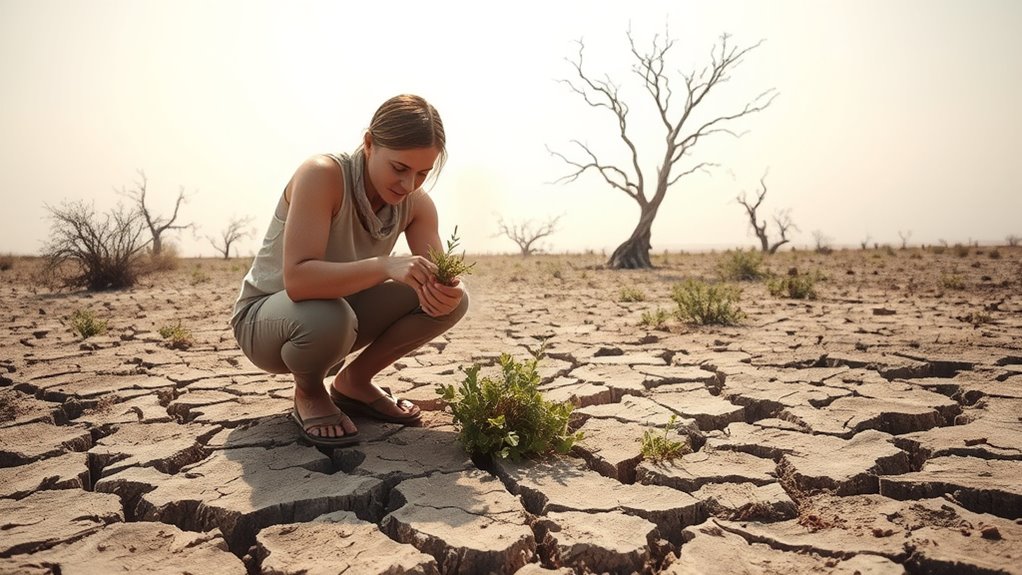
During a drought, it’s vital to pause foraging when signs indicate resource depletion or scarcity, such as declining plant health or reduced insect activity. Recognize that stopping temporarily helps conserve energy, prevents overharvesting, and allows the environment to recover. Pause strategically to prioritize resilient sources like deep-rooted plants and drought-adapted insects. Knowing when to hold back supports both your survival and ecosystem health. To discover more about making smart foraging choices during droughts, explore further strategies.
Key Takeaways
- Recognize signs of resource depletion to determine when to pause for environmental recovery.
- Prioritize resilient, deep-rooted plants and insects less affected by drought conditions.
- Use pauses strategically to conserve energy and prevent overharvesting of vital resources.
- Assess landscape conditions critically before foraging to avoid depleting scarce resources.
- Employ patience and restraint to support ecosystem resilience and ensure long-term survival.
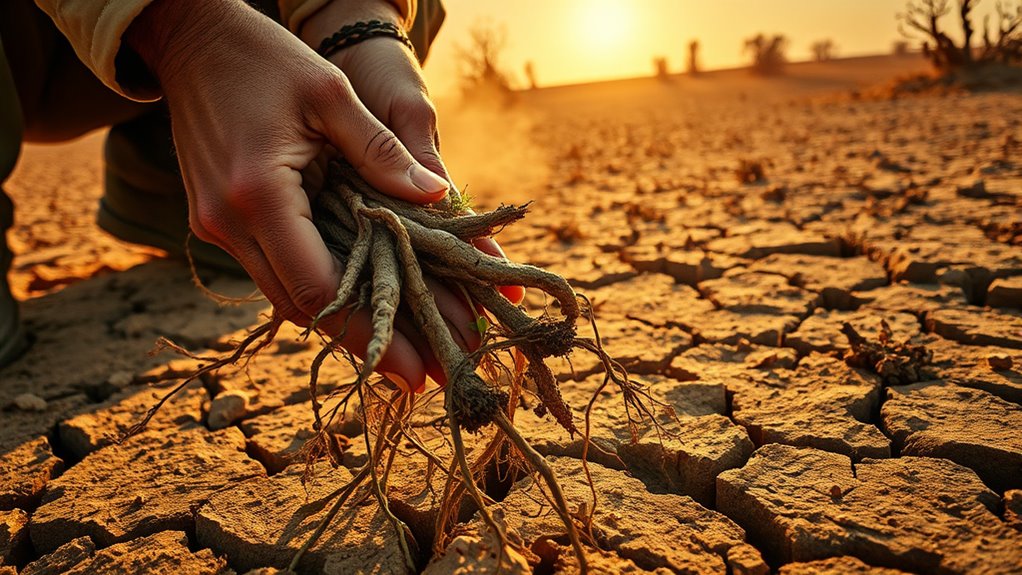
Have you ever wondered how to find food when a drought dries up your usual sources? During such times, your ability to adapt becomes essential. Droughts challenge your traditional foraging habits, forcing you to develop adaptive strategies that help you survive without depleting fundamental resources. The key lies in understanding when to push forward and when to pause, conserving your energy and resources for when conditions improve. Resource prioritization becomes your most powerful tool—deciding which plants, insects, or water sources are worth your effort and which are better left untouched to allow recovery.
Prioritize resilient resources, know when to pause, and conserve energy during droughts to ensure sustainable survival.
When the landscape shows signs of severe drought, it’s imperative to evaluate your environment critically. Instead of blindly foraging, you need to adopt a strategic mindset. Focus first on sources that are more resilient or less affected by drought conditions. These might include deep-rooted plants that access underground water or insects that have adapted to dry environments. By prioritizing these resources, you maximize your chances of obtaining nourishment while reducing unnecessary strain on the ecosystem. Remember, overharvesting during droughts can lead to long-term damage, making your efforts counterproductive.
Knowing when to pause is just as important as knowing what to forage. If signs indicate that resources are dwindling or if your efforts aren’t yielding results, it’s time to back off. This isn’t giving up—it’s exercising wisdom and restraint. Pausing allows the environment to recover, preventing depletion that could make future foraging even harder. It also helps you conserve your energy, which is essential during times when food and water are scarce. During these pauses, reflect on your strategies: Are you focusing on the most reliable sources? Are you overextending yourself? Adjust your approach accordingly. Your ability to read the landscape and recognize signs of resource exhaustion is a skill that grants you greater freedom and resilience.
In essence, thriving during droughts requires more than just searching blindly; it demands a conscious, strategic approach. Adaptive strategies and resource prioritization empower you to navigate scarcity with intelligence and purpose. Recognize your environment’s signals, conserve your strength, and choose your foraging targets wisely. Sometimes, the best move is to hold back, wait patiently, and let the land recover. This disciplined approach not only sustains you but also supports the resilience of the ecosystem—giving you genuine liberation from the cycle of depletion and desperation. When you master when to pause, you’re truly in control of your survival, turning adversity into an opportunity for resourcefulness and strength.
Furthermore, understanding the importance of resource prioritization can significantly enhance your ability to adapt effectively during drought conditions.
Frequently Asked Questions
How Can I Identify Safe Plants to Forage During Drought Conditions?
You can identify safe plants during drought by focusing on plant identification and drought resilience traits. Look for hardy, drought-tolerant species with deep roots, and verify their identity through reliable guides. Avoid plants with wilted leaves, discoloration, or unusual growth. By recognizing resilient plants that thrive in dry conditions, you liberate yourself to forage confidently and sustainably, embracing the wild abundance around you without risking your health.
Are There Specific Signs Indicating When Foraging Becomes Too Risky?
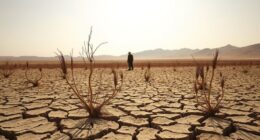
You should pause foraging when drought warning signs, like wilting plants, cracked soil, and decreased plant diversity, become clear. These indicate increased foraging risk factors, such as reduced plant nutrients and higher contamination chance. If plants look stressed or the landscape feels overly dry, it’s a sign to step back and protect your health and the environment. Stay alert, trust your instincts, and remember, taking a break keeps foraging liberating and sustainable.
What Tools Are Best for Foraging in Drought-Affected Areas?
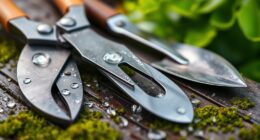
Drought-resistant plants dominate dry domains, making them your primary tools for safe foraging. Use sharp scissors, sturdy baskets, and gloves to protect and pick cautiously. Follow foraging safety tips like identifying resilient plants and avoiding contaminated areas. Embrace the environment’s endurance, and equip yourself with knowledge and tools that liberate your foraging journey, allowing you to harvest wisely and safely in challenging drought conditions.
How Does Drought Impact the Nutritional Value of Wild Edibles?
Drought often lowers the nutrient concentration in wild edibles, making them less nutritious. You might notice drought-resistant species maintain higher nutrient levels, providing some resilience. By choosing these hardy plants, you can still enjoy nourishing foraging. Embrace the challenge, knowing that selecting drought-tolerant species keeps your wild edibles potent and essential, freeing you from dependency on less reliable sources. Stay informed, and adapt your foraging to sustain your health amidst drought conditions.
Can Foraging Help Support Local Ecosystems During Droughts?
Like a essential pulse, your foraging can bolster ecosystem resilience during droughts. By selectively harvesting wild edibles, you support plant succession, encouraging diverse growth and preventing overgrowth of invasive species. Your mindful foraging helps maintain natural balances, allowing ecosystems to adapt and recover. This act of liberation nurtures the land, empowering you to connect deeply with nature while actively contributing to its health and longevity.
Conclusion
During droughts, knowing when to pause your foraging can protect both you and the environment. Did you know that over 30% of plant species struggle to survive during prolonged droughts? By being mindful and taking breaks when resources are scarce, you help preserve ecosystems for future foraging. Remember, patience and awareness are your best tools. When in doubt, pause, reassess, and return when conditions improve—your efforts make a difference.