
TL;DR

Get garden gear delivered free with Prime
- Fast, free delivery on millions of items
- Prime Video, Amazon Music and more included
- Member-only deals all year
A backyard compost pile slowing or freezing in winter does not necessarily mean it has failed. Before adding water, scraps or an activator, check the pile’s center temperature, moisture, airflow and recent ingredients; pause additions if the bin is full.
A quiet or frozen winter compost pile is not necessarily broken, but adding scraps, water or an activator without checking it can worsen existing problems, according to a Planet Natural report. The guidance recommends checking the pile’s interior temperature, moisture, airflow and recent additions before deciding whether to make a correction or wait for warmer conditions.
First, compare the pile’s center with outdoor conditions. If a compost thermometer can be inserted easily, record its reading alongside the outside temperature and the pile’s approximate size. Do not force a probe into frozen material. A lack of visible steam does not show whether decomposition has stopped, and a smaller or partly filled system may retain less heat than a substantial, well-built batch. Recognizable food scraps and fresh leaves suggest the material is unfinished, not necessarily ready for planting.
Next, assess thawed material, not frozen lumps. A suitable mix should feel damp like a wrung-out sponge without releasing water. Dripping, heavy material or a sour smell can point to excess moisture and limited oxygen. When conditions allow, dry browns and loosening compacted material may help; if thawed material is truly dry, add water gradually in workable weather rather than flooding the pile to thaw it.
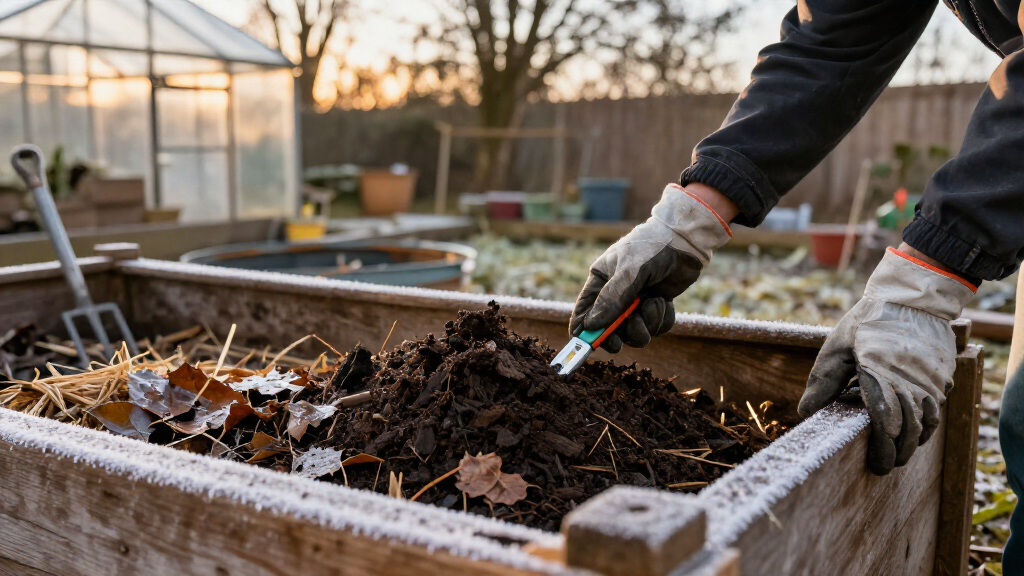
Inspect for flattened layers and concentrated scraps. Wet leaves, settled grass or food scraps can form dense mats that restrict air movement, while one handful may not represent the whole pile. If a clear problem is present and the material is workable, break up the mats and mix in dry, structured browns. Review what has gone in recently, too: Planet Natural cites Illinois Extension’s starting guideline of about three containers of browns for one of greens by volume, with adjustments for the actual mix. The report advises against adding fertilizer to a frozen, waterlogged pile or treating an activator as a substitute for air, balanced moisture and suitable ingredients.
Avoiding Winter Compost Mistakes
The checks matter because a well-meant adjustment can address the wrong problem. Pouring water onto frozen material will not reliably thaw it, and adding more wet kitchen scraps to a saturated, compacted pile may add to the imbalance. Likewise, repeatedly turning a reasonably balanced pile can release stored heat without correcting a specific fault.
The guidance also helps gardeners decide when to pause. A bin’s capacity does not expand just because its contents are frozen, and new scraps can accumulate faster than cold material decomposes. Keeping dry browns available, covering the system appropriately and pausing additions when it cannot contain them can prevent a manageable winter slowdown from becoming an overloaded pile.
Popular right now

Bose QuietComfort Ultra Earbuds (2nd Gen) – Wireless Noise‑Cancelling Earbuds with Mic, Immersive Audio, USB‑C Charging, Up to 6 Hours Batte

iRobot Roomba 105 Combo Robot Vacuum and Mop

De’Longhi Classic Matte Black Espresso Machine with Milk Frother
As an affiliate, we earn on qualifying purchases.
Cold Slows Small Backyard Bins
Outdoor temperatures can slow decomposition sharply, and small piles or partly filled tumblers generally hold less heat than larger batches. Illinois Extension’s composting guidance is cited in the report for the effects of pile size and winter temperatures. The report also cites Maryland Extension’s advice to avoid routine winter turning because opening a pile can release heat.
That does not mean every pile should remain untouched. The distinction is between unnecessary routine turning and a targeted correction when there is a clear issue, such as a wet, sour-smelling mass or flattened layers. A frozen tumbler should not be forced to rotate; wait until the contents and moving parts can operate normally and follow the manufacturer’s instructions.
What a Cold Reading Cannot Show
The supplied report gives no measured temperature, moisture test results or case data for a particular compost pile. Without those details, a reader cannot diagnose an individual bin from the fact that it appears quiet. A frozen probe reading, frosty surface or lack of steam is not enough to establish whether decomposition has stopped or the compost is mature.
Conditions can vary within the same pile: one area may be wet while another is dry, and snow or rain may affect exposed material differently from the center. The report does not specify a single temperature threshold or schedule for restarting additions. Any change depends on the pile’s actual condition, size, ingredients and whether it is workable.
Wait, Correct or Pause Additions
For gardeners content to wait until spring, the report recommends keeping the bin accessible, protecting a supply of dry browns and adding only what the system can contain and cover. Pause additions when the bin fills, or use an accepted collection program if one is available. Reassess moisture and mix after the material thaws.
Those seeking active winter composting should work with a substantial batch of balanced ingredients, adequate moisture and air spaces, and protection from wind and excess rain. Monitor the center and make corrections when the material is workable, while avoiding repeated opening that loses heat without solving a problem. Severe cold and small volumes can still limit decomposition; the next practical step is to check conditions again as the pile thaws.
Key Questions
Does a frozen compost pile mean it has failed?
No. Cold can slow or pause decomposition, especially in a small backyard bin. Check the material and its ingredients before concluding that the pile is finished or broken.
Should I add water if the pile looks dry in winter?
Test material once it has thawed enough to handle. Frozen lumps do not provide a useful moisture test, and the report advises against pouring water onto a pile to thaw it. If thawed material is genuinely dry, moisten it gradually in workable weather.
Should I turn my compost every week in winter?
Not as a routine, according to the report’s account of Maryland Extension guidance. Turning can release stored heat. Mix the pile when it is workable and a clear correction—such as breaking up a compacted, wet layer—is needed.
What should I do if the bin is full?
Do not treat a frozen pile as unlimited storage. Pause additions, keep the bin appropriately covered and protect dry browns for later mixing. The report suggests using an accepted collection program when available.
Source: planetnatural.com