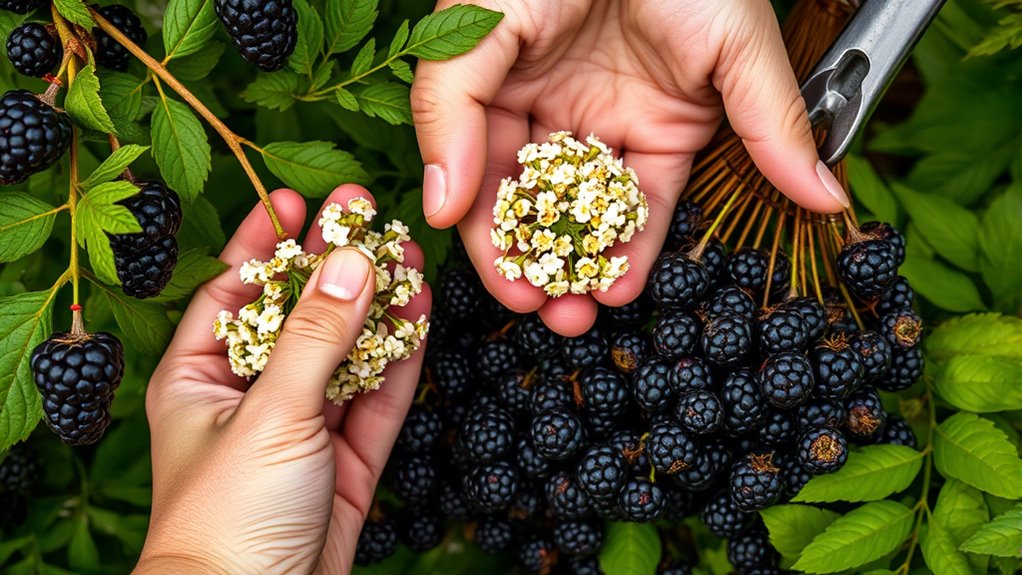

Elderflower and elderberry, though from the same plant family, require different handling. You should harvest elderflowers when they’re fully open in late spring, snipping whole clusters and avoiding green parts. For elderberries, wait until they’re deep purple or black, then pick ripe, juicy berries carefully, wearing gloves due to natural toxins. Proper preparation and timing are key to safe use and maximum benefit; keep going to explore more detailed tips.
Open a free Amazon Business account
Business pricing, bulk buying and tax-exempt orders.
As an affiliate, we earn on qualifying purchases.
Key Takeaways
- Elderflowers are harvested in late spring to early summer when fully open, while elderberries ripen in late summer to fall.
- Elderflowers require gentle plucking of whole clusters with a sweet scent, whereas elderberries need to be fully ripe, deep purple or black, before picking.
- Elderflowers are used mainly for infusions, syrups, and floral extracts, while elderberries are processed into jams, syrups, and medicinal remedies.
- Handling elderberries often involves wearing gloves due to natural toxins, unlike elderflowers which are safe to handle with minimal precautions.
- Proper preparation, including washing and cooking elderberries, is essential to avoid toxins, whereas elderflowers generally require minimal processing.

Have you ever wondered how elderflower and elderberry differ, despite both coming from the same plant family? It’s a question that sparks curiosity for those eager to harness nature’s gifts and embrace freedom through wildcrafting. The truth is, understanding these differences empowers you to harvest and prepare these plants correctly, guaranteeing safety and potency. When it comes to wildcrafting tips, knowing the right harvesting seasons is key. Elderflowers bloom in late spring to early summer, typically from May to June, offering a brief window when the fragrant clusters are at their peak. Elderberries, on the other hand, ripen later in summer, around August to September. Keeping track of these seasons is vital because harvesting too early or too late can compromise flavor, medicinal properties, and safety.
As a wildcrafter, you have the power to connect directly with nature, but that means respecting the plant’s cycles. Elderflowers should be gathered when they are fully open, their tiny petals radiating a sweet, intoxicating scent. At this stage, they contain the highest concentration of beneficial compounds. Grab a pair of scissors or pruning shears and clip whole flower clusters, making sure to leave enough behind for the plant’s health and future growth. For elderberries, wait until the berries are deep purple or black—never pick them green or unripe. Ripe berries are juicy and bursting with antioxidants, but they also contain compounds that can cause stomach upset if not prepared properly. Additionally, be aware that the flowers and berries have different harvesting techniques to maximize quality and safety.
Wildcrafting tips extend beyond timing; it’s about sustainable harvesting. Always identify the plant confidently before you pick and avoid overharvesting from a single patch. Take only what you need, leaving enough for the plant to regenerate and for wildlife that depends on it. Use gloves when handling elderberries—some parts contain toxins—and wash all parts thoroughly before use. Remember, your goal is to liberate the plant’s energy, not to deplete it. By respecting the harvesting seasons and practicing mindful wildcrafting, you’re empowering yourself to create healing remedies and delicious treats while maintaining harmony with nature. This approach not only guarantees your safety and the quality of your harvest but also nurtures your connection to the wild, giving you the freedom to craft and heal on your own terms.
Frequently Asked Questions
Can Elderflower and Elderberry Be Used Interchangeably in Recipes?
You can’t really swap elderflower and elderberry in recipes because their flavor profiles and culinary uses differ sharply. Elderflower offers a light, floral taste perfect for syrups and drinks, while elderberry provides a tart, berry flavor great for jams and sauces. Using one in place of the other risks altering your dish’s character. Embrace their unique qualities and enjoy experimenting — liberation comes from appreciating each ingredient’s true essence.
Are There Any Safety Concerns With Consuming Elderflower or Elderberry?
You should be aware of toxicity precautions when consuming elderflower and elderberry, as raw parts can cause nausea or vomiting. Always cook or process them properly. Also, watch for allergic reactions, especially if you’re sensitive to plants in the honeysuckle family. If you experience any symptoms, stop use immediately. Enjoy their benefits safely by following recommended preparations and consulting a healthcare professional if needed.
How Do Harvesting Methods Differ for Elderflower and Elderberry?
You harvest elderflowers by gently plucking the delicate clusters before they fully bloom, using careful harvesting techniques to avoid damaging the plant. For elderberries, you gather ripe clusters when the berries turn deep purple or black, ensuring you separate the plant part distinction—berries from stems. Embrace the freedom to harvest responsibly, knowing that timing and plant part awareness maximize safety and flavor, empowering your natural connection to these wild treasures.
Do Elderflower and Elderberry Have Similar Medicinal Benefits?
You’ll find that elderflower and elderberry offer distinct medicinal benefits because of their different plant properties. Elderflower is great for easing colds, reducing inflammation, and soothing sore throats, while elderberry is known for boosting your immune system and fighting off infections. Their medicinal differences empower you to choose the right plant for your needs, allowing you to harness nature’s healing power and feel more liberated in managing your health naturally.
What Are the Best Storage Techniques for Each Plant?
You should dry store elderflowers in a cool, dark place in breathable containers to keep their delicate aroma intact. For elderberries, refrigeration works best—spread them out on a tray, then transfer to an airtight container or bag. This method prevents spoilage and preserves their medicinal qualities. Embrace these techniques to liberate your herbs’ full potential, ensuring they stay potent and fresh whenever you need them.
Conclusion
Now that you know the differences between elderflower and elderberry, you can confidently choose the right one for your needs. Think of elderflower as a gentle, sunlit breeze, perfect for delicate teas and infusions, while elderberry is a robust oak, ready to support your immune defenses. By understanding their unique actions and preparations, you’re armed with nature’s dual tools—each ready to work its magic, like two sides of the same coin, in your wellness journey.
Flea & tick season Picks
flea and tick prevention
As an affiliate, we earn on qualifying purchases.