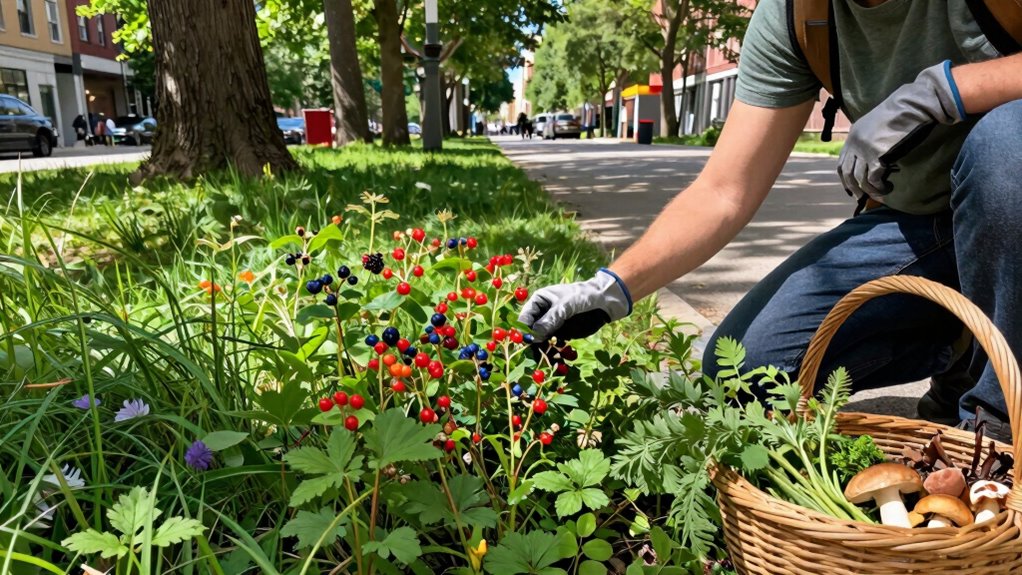

To forage responsibly in public spaces, start by accurately identifying edible plants and avoiding toxic look-alikes. Harvest only what you need, taking small portions and never uprooting whole plants, to allow regrowth. Stick to designated trails, respect wildlife, and clean up after yourself. Follow local regulations and avoid protected species. By practicing these ethical and sustainable habits, you’ll help preserve natural spaces for everyone. If you keep exploring, you’ll discover even more ways to forage safely and responsibly.
Key Takeaways
- Identify plants accurately using reliable guides and consult experts to avoid toxic look-alikes.
- Harvest only small amounts ethically, avoiding uprooting and protected species.
- Stick to designated trails and avoid trampling sensitive vegetation.
- Clean up all trash and debris to preserve natural spaces.
- Respect regulations, seek permissions, and consider others sharing the environment.
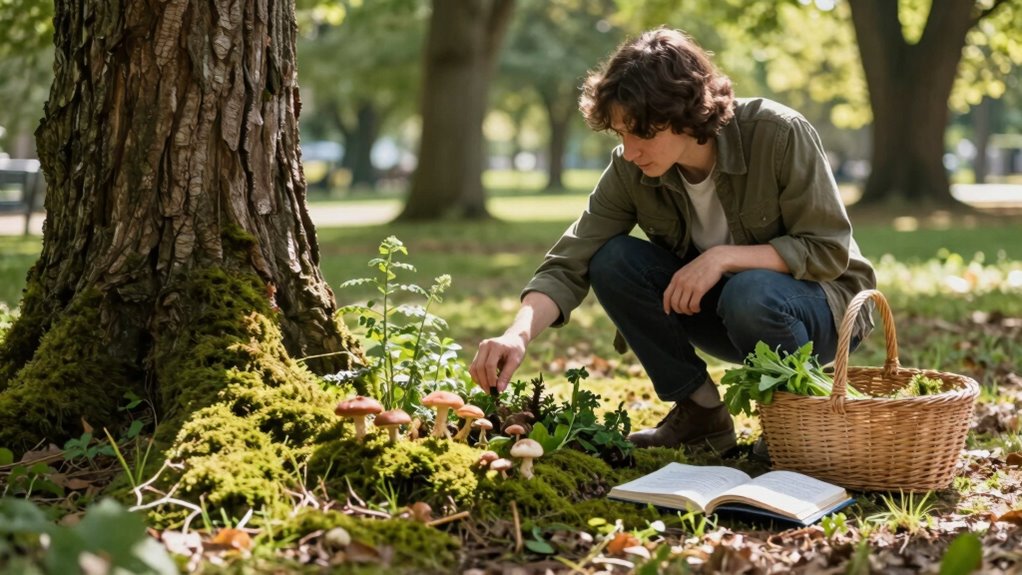
Have you ever considered how foraging in public spaces can be both rewarding and responsible? When you step into parks, forests, or even urban green areas, you’re opening yourself up to a bounty of wild plants that can enrich your meals and deepen your connection to nature. But with this opportunity comes a responsibility to forage ethically and safely. The first step is mastering wild plant identification. You need to learn how to distinguish edible plants from their toxic look-alikes. Use reliable guides, attend workshops, or consult experienced foragers to build your knowledge. Pay close attention to details like leaf shape, flower structure, and habitat, as these clues help prevent mistakes. Remember, misidentifying a plant can have serious health consequences, so never rely solely on memory or vague descriptions.
Once you’re confident in your wild plant identification skills, focus on practicing ethical harvest practices. This means harvesting with care, ensuring you leave enough for the plant to regenerate and for wildlife that depends on it. Always take only what you need, and avoid stripping entire patches, which can damage the local ecosystem. For example, when collecting berries or leaves, pinch or cut a small portion rather than uprooting the entire plant unless you’re certain it’s sustainable to do so. Be mindful of the plant’s growth cycle—harvesting at the right time ensures the plant can recover and continue thriving. Never harvest from endangered or protected species, and be aware of local regulations or restrictions in the area where you forage. Additionally, incorporating sustainable harvesting practices supports the longevity of wild plant populations and helps maintain ecological balance. Developing a foraging plan beforehand can help you minimize your impact and make your foraging trips more efficient.
Another key aspect of responsible foraging is respecting the environment and other people sharing the space. Stick to designated trails and avoid trampling sensitive vegetation. Clean up after yourself, taking all trash or discarded debris with you, and be considerate of others who may be enjoying the same space. If you’re foraging in a community or urban park, always seek permission if required, and be transparent about your activities. Remember, responsible foraging isn’t just about what you gather; it’s about ensuring that natural spaces remain healthy and accessible for everyone. By combining careful wild plant identification with ethical harvest practices, you help preserve the environment while enjoying the benefits of foraging. It’s a practice rooted in respect—for nature, yourself, and future generations.

Peterson Field Guide To Medicinal Plants & Herbs Of Eastern & Central N. America: Third Edition―A Field Guide to Discovering Nature's Remedies in Eastern and Central North America
- Comprehensive guide to medicinal plants: Eastern and Central North America
As an affiliate, we earn on qualifying purchases.
As an affiliate, we earn on qualifying purchases.
Frequently Asked Questions
Is Foraging Legal in All Public Parks?
Foraging isn’t legal in all public parks; rules vary widely depending on local regulations. You need to check with park authorities before gathering plants or other resources. Follow proper foraging etiquette by taking only what you need, avoiding damage to the environment, and respecting designated areas. Failing to adhere to local regulations can lead to fines or other penalties, so always do your research and ask for permission if necessary.
How Do I Identify Edible Versus Poisonous Plants?
Identifying edible versus poisonous plants is like reading a secret code; your eyes need to spot the subtle differences. Focus on plant identification by studying guidebooks or apps, paying close attention to leaf shapes, colors, and textures. Watch for poisonous plant signs like bitter tastes, milky sap, or bad smells. Never consume a plant unless you’re 100% sure it’s safe, as many deadly plants mimic edible ones.
What Equipment Is Essential for Safe Foraging?
You’ll need essential equipment like a good field guide for plant identification and a sharp knife for harvesting. Safety gear such as gloves protects your hands from thorns or irritants, and a basket or breathable bag keeps your foraged finds fresh. Bring a smartphone with identification apps or photos for backup. Always carry a whistle or small first aid kit for emergencies, ensuring your foraging experience remains safe and enjoyable.
Can I Forage in Urban Areas Safely?
Yes, you can forage safely in urban areas—just like exploring a jungle gym, only with more concrete and fewer safety rails. Urban foraging and wild harvesting require sharp eyes and knowledge of what’s safe, avoiding pollution and contaminated plants. Stick to parks or green spaces, identify plants correctly, and respect local regulations. With a cautious approach, you can enjoy nature’s bounty right in the city without risking your health.
How Do I Minimize Environmental Impact While Foraging?
You can minimize environmental impact by practicing sustainable harvesting, ensuring you only take what you need and leave enough for the ecosystem to thrive. Avoid overharvesting, and be mindful of plant health and growth patterns. Respect local regulations and protected areas to support ecosystem preservation. By foraging responsibly, you help maintain biodiversity and ecological balance, ensuring these resources remain available for future generations.
Conclusion
Think of foraging as tending a delicate garden—you’re the caretaker, and the land is your shared canvas. When you harvest thoughtfully, respecting the roots and leaving seeds behind, you nurture a thriving ecosystem for everyone. Every mindful pick is like a gentle rain, nourishing future growth. By foraging responsibly in public spaces, you become part of an ongoing dance—honoring nature’s rhythm and ensuring that this bounty continues to flourish for generations to come.