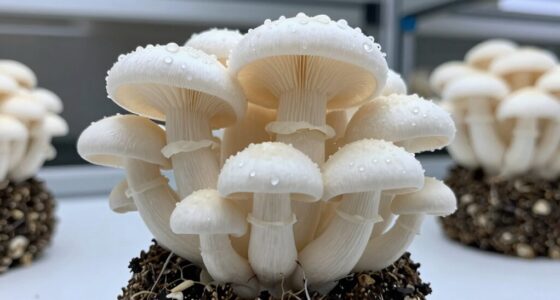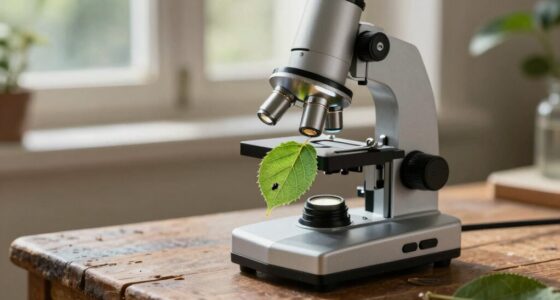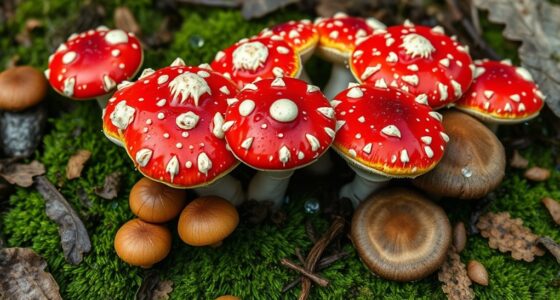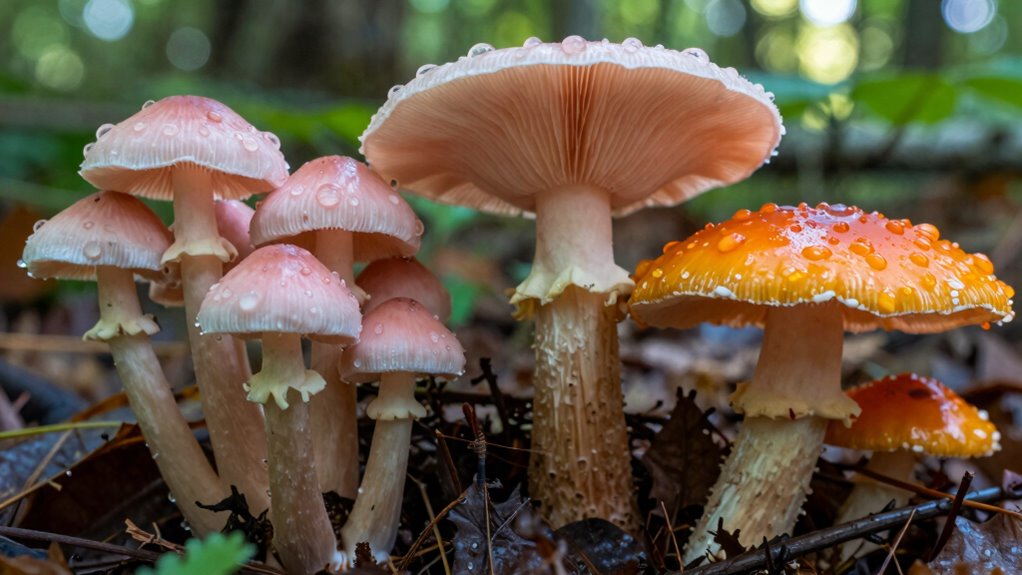

To avoid wishful thinking in fungi identification, stay objective and rely on solid evidence rather than assumptions or appearances. Use multiple resources like field guides and expert advice to confirm species, paying attention to habitat, spore prints, and microscopic features. Don’t be swayed by visual appeal or hope for a positive outcome. Developing a systematic, cautious approach keeps you safe. Keep exploring, and you’ll discover more essential tips for safe verdicts.

Get garden gear delivered free — and shop member deals
- Fast, free delivery on millions of items
- Access to Prime Big Deal Days deals on October 6–7
- Prime Video, Amazon Music and more included
Key Takeaways
- Rely on multiple identification methods, including spore prints and microscopic features, rather than visual appearance alone.
- Consult trusted field guides or experts to verify species before consumption.
- Base decisions on habitat and environmental clues, not just mushroom looks.
- Be willing to discard uncertain specimens instead of risking misidentification.
- Develop a disciplined, step-by-step identification process to minimize biases and assumptions.
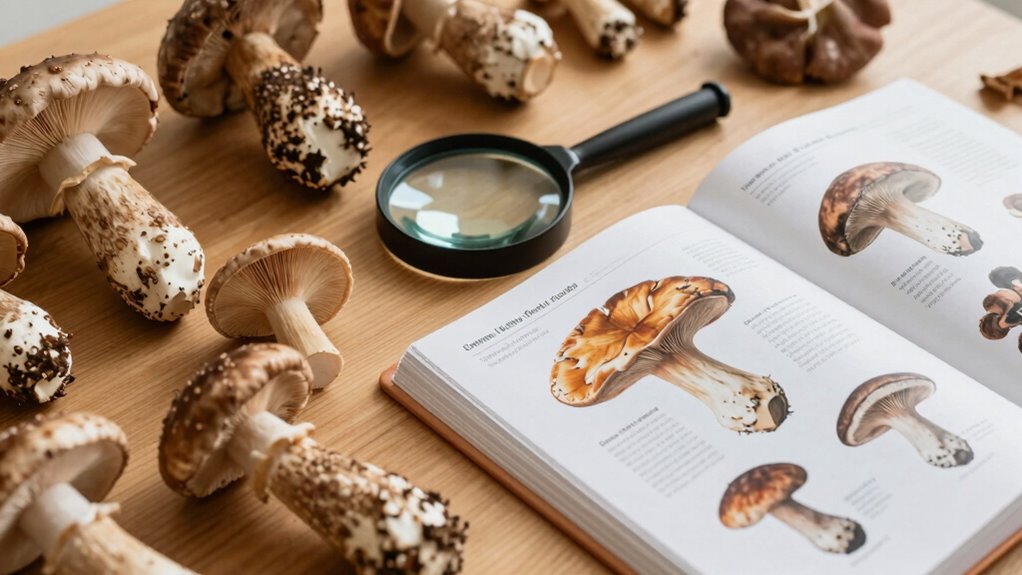
Identifying fungi can be a rewarding but challenging task, especially if you’re new to mycology. One of the biggest pitfalls is falling into wishful thinking—believing a mushroom is safe or edible simply because you want it to be. To avoid this, you need to develop a clear, disciplined approach that prioritizes accuracy over hope. A good starting point is understanding the importance of edibility safety. Many mushrooms look alike, but only a handful are safe to eat. Just because a mushroom resembles a known edible species doesn’t mean it is. Always verify through multiple identification keys and trusted resources before considering consumption. Remember, misidentification can lead to severe poisoning, so it’s better to err on the side of caution than to assume safety based on wishful thinking.
Habitat selection plays a crucial role in fungi identification and avoiding mistaken identity. Different species thrive in specific environments, so pay close attention to where you find a mushroom. For example, some edible fungi prefer deciduous forests, while others grow on coniferous trees or in grasslands. Knowing the typical habitat of a mushroom helps narrow down your options and reduces the chances of confusing it with a toxic lookalike. Be cautious about collecting mushrooms from altered or unusual environments—pollution or pesticides can contaminate edible species, making habitat knowledge essential for assessing edibility safety. Additionally, understanding habitat preferences can improve your accuracy by helping you identify fungi more reliably. Observing environmental conditions can also provide critical clues in differentiating similar species, especially when combined with other characteristics. Developing a systematic approach that incorporates habitat information can significantly improve your accuracy and confidence in identification.
It’s easy to get swept up in excitement or hope when you stumble upon a beautiful mushroom, but maintaining objectivity is vital. Check multiple features, and don’t rely solely on visual appeal. Use a field guide or consult a mycologist if possible. Resist the temptation to label a mushroom as edible just because it looks familiar or because someone told you it’s safe. Instead, focus on gathering concrete evidence—spore print color, microscopic features, and habitat details—and be willing to discard any specimen if you’re unsure. Developing a systematic identification process helps ensure consistency and reduces the influence of personal biases. Keeping a cautious mindset and understanding the importance of edibility safety and habitat selection will help you make more accurate identifications and avoid dangerous mistakes rooted in wishful thinking. Remember, accurate identification is the cornerstone of safe foraging, and patience is essential to ensure your safety.
fungi identification field guide
As an affiliate, we earn on qualifying purchases.
As an affiliate, we earn on qualifying purchases.
Frequently Asked Questions
Can Fungi Identification Be Done Solely Through Visual Inspection?
Fungi identification can’t rely solely on visual inspection. While observing visual cues and morphological features like cap shape, gill structure, and color can help, they often aren’t enough for accurate identification. Fungi can look similar but differ chemically or genetically. To avoid mistakes, you should also consider spore prints, smell, habitat, and, if possible, conduct microscopic or DNA analysis. This thorough approach guarantees more reliable identification.
What Are Common Mistakes Beginners Make in Fungi Identification?
You often confuse vivid imagination with mycological terminology, risking poor identification accuracy. Beginners tend to rush, jumping to conclusions without thoroughly examining spore color, gill structure, or habitat details. They may overlook subtle features or rely solely on visual cues, leading to mistakes. Instead, take your time, document each characteristic meticulously, and cross-reference with reliable guides. Patience and attention to detail are key to improving your fungi identification skills.
Are There Reliable Digital Tools for Fungi Identification?
Yes, there are reliable digital tools for fungi identification. You can use apps that access extensive fungi databases, helping you compare images and features accurately. These tools often include detailed descriptions, habitat info, and identification guides, reducing guesswork. Just remember, while digital tools are helpful, they shouldn’t replace your careful observation and research. Combining technology with traditional methods boosts your chances of correct identification and avoids wishful thinking.
How Do Environmental Factors Influence Fungi Appearance?
Environmental impact and growth conditions greatly influence fungi appearance. You’ll notice changes based on humidity, temperature, light, and substrate quality. For instance, high humidity can lead to larger, more vibrant caps, while dry environments may produce smaller, duller fungi. Nutrient availability affects color and texture, and seasonal shifts can cause variations in shape and size. Monitoring these factors helps you accurately interpret fungi features, avoiding wishful thinking and misidentification.
Is It Safe to Taste Fungi for Identification Purposes?
You should never taste fungi for identification purposes because of the risks involved. Edible risks are significant, and many toxic look-alikes closely resemble edible varieties, making visual identification unreliable. Tasting can cause serious health issues or even be fatal. Always rely on expert identification methods, such as spore prints or microscopic analysis, rather than taste. When in doubt, avoid consuming wild fungi altogether to prevent dangerous mistakes.
Conclusion
To avoid wishful thinking when identifying fungi, stay grounded in careful observation and scientific methods. Think of your judgment as a lighthouse, guiding you through foggy assumptions toward clarity. By trusting your tools and evidence rather than hopes, you guarantee your identification is accurate and reliable. Remember, fungi are like elusive shadows—beautiful yet tricky. Only by sticking to facts can you truly illuminate their true nature and avoid the pitfalls of wishful thinking.
Fall Picks
fall essentials
As an affiliate, we earn on qualifying purchases.