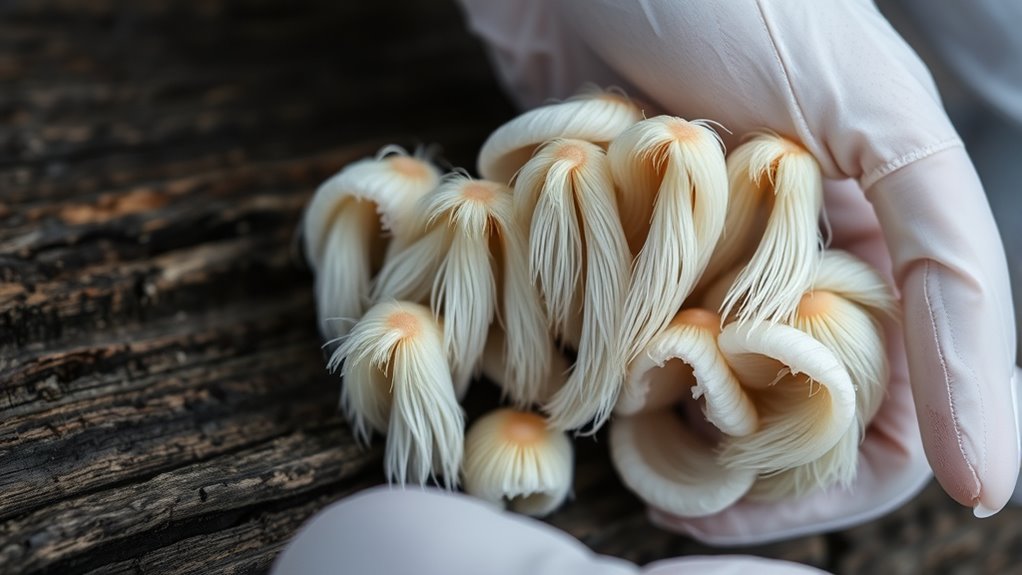

To properly handle shaggy mane or inky cap mushrooms, start by harvesting in the morning with scissors or a sharp knife, cutting at the base to avoid damaging the mycelium. Store them in a paper bag in your fridge if you aren’t using them immediately, since their shelf life is short. For safe enjoyment, wait until the caps are mature but before they turn black, and always follow cultivation tips to guarantee a delicious, safe mushroom experience. Keep exploring to learn more about their harvest and culinary uses.
Key Takeaways
- Harvest shaggy mane mushrooms in the morning using scissors or a sharp knife at the base to avoid damaging the mycelium.
- Pick mushrooms before caps turn inky black, signaling spore dispersal and optimal freshness.
- Handle gently to prevent bruising, and process or consume promptly due to their short shelf life.
- Store in a paper bag in the fridge to maintain quality and extend freshness.
- Proper harvesting and handling ensure safety, promote sustainability, and help maintain healthy future growth.
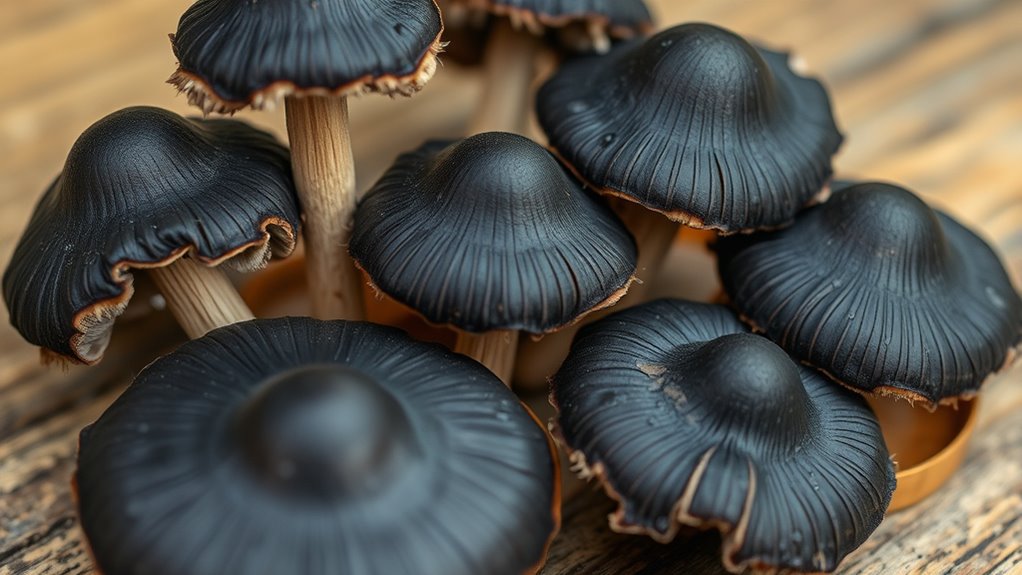
Have you ever come across the striking appearance of shaggy mane mushrooms? Their tall, wispy caps and ghostly white stature seem to command attention, inviting you to explore their secrets. These inky caps aren’t just an eye-catching spectacle; they hold a world of possibilities for those seeking to embrace natural freedom through foraging, cultivating, and enjoying wild foods. If you’re ready to tap into their potential, understanding cultivation techniques and culinary uses will set you free from reliance on store-bought produce, reconnecting you with the living bounty of the earth.
Cultivating shaggy mane mushrooms at home isn’t as complex as it appears. You can start with simple cultivation techniques that give you control over your harvest. Begin by acquiring spores or spawn from trusted sources. These fungi thrive on nutrient-rich substrates like straw, sawdust, or composted materials. Once you’ve prepared your substrate, inoculate it with the spawn, and keep the environment humid and cool — around 55-65°F (13-18°C) — with indirect light. Maintain proper airflow to prevent mold, and within a few weeks, you’ll see the characteristic shaggy caps emerge. This process grants you liberation from industrial food systems, empowering you to grow your own mushrooms sustainably and on your terms. Plus, cultivating your own shaggy mane mushrooms lets you experiment with different substrates and conditions, deepening your connection to nature’s cycles. Additionally, understanding the growth cycle of these fungi can help optimize your cultivation success.
When it comes to culinary uses, shaggy mane mushrooms truly shine. Their delicate, slightly nutty flavor makes them a versatile ingredient for a wide range of dishes. You can harvest them fresh just as they reach their peak, ideally before they turn into inky black, inky caps, which signals their spore dispersal stage. These mushrooms are best enjoyed cooked; sauté them with garlic and herbs, add them to soups, or toss them into pasta dishes. Their tender texture and subtle flavor bring a unique dimension to your meals, allowing you to savor the fruits of your labor. By transforming wild fungi into culinary delights, you reclaim control over what you eat, breaking free from processed foods and embracing a natural, nourishing diet.
Handling shaggy mane mushrooms properly is essential to preserve their quality and safety. Always harvest in the morning, and use scissors or a sharp knife to cut them at the base. Avoid pulling or twisting, which can damage the mycelium and impact future growth. Once harvested, process or consume them promptly; they have a short shelf life and can quickly spoil or turn inky black if left too long. If you’re not using them immediately, store them in a paper bag in the fridge to maintain freshness. Proper handling ensures you stay connected to the integrity of these fungi, respecting their natural lifecycle and your own responsibility in harvesting ethically. Embracing these practices allows you to fully enjoy their culinary potential and the liberation that comes from understanding and respecting nature’s offerings.
Frequently Asked Questions
How Long Do Shaggy Mane Mushrooms Stay Edible After Picking?
You’ll want to enjoy your shaggy mane mushrooms within a day or two after picking, as their edible window is pretty short. To maximize mushroom preservation, keep them in a paper bag in the fridge and avoid moisture. This way, you maintain their freshness and flavor longer. Don’t wait too long—once they start to darken or slimy, their edibility drops, and you should free them from your collection.
Can Shaggy Mane Mushrooms Be Cultivated Indoors Successfully?
Yes, you can successfully cultivate shaggy mane mushrooms indoors. To do so, focus on meeting their growth requirements: maintain high humidity, provide fresh air, and keep temperatures around 55-65°F. Use sterilized substrates like straw or sawdust and guarantee proper ventilation. Indoor cultivation allows you to enjoy these unique mushrooms at your convenience, giving you the freedom to grow your own edible fungi whenever you desire.
Are Shaggy Mane Mushrooms Safe for Children and Pets?
Shaggy Mane mushrooms pose toxicity concerns, especially for children and pets, whose ingestion risks are significant. Did you know that even small amounts can cause gastrointestinal distress or allergic reactions? You can’t risk their safety with these delicate, inky mushrooms. For your family’s liberation from worry, keep Shaggy Manes out of reach, and always verify for safety before sharing wild fungi. Your pets and kids deserve protection from potential harm.
What Are Common Look-Alikes to Avoid When Foraging?
When foraging, you should watch out for false identifications and toxic look-alikes like the deadly Destroying Angel or deadly Galerina. These mushrooms can resemble shaggy mane in shape or color but are highly poisonous. Always double-check features like gill attachment and spore color. Don’t risk it—if you’re unsure, leave it be. Your freedom to explore nature safely depends on proper identification and cautious foraging.
How Should I Store Shaggy Mane Mushrooms for Maximum Freshness?
Storing shaggy mane mushrooms is like keeping a delicate secret. You should place them in an airtight container with a damp paper towel to control humidity and prevent dehydration. Keep the container in the refrigerator, ideally in a breathable bag or container, to maintain freshness. Avoid washing them before storage—wait until you’re ready to use. This method frees you to enjoy their fleeting, flavorful presence at its best.
Conclusion
As you gently lift a shaggy mane mushroom, imagine the delicate, ghostly cap unfolding like a pale umbrella at dawn. Handle it with care, feeling the smooth, soft texture slip through your fingers, and picture its fleeting life—vanishing quickly into the shadows of the forest floor. With respectful hands, you preserve its fragile beauty, allowing others to marvel at its fleeting, inky elegance. Remember, each careful touch keeps this ephemeral wonder alive just a little longer.