
TL;DR

Get garden gear delivered free with Prime
- Fast, free delivery on millions of items
- Prime Video, Amazon Music and more included
- Member-only deals all year
Country Living tested cayenne pepper solution, vinegar, dog hair and Irish Spring soap shavings on four pumpkins, alongside an untreated control, over 12 days. Cayenne was the report’s top pick: its pumpkin remained untouched through day 11 with repeat applications, but squirrels began eating it on day 12.
Cayenne pepper solution was the top-performing of four home remedies tested to deter squirrels from eating pumpkins in a 12-day Country Living trial. The treated pumpkin stayed untouched through day 11 with repeat applications, but squirrels began eating it on day 12, so the test suggests a temporary deterrent rather than a lasting fix.
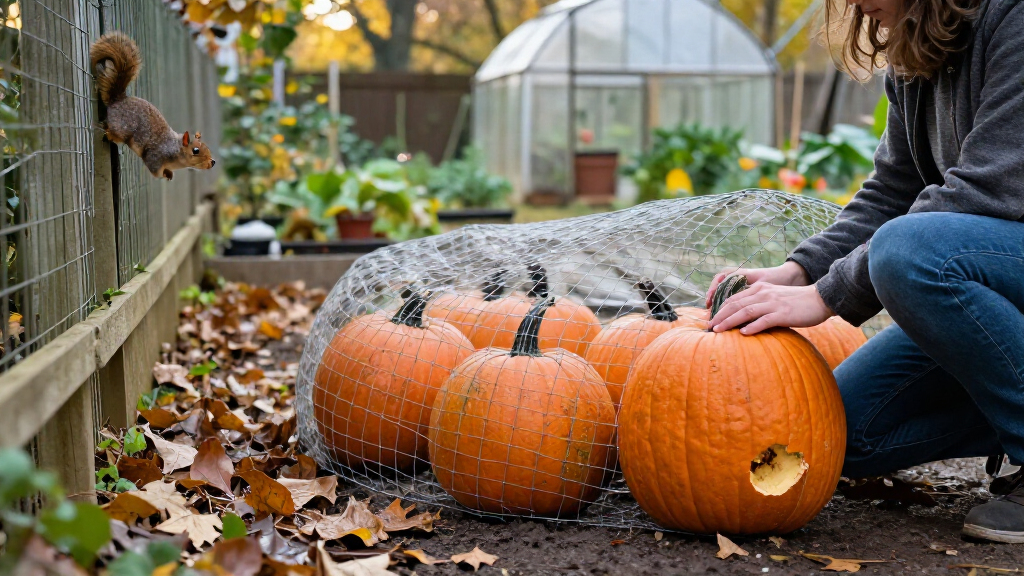
The test used four treated pumpkins and one untreated control in a neighbor’s yard, with permission. The remedies were fresh dog hair, white vinegar, a cayenne pepper solution and shavings of Irish Spring soap. The report says the control pumpkin had gnaw marks within hours, was scooped out by day 3 and was gone by day 5.
For the cayenne treatment, the editors mixed 2 tablespoons of powdered cayenne with 16 ounces of water. The powder clogged their spray bottle, so they poured the solution over the pumpkin instead. They reapplied it every other day or after rain, with the last application on day 7. The pumpkin remained untouched through day 11; by day 12, squirrels had started eating it.
Vinegar placed second: the pumpkin received a fine spray of straight white vinegar, reapplied on the same schedule through day 7. A squirrel apparently took a small nibble around day 4 or 5, but the pumpkin remained largely untouched through day 12. Dog hair did not prevent substantial damage by day 5, while the soap-shaving pumpkin lasted more than 10 days before being eaten on day 11. The soap test began later, however, and that pumpkin sat alone for five days after the others were gone.
Which Treatments Lasted Longest
The results offer a practical comparison for people displaying pumpkins outdoors, but they do not establish a universally reliable method. Cayenne ranked first in this particular trial, and vinegar also limited damage for much of the test. Both treatments required repeat applications, including after rain, and the cayenne-treated pumpkin was eventually eaten.
The outcomes also show why simple rankings need qualification. The soap-treated pumpkin lasted longer than the others before being eaten, but its test started later, leaving it without the same exposure conditions. Dog hair’s performance may also have been affected by the untreated pumpkin: the report notes squirrels began eating the hair-surrounded pumpkin on the same day the control was gone. These observations make the trial useful as a small comparison, not a controlled finding that predicts results in every yard.
Popular right now

Apple AirPods Pro 3 Wireless Earbuds with Active Noise Cancellation

De'Longhi Magnifica Evo Fully Automatic Espresso Machine with Manual Milk Frother, Silver

Vitamix 5200 Professional-Grade Blender, 64 oz. Container, Black
As an affiliate, we earn on qualifying purchases.
How the Yard Trial Was Run
The experiment was prompted by a neighbor who had struggled for years to protect a holiday pumpkin display from squirrels. With the neighbor’s permission, Country Living placed the four treated pumpkins and an untreated control in the yard and followed their condition over 12 days.
The report describes the methods, reapplication schedule and observed damage, but it does not provide details such as the number of squirrels involved, weather conditions beyond reapplying after rain, or whether the pumpkins were identical in size and condition. The control was eaten quickly, but the editors said they could not determine whether it diverted squirrels from the treated pumpkins.
What the Small Test Cannot Show
The report does not establish whether any treatment works reliably across different yards, squirrel populations, pumpkin varieties or weather. It tested one pumpkin per method, so differences could reflect factors beyond the treatments. The later start for the soap test also means its duration is not directly comparable with the others.
It is also unclear whether the untreated pumpkin acted as a decoy that delayed damage to some treated pumpkins. Country Living explicitly said the trial could not answer that question. The report offers no further testing or independent verification of the observed results.
A Decoy Pumpkin Test Is Planned
Country Living said its next planned experiment is to place a decoy pumpkin in a distant corner of the yard and see whether it helps protect display pumpkins in busier areas, such as a porch or sidewalk. No timing or results for that follow-up test were provided.
For the current report, the practical takeaway is limited to the conditions tested: cayenne solution performed best when reapplied regularly, but squirrels eventually ate that pumpkin too. Whether a decoy changes the outcome remains untested.
Key Questions
Which method was the top performer?
Cayenne pepper solution was Country Living’s top pick. Its pumpkin stayed untouched through day 11, then squirrels began eating it on day 12.
How was the cayenne solution made?
The test mixed 2 tablespoons of powdered cayenne with 16 ounces of water. Because the mixture clogged the spray bottle, the editors poured it over the pumpkin and reapplied it every other day or after rain through day 7.
Did vinegar protect the pumpkin?
The vinegar-treated pumpkin received a small nibble around day 4 or 5 and remained largely untouched through day 12. That made vinegar the report’s runner-up, though the test involved only one pumpkin for that method.
Did the untreated control affect the results?
It may have influenced squirrel behavior, but the report says the trial could not determine that. The control had gnaw marks within hours and was gone by day 5.
What is the next experiment?
Country Living plans to test whether placing a decoy pumpkin in a far corner of the yard can help protect pumpkins displayed in busier spots. The report gives no schedule or outcome for that test.
Source: countryliving.com