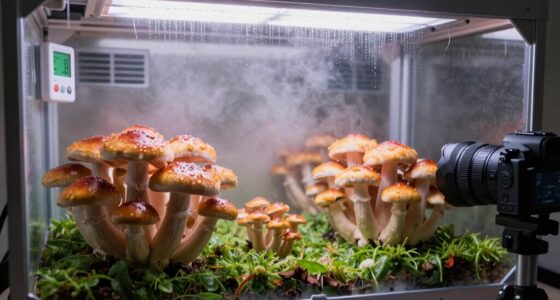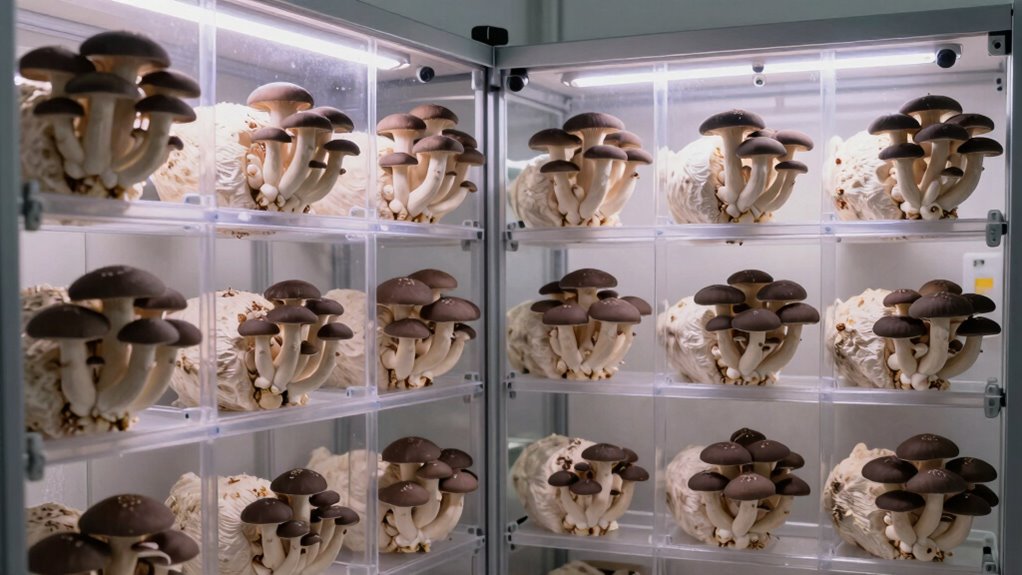

Indoor mushroom grow chambers are designed to create a controlled environment that guarantees healthy growth. You can manage airflow with fans or vents to prevent CO2 buildup and keep the air fresh. Maintaining high humidity levels with misting or humidifiers supports healthy development, while monitoring tools help you adjust conditions as needed. Balancing ventilation, humidity, and temperature is key. Keep exploring to discover how these factors work together for maximum mushroom production.
Key Takeaways
- Indoor mushroom grow chambers are controlled environments with regulated ventilation, humidity, and temperature for optimal mushroom cultivation.
- Proper airflow prevents CO2 buildup and supports healthy mycelium growth and pinning.
- Maintaining 85-95% humidity with humidifiers or misting systems is crucial for healthy development.
- Monitoring tools and automated systems help sustain stable environmental parameters throughout growth stages.
- The chamber functions as a mini-ecosystem, requiring diligent adjustments based on mushroom response and growth stage.
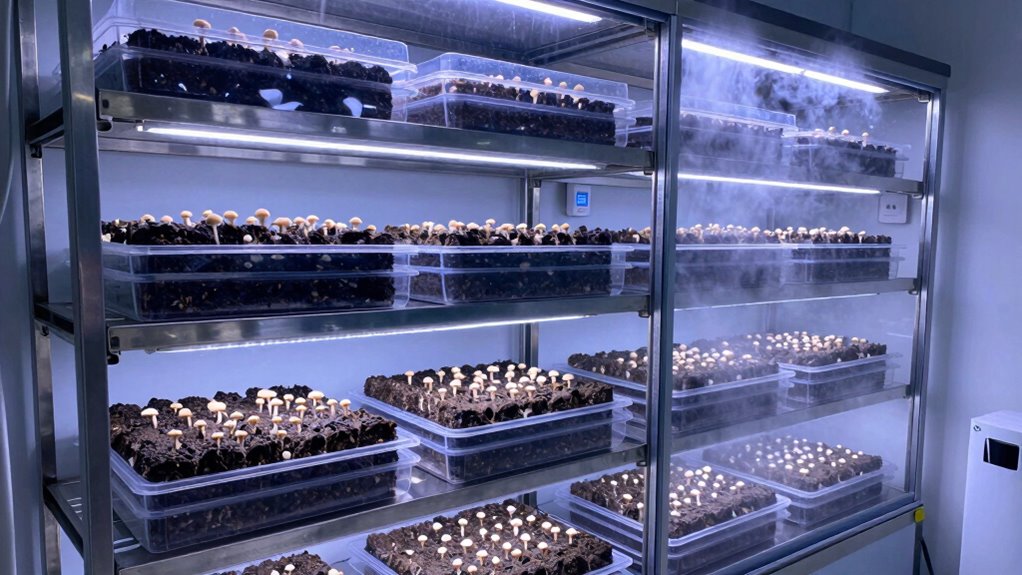
Ventilation and humidity control are essential to mimic the mushrooms’ natural habitat. Good airflow prevents the buildup of carbon dioxide, which can hinder mycelium growth and cause deformities. You should set up fans or passive vents to guarantee fresh air circulates consistently, preventing stagnant conditions. At the same time, maintaining the right humidity level is critical; most mushrooms thrive in 85-95% humidity. Using humidifiers or misting systems helps you keep moisture levels steady, even as the mushrooms grow and consume water. It’s important to monitor humidity regularly with a reliable hygrometer, adjusting your systems to prevent overly dry or overly moist conditions, both of which can cause issues like drying out or mold formation. Additionally, understanding sound vibrations and their influence on cellular health can be beneficial for optimizing growth environments. Proper environmental control can significantly improve the yield and quality of your mushrooms. Regularly observing microclimate conditions within the chamber can help identify early signs of imbalance, ensuring prompt adjustments.
Implementing environmental monitoring tools can facilitate real-time adjustments, helping maintain optimal conditions automatically.
Controlling ventilation and humidity isn’t just about setting and forgetting. You need to observe how your mushrooms respond and make adjustments accordingly. For example, during the fruiting stage, increased fresh air exchange can stimulate pinning, but too much airflow can dry out the substrate. Conversely, during incubation, you might prioritize maintaining stable temperature and humidity to support mycelium colonization. To ensure consistent results, it’s helpful to implement monitoring tools that track environmental parameters continuously. The key is balancing airflow to prevent excess moisture loss while avoiding stale, CO2-laden air that can stunt growth.
In essence, your indoor mushroom grow chamber acts as a small-ecosystem where you control every parameter for prime growth. Proper mushroom substrate preparation gives your mushrooms a strong foundation. Meanwhile, diligent ventilation and humidity control ensure that the environment remains ideal for healthy development from spawn to harvest. With a bit of attention and adjustment, you’ll create a thriving space where your mushrooms can grow reliably and abundantly.

Smart Growing Chamber for Indoor Mushroom Cultivation Eco Box with Grow Lights & Lighting Lamps Temperature & Humidity Monitoring & Display Monotub Grow Kit with Automatic Humidification & Ventilation
- Automatic Fruiting Chamber: Automates humidification, ventilation, and lighting
- Real-Time Monitoring: Displays temperature and humidity on screen
- Customizable Humidification: Sets humidity levels and cycle duration
As an affiliate, we earn on qualifying purchases.
As an affiliate, we earn on qualifying purchases.
Frequently Asked Questions
What Is the Ideal Humidity Level for Mushroom Growth?
You should aim for a humidity level of around 85-95% for ideal mushroom growth. Proper humidity control is essential because it creates the perfect environment for mushrooms to develop. Keeping humidity high helps prevent mold, which can damage your crop. Regularly monitor and adjust humidity levels to maintain this range, ensuring healthy growth and minimizing the risk of mold prevention issues in your indoor grow chamber.
How Often Should I Monitor Temperature in the Chamber?
You should monitor the temperature in your mushroom grow chamber at least twice daily to guarantee ideal conditions. Keep an eye on lighting schedules and air circulation, as they influence temperature stability. Proper air circulation prevents hot spots, while consistent lighting schedules support healthy growth. Adjust the temperature if you notice fluctuations, especially during changes in lighting or airflow, to maintain the perfect environment for your mushrooms.
Can Different Mushroom Species Share the Same Chamber?
Think of your chamber as a bustling city, where different mushroom species are neighbors. Yes, you can share a chamber, but consider mushroom species compatibility to prevent conflicts. Balancing chamber species diversity is key—some thrive together, others don’t. By monitoring conditions closely and choosing compatible species, you create harmony that supports healthy growth, much like a well-planned community. Proper management guarantees each mushroom gets its own space to flourish.
What Are Common Pests or Diseases in Grow Chambers?
In your grow chamber, common pests include fungus gnats, mites, and springtails, while diseases like mold and bacterial blotch can also strike. To prevent pests, practice pest prevention strategies like regular cleaning and monitoring. For disease management, maintain proper humidity, airflow, and hygiene to reduce contamination. Consistent inspection helps catch issues early, keeping your mushroom crop healthy and thriving while minimizing pest and disease problems.
How Long Does It Take for Mushrooms to Mature?
Mushrooms typically reach maturity within 10 to 14 days after the first signs of pinning. During mushroom harvesting, understanding growth stages is vital to guarantee peak quality. The entire process relies on factors like temperature, humidity, and light. Keep a close eye on your grow chamber, as timely harvesting during the right growth stage maximizes yield and flavor, making your mushroom cultivation efforts successful.
Conclusion
Now that you know how indoor mushroom grow chambers work, you’re ready to cultivate your own fungal garden. Think of these chambers as your personal mushroom orchestra, where each element plays an essential role in harmony. With patience and care, you’ll watch your mushrooms thrive like a well-tended garden of treasures. So go ahead—dive in and let your indoor mushroom adventure flourish, turning your space into a mini mushroom haven that’s as rewarding as it is delicious.